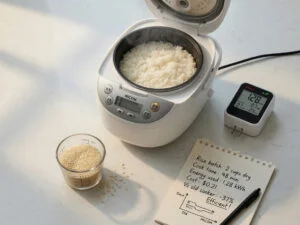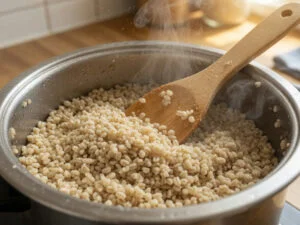
We’ve all been there—lifting the lid on what should be perfect rice, only to find a sticky, clumpy mess staring back at us. You know, it’s actually more science than art, though most of us treat it like guesswork. The thing is, there are specific techniques that separate fluffy, restaurant-quality grains from the gummy disasters we’re probably used to making. Let’s just say the secret isn’t what you think.
Understanding Rice Types and Their Cooking Properties
When we’re talking about achieving that perfect fluffy rice, the type of rice we choose makes all the difference—actually, it’s probably the most essential factor. Long-grain varieties like basmati and jasmine are your best bet here. They’ve got this amazing ability to stay separate and light when cooked properly. Short-grain rice? Well, that’s naturally stickier—great for sushi but not what we’re after. Medium-grain falls somewhere in between. Understanding these rice textures helps us match the right variety with appropriate cooking methods. It’s like choosing the right tool for the job, you know? Additionally, selecting the right rice variety can significantly impact the nutritional benefits of your meal.
The Perfect Water-to-Rice Ratio for Different Varieties
Here’s the thing we’ve learned through countless kitchen experiments—getting the water ratio right isn’t just important, it’s actually the difference between rice that’s fluffy and perfect versus rice that’s, well, kind of a mushy disaster. Long grain varieties like jasmine need about 1.5 cups of water per cup of rice, while short grain types are more like finicky houseplants that want exactly equal parts water and rice. We’re going to walk through these ratios because honestly, once you nail this part, you’ll wonder why rice ever seemed tricky in the first place. Additionally, remember to rinse your rice before cooking to enhance its texture and remove excess starch, which contributes to the water-to-rice ratio.
Long Grain Ratios
One thing that really makes or breaks your rice game? Getting the water ratio right for long grain varieties. We’ve found that 1.5 cups of water for every cup of long grain white rice works like magic – well, maybe not magic, but it’s pretty close. This ratio guarantees those grains stay fluffy and separate, which is exactly what we’re going for. Different cooking techniques might tempt you to adjust this, but trust us on this one. It’s the foundation that’ll transform your rice from mushy disappointment to restaurant-quality perfection every single time. Additionally, for those looking to explore healthier options, brown rice requires a different water ratio and cooking time to achieve a similar fluffy texture.
Short Grain Adjustments
Short grain rice plays by completely different rules, and honestly, we had to learn this the hard way after countless batches of rice pudding disguised as dinner. The magic ratio? 1.25:1 water to rice – less than you’d think. We always rinse first to remove excess starch, preventing that gummy mess. The sticky texture is what we’re after, but there’s a fine line between sticky and sludge. It cooks faster too, about 15-20 minutes. Add a pinch of salt for flavor, then let it rest covered for 10-15 minutes. Trust us on this one. Proper rinsing, which removes excess starch, is crucial for achieving that perfect fluffy texture.
Essential Pre-Cooking Steps: Rinsing and Toasting Techniques
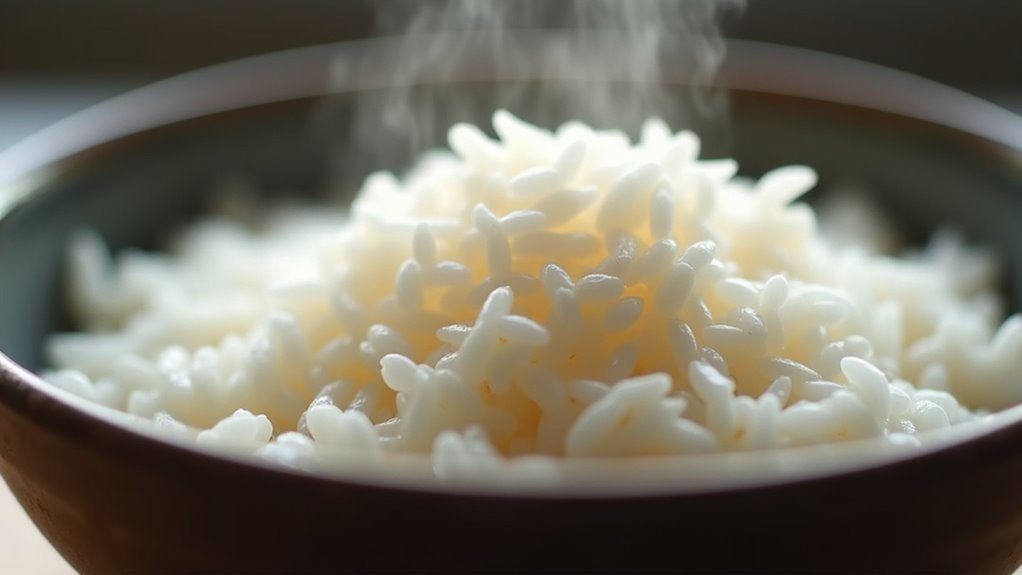
Before we even think about turning on the heat, there’s actually two essential steps that’ll make or break your rice game – and honestly, most people skip them entirely.
First, let’s talk rinsing benefits. We’re removing that excess surface starch that makes rice gummy. Rinse until water runs clear – usually three rounds does it.
Then comes toasting techniques. Heat oil in a heavy-bottomed pot, add rice, and toast over medium heat. This creates a protective coating around each grain. Additionally, the rinsing process is crucial in ensuring that your rice doesn’t become too sticky during cooking.
| Step | Action | Result | Time |
|---|---|---|---|
| Rinse | Cold water wash | Removes starch | 2-3 minutes |
| Toast | Medium heat + oil | Separates grains | 3-4 minutes |
| Check | Water clarity | Ready for cooking | Visual cue |
| Heat | Even distribution | No burning | Consistent |
Mastering Heat Control and Timing for Optimal Results
Now that we’ve got our rice properly prepped, here’s where things get tricky – and honestly, where most people mess up their rice completely. Heat adjustments are essential – we need a gentle boil, not a rolling one that’ll cause overflow. Once boiling, drop to low heat and cover with a tight-fitting lid. Don’t peek! I know it’s tempting, but lifting that lid disrupts everything. Timing accuracy matters too: 13 minutes for white rice, then rest 10-20 minutes. At high altitudes, add an extra minute per 1,000 feet – the lower boiling point throws everything off. For those using brown rice, remember to use a water-to-rice ratio of 1:2.5 for optimal cooking results.
The Kitchen Towel Trick That Prevents Sticky Rice
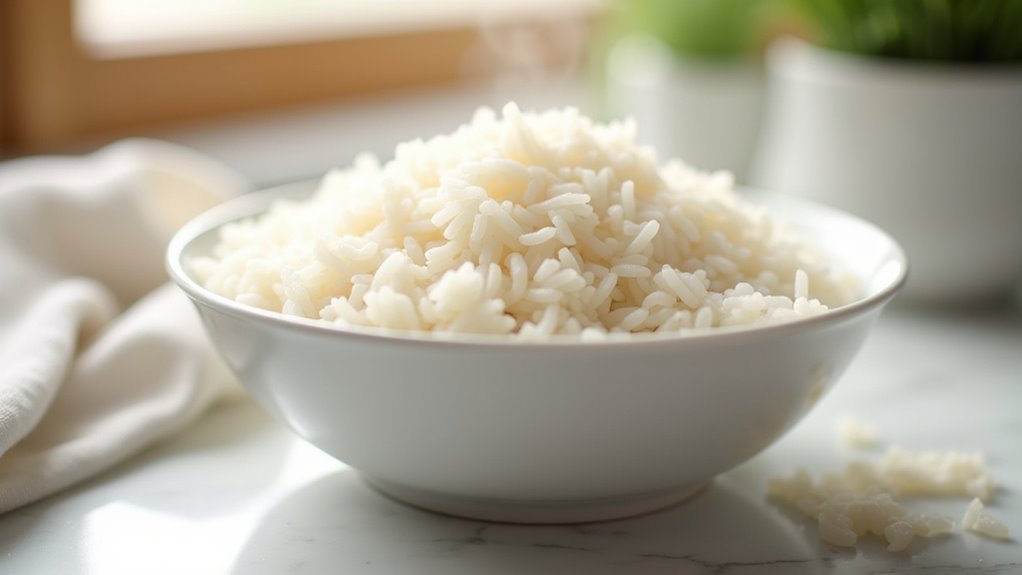
After your rice finishes its cooking time, here’s the game-changing trick that’ll save you from that dreaded sticky mess – and honestly, I wish someone had told me this years earlier. Place a clean kitchen towel under the lid and let it rest for at least 10 minutes. The kitchen towel benefits are incredible – it traps condensation that would otherwise drip back down. This moisture absorption technique works like magic for pilafs and brown rice too. Additionally, using a rice cooker ensures even cooking for perfectly fluffy results every time.
| Rice Type | Resting Time | Result |
|---|---|---|
| White Rice | 10-15 minutes | Fluffy, separated grains |
| Brown Rice | 15-20 minutes | Enhanced texture |
| Pilaf | 10-12 minutes | Professional quality |
Common Mistakes That Lead to Gummy or Mushy Rice
Even though we’ve mastered the towel trick, there are still several sneaky mistakes that can turn our perfectly measured rice into a disappointing, gummy mess – and honestly, I’ve probably made every single one of these errors at some point. Using too much water is probably the biggest culprit; it completely throws off water absorption. I’ve also been guilty of skipping the rinse step, which leaves excess starch behind. Peeking under the lid disrupts proper cooking techniques, and cranking up the heat always backfires. Trust me, gentle heat is everything. Remember, the right water-to-rice ratio is crucial for achieving the perfect texture.
Storage Tips and Reheating Methods for Leftover Rice
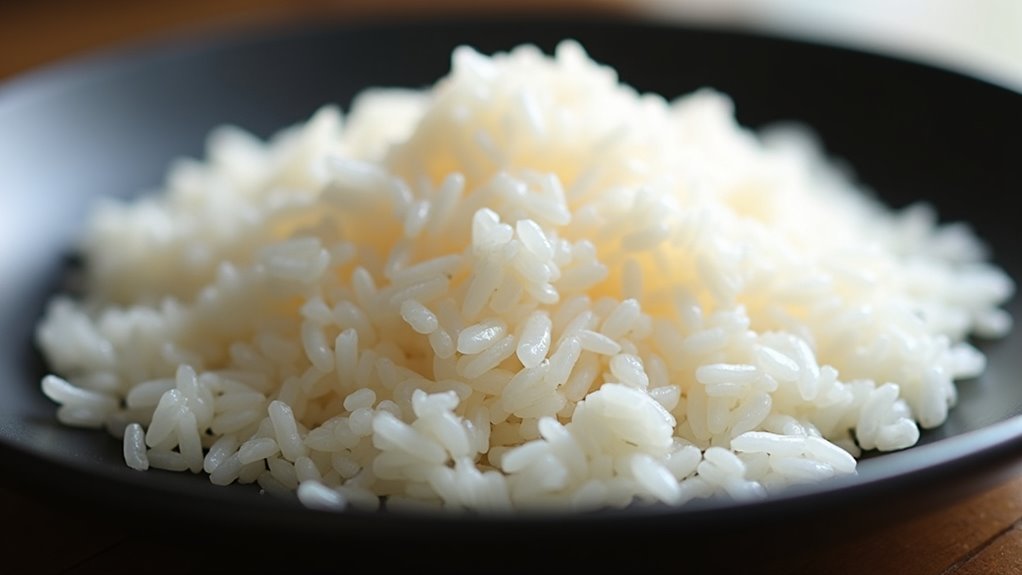
We’ve all been there—you cook a perfect pot of fluffy rice, but then you’re left wondering how to store those leftovers without turning them into a sad, clumpy mess. The good news is that with the right storage containers and reheating techniques, your leftover rice can actually taste almost as good as when it was freshly made. Let’s walk through the best ways to keep your rice fresh in the fridge, how long it’ll actually stay safe to eat, and the simple tricks that’ll bring it back to life when you’re ready for round two. It’s important to remember that cooked rice is safe to keep for up to 4 hours before it should be discarded.
Proper Storage Containers
Once you’ve mastered cooking that perfect fluffy rice, you’ll want to store it properly so it doesn’t turn into a sad, dried-out mess in your fridge. The container you choose makes all the difference for moisture retention and keeping your rice fresh.
Here’s what we’ve found works best for storing leftover rice:
- Glass containers with tight-fitting lids – These airtight containers are ideal because they don’t absorb odors and seal completely.
- BPA-free plastic food storage containers – Make sure they have secure, airtight seals.
- Vacuum-sealed bags – Perfect for freezer storage, removing air prevents freezer burn.
Good airtight containers keep your rice fluffy for days, but remember to refrigerate leftover rice within 2 hours of cooking to minimize the risk of bacterial growth.
Safe Refrigeration Duration
After you’ve stored your rice in the right container, timing becomes essential—we don’t want to keep it hanging around too long. The refrigeration duration for cooked rice is typically 4 days, though some say you can push it to 6. Honestly, I think it’s better to err on the side of caution with rice freshness. Well, you know how rice can get that weird texture when it’s been sitting around? That’s your cue it’s probably past its prime. For longer storage, freezing works great—actually, it can last 3 to 4 months that way.
Effective Reheating Techniques
When it comes to bringing leftover rice back to life, the key is adding just enough moisture to wake it up without turning it into mush. We’ve all dealt with cold, hardened rice that’s lost its fluffy charm. Actually, proper reheating techniques can restore that perfect texture.
Here are our go-to methods for moisture retention:
- Microwave method: Add 2 teaspoons water per cup of rice, cover tightly, and heat for 1 minute
- Stovetop steaming: Use a covered pot with minimal water for larger quantities
- Quick refresh: Even day-old rice works great for fried rice after reheating
Frequently Asked Questions
What Is the Key to Fluffy Rice?
We achieve fluffy rice through proper water ratios, rinsing until clear, and using gentle cooking methods. Different rice types require specific techniques, but low heat with covered steaming works universally for light, separated grains.
How Do You Get Rice to Puff?
We create puffed varieties by using specific cooking techniques like deep frying raw rice in hot oil or using high heat and steam pressure to rapidly expand the grains’ moisture content.
What Is the 1/2/3 Rule of Rice?
Like clockwork precision, we’ll follow the 1/2/3 rule when measuring rice: one cup rice needs two cups water and three tablespoons fat. This golden water ratio creates perfectly fluffy grains every time.
What’s the Secret to Making Perfect Rice?
We’ve mastered perfect rice cooking through proper rinsing, exact water ratios, low-heat steaming, and post-cooking rest periods. These texture enhancement techniques guarantee we’ll consistently achieve fluffy, separated grains every time.