We’ve all been there—excited about getting a rice cooker, thinking it’ll solve our kitchen problems. Well, maybe it’s not quite the miracle appliance we hoped for. Sure, rice cookers can be handy, but they come with their fair share of drawbacks that manufacturers don’t really advertise. From limited functionality to surprisingly high costs, these countertop devices might actually create more issues than they solve.
Limited Cooking Versatility Beyond Rice Dishes
While rice cookers are fantastic at what they’re designed for, they’re fundamentally one-trick ponies when it comes to kitchen versatility. Sure, you can steam some vegetables or maybe cook oatmeal, but honestly, the limited meal options become pretty obvious once you start exploring. We’re talking about cooking constraints that’ll frustrate anyone wanting to branch out. Most rice cookers can’t sauté or brown ingredients, which is—well, it’s kind of essential for building flavors. That non-stick surface? It’s great for rice but restricts high-heat cooking methods we’d use for more complex dishes. Additionally, multi-cookers like the Instant Pot Pro offer multiple cooking functions, allowing for a wider variety of meal preparation beyond just rice.
High-End Models Come With Premium Price Tags
When you’re shopping for a high-end rice cooker, the sticker shock hits pretty fast—we’re talking $300 to $600+ for models with induction heating technology. That’s a serious consumer investment for what’s fundamentally a single-purpose appliance. Sure, premium models offer precise temperature control and multiple functions, but price justification becomes tricky when basic models cost under $50. Additionally, while high-end models provide advanced features, many users find that electric models can efficiently meet most cooking needs at a lower price point.
| Feature | Basic Model | Premium Model |
|---|---|---|
| Price Range | $20-$50 | $300-$600+ |
| Technology | Simple heating | Induction heating |
| Functions | Rice only | Multiple settings |
| Durability | 2-3 years | 10+ years |
For budget-conscious families, that upfront cost can be prohibitive, even if long-term value exists.
Non-Stick Surface Restrictions and Maintenance Requirements
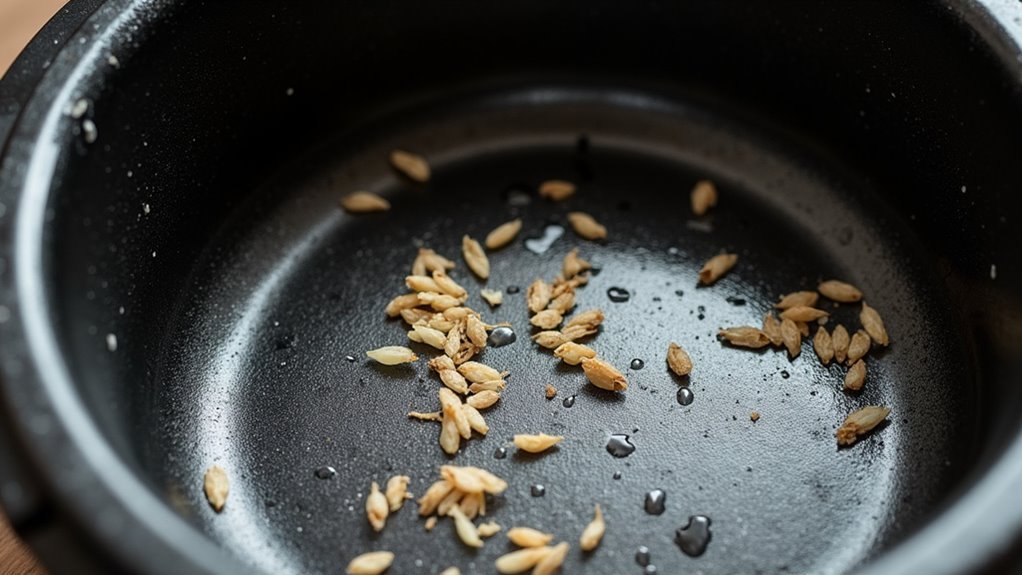
Although rice cookers promise convenience, their non-stick surfaces actually create more hassle than you’d expect. We’re stuck using only plastic or wooden utensils—metal spoons are off-limits since they’ll scratch the coating. These non stick limitations mean we can’t just grab whatever’s handy from our drawer.
The maintenance challenges don’t stop there. Hand washing becomes mandatory because dishwashers might damage the surface. We need gentle cleaners too, which honestly feels like babying our appliances. Over time, the coating inevitably wears down anyway, making rice stick despite our careful efforts. It’s frustrating when convenience appliances require such meticulous care.
Potential for Burning and Uneven Cooking Results
Even when we follow the instructions perfectly, rice cookers can still let us down with frustrating cooking inconsistencies. You know how disappointing it is when you lift that lid expecting fluffy, perfect rice, only to find the bottom layer burned to a crisp while the top grains are still crunchy—it’s like the heat just couldn’t figure out where it wanted to go. We’ve all been there, and honestly, it makes you wonder if these machines are as foolproof as they’re supposed to be. Additionally, it’s worth noting that while rice cookers can provide consistent results with perfectly cooked rice, they are not immune to the occasional mishap.
Bottom Rice Burns
While rice cookers promise foolproof results, we’ve all experienced that sinking feeling when we lift the lid to find a layer of burnt rice stuck to the bottom. This happens because heat concentrates at the bottom layer, especially in entry-level models without automatic shut-off features. Well, burn prevention techniques like stirring every 2-3 minutes can help, but it defeats the “set it and forget it” appeal. Rice cooker maintenance is essential too – leftover residue creates hot spots. Regular cleaning is key to preventing this issue, as leftover food can cause uneven cooking. We’re basically babysitting our rice anyway, so maybe the convenience isn’t as foolproof as advertised.
Uneven Heat Distribution
The burning issue we just covered is actually part of a bigger problem – most rice cookers just can’t distribute heat evenly throughout the pot. Well, cheaper models especially struggle with this since they lack advanced technology like induction heating. You know, the heat stays concentrated at the bottom while the top barely gets warm enough. This creates significant temperature variations that, honestly, make consistent results nearly impossible. When we’re talking about cooking capacity, larger batches make this worse. The heat retention isn’t uniform either, so we end up with mushy rice on top and crispy stuff at the bottom. Additionally, the slow cooking option of some rice cookers can exacerbate these issues, as uneven heat can lead to inconsistent flavor development in dishes.
Slower Cooking Times Compared to Stovetop Methods
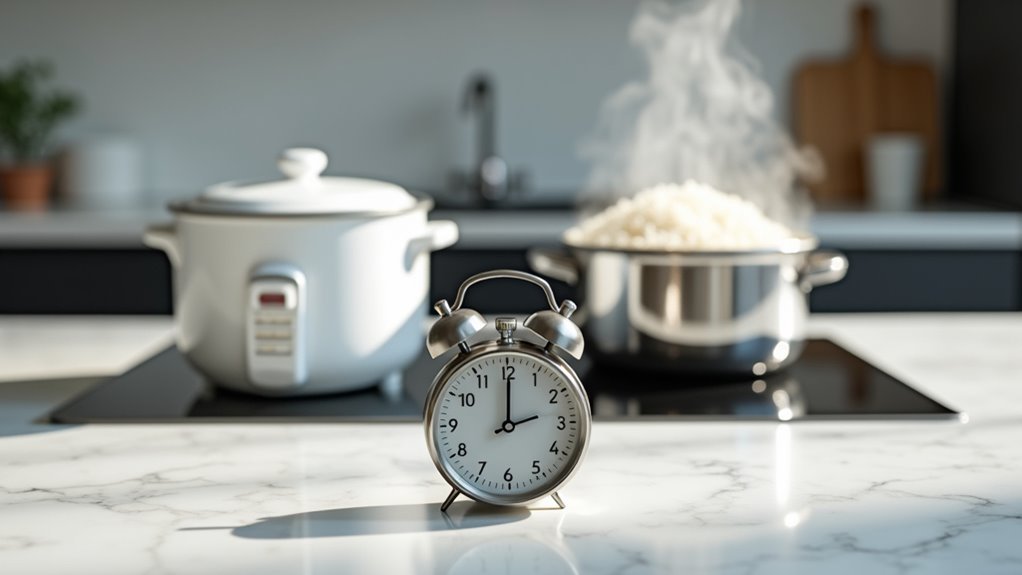
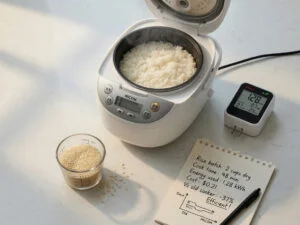
When we’re comparing rice cookers to stovetop methods, there’s actually a pretty significant time difference that might surprise you. While your rice cooker is chugging away for 30-40 minutes on a basic 2-cup batch, you could’ve already finished cooking that same rice on the stovetop in under 20 minutes. We think this speed advantage makes stovetop cooking the clear winner when you’re pressed for time, though you’re obviously trading some of that hands-off convenience for efficiency.
Time Comparison Analysis
If you’re someone who values speed in the kitchen, rice cookers might actually work against you. When we’re rushing to get dinner on the table, every minute counts. Basic white rice takes under 20 minutes using stovetop cooking techniques, but rice cookers need 30-40 minutes for the same 2-cup batch. That’s nearly double the time! The automatic cycles that make rice cookers so convenient also make them slower for meal preparation.
| Method | Time Required | Preheating | Best For |
|---|---|---|---|
| Stovetop | Under 20 min | Immediate | Quick meals |
| Rice Cooker | 30-40 min | Variable | Convenience |
Stovetop Speed Advantages
Since stovetop cooking gives us complete control over the heat source, we’re able to slash cooking times dramatically compared to rice cookers. The stovetop convenience becomes obvious when we’re rushing to get dinner ready—basic white rice finishes in under 20 minutes versus the 30-40 minutes rice cookers demand.
This cooking control translates into real advantages:
- Immediate heat adjustment for faster results
- No waiting for automated cycles to complete
- Direct monitoring without guessing what’s happening inside
When time’s tight, that extra control makes all the difference in meal preparation efficiency.
Efficiency Trade-offs
While rice cookers promise hands-off convenience, they’re basically trading speed for automation—and that trade-off isn’t always worth it. When we’re rushing to get dinner ready, those extra 10-20 minutes really add up. The lack of preparation flexibility becomes obvious when unexpected guests arrive or plans change last minute. Additionally, slow cookers are ideal for roasts and stews, further highlighting the efficiency trade-offs involved.
| Cooking Method | Time Required | Best For |
|---|---|---|
| Rice Cooker | 30-40 minutes | Meal planning ahead |
| Stovetop | Under 20 minutes | Quick meals |
| Instant Pot | 12-15 minutes | Balance of speed/convenience |
| Microwave | 10-12 minutes | Emergency situations |
Sometimes time saving alternatives just make more sense for busy households.
Storage Space and Weight Considerations
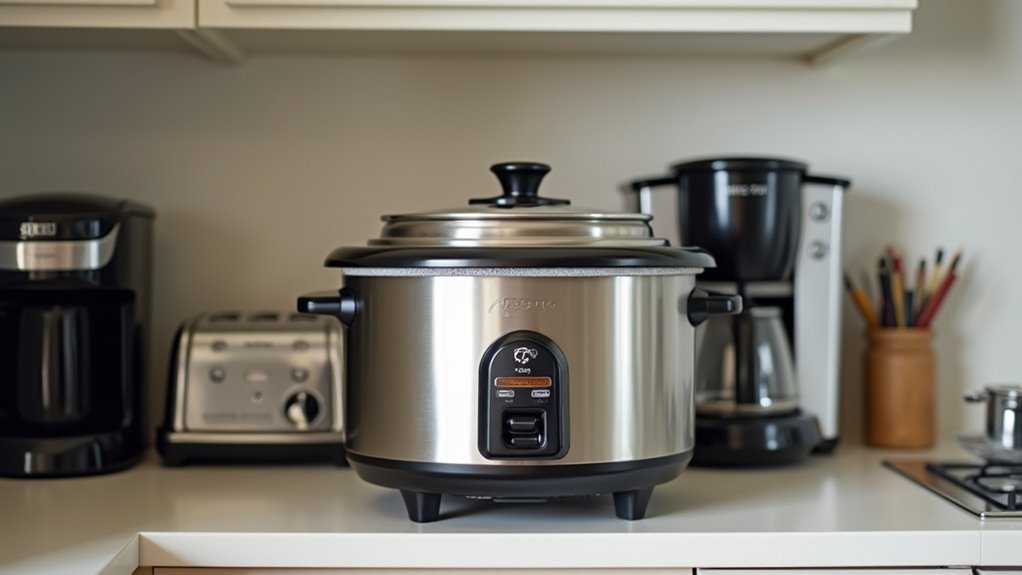
Bulkiness becomes a real headache when you’re dealing with rice cookers, especially if your kitchen’s already cramped. These appliances don’t exactly play nice with limited counter space, and finding adequate storage solutions can be frustrating.
We’re talking about appliances that weigh anywhere from 3 to over 10 pounds – those induction heating models are particularly heavy. Here’s what makes storage challenging:
- Vertical clearance requirements for bulky designs
- Dedicated shelf space that limits other kitchen items
- Awkward weight distribution making them cumbersome to move
You’ll probably find yourself dedicating prime real estate just for one appliance. Additionally, many rice cookers come equipped with advanced features that can increase their size and storage needs.
Frequently Asked Questions
What Is the Disadvantage of a Rice Cooker?
We’ve found rice cookers have limited versatility beyond cooking rice, plus maintenance issues like potential burning without stirring and careful cleaning requirements for non-stick surfaces that can scratch easily.
What Is the Common Problem of Rice Cookers?
We commonly face rice sticking to the bottom, which affects rice quality, and timing issues with cooking time that lead to overcooked or undercooked results when we don’t monitor properly.
Is It Healthy to Use a Rice Cooker?
Like a nutritional goldmine, we’d say rice cookers are healthy kitchen allies. They offer excellent nutritional benefits by preserving vitamins and cooking efficiency that encourages us to eat more whole grains regularly.
Are Rice Cookers Actually Worth It?
We’d say rice cookers are worth it if you cook rice frequently. After doing a price comparison and considering cooking efficiency, they’re convenient but slower than stovetop methods and less versatile overall.