
We’ve all been there—rushing out the door and suddenly wondering if we remembered to turn off the stove. Well, modern electric cookers promise to solve this anxiety with automatic shut-off technology, but here’s the thing: they’re not always as reliable as we’d hope. You know, these systems depend on sensors that can be thrown off by something as simple as steam or a dirty surface. The question isn’t whether this technology works, but rather when it might fail you.
How Automatic Shut-Off Technology Works in Electric Cookers
When we’re cooking dinner and get distracted by a phone call or forget we’ve left something on the stove, automatic shut-off technology acts like a safety net that’s got our backs.
This clever system uses sensors to detect whether cookware’s actually on the electric stove. If it doesn’t sense anything for, well, maybe 30 minutes to 2 hours depending on your model, it’ll automatically turn off the heating elements.
Some units even include tip-over switches and work alongside smoke detection systems. It’s basically like having a vigilant kitchen assistant that never gets tired.
Types of Automatic Shut-Off Systems Available
While all automatic shut-off systems share the same goal of keeping us safe, they actually work in pretty different ways depending on what type you’ve got.
We’re talking about some pretty clever technology here that’s designed to step in when things go wrong.
Here are the main types you’ll find:
- Timer-based systems – These shut down your electric stove after a set period of inactivity
- Sensor-based systems – Use smoke detector technology or motion sensors to monitor activity
- Cookware detection – Automatically turns off when no pots or pans are detected
- Tip-over switches – Instantly shut off if the appliance gets knocked over
Factors Affecting Reliability of Auto Shut-Off Features
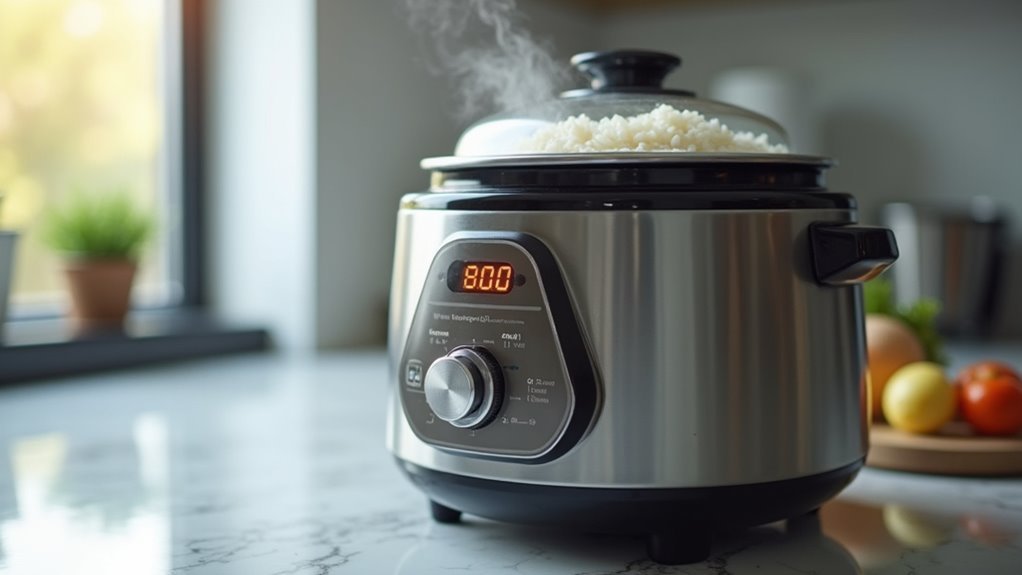
Although automatic shut-off systems are designed to be our safety net, their reliability isn’t foolproof – and honestly, that’s something we need to talk about.
Several factors can throw these systems off course. Steam and smoke from cooking can actually confuse the sensors, making them think everything’s fine when it’s not.
We’ve got to keep those sensor areas clean too – food debris is like putting tape over a smoke detector.
The quality of your cooker matters tremendously, and using incompatible cookware for any period of time will definitely compromise your automatic shut-off reliability. Additionally, proper cleaning of the steamer tray is essential to ensure that the sensors function correctly.
Testing and Maintenance of Automatic Safety Systems
Knowing all these potential pitfalls, we can’t just cross our fingers and hope our automatic shut-off systems work when we need them most. Regular testing and maintenance aren’t just recommended—they’re essential for kitchen safety.
Think of it like checking your smoke detector batteries. We need to be proactive about these safety features:
- Test your automatic shut-off monthly by following your user manual’s guidelines
- Check sensors and control panels for obstructions or obvious malfunctions
- Replace faulty components immediately—don’t wait until it’s too late
- Schedule periodic inspections with qualified technicians for thorough system evaluation
Common Malfunctions and Warning Signs
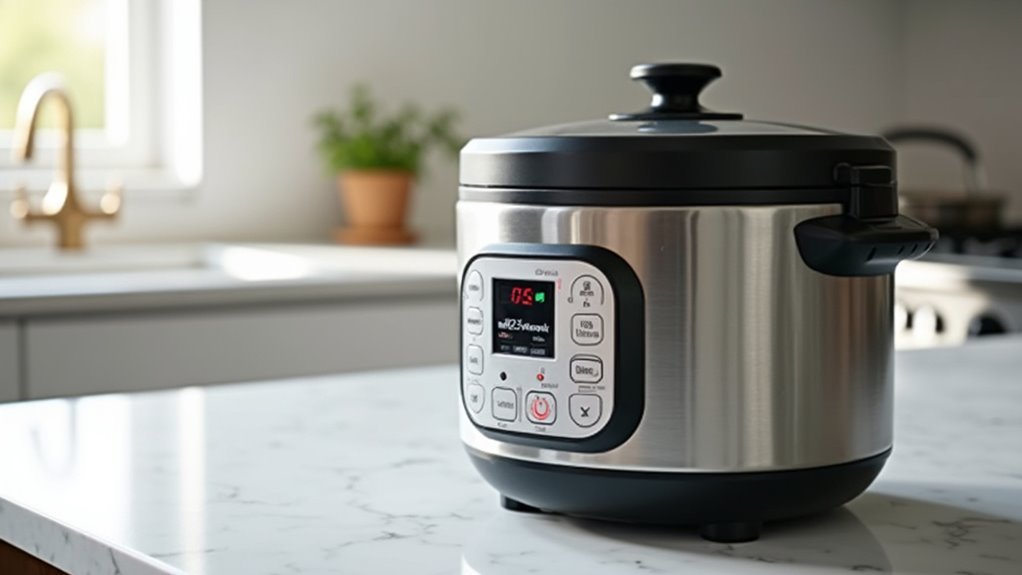
Even the most reliable automatic shut-off systems can develop problems over time, and—well, let’s be honest—recognizing the warning signs early can be the difference between a minor inconvenience and a serious safety hazard.
We’ve noticed that faulty sensors are probably the biggest culprit, failing to detect cookware and creating a RISK OF FIRE. When automatic shut systems don’t respond consistently, that’s your first red flag.
| Warning Signs | What It Means |
|---|---|
| Inconsistent shut-off responses | Sensor malfunction |
| Unusual sounds/error codes | Internal system failure |
| Circuit breaker trips frequently | Electrical problems |
You know, those indicator lights aren’t just decoration—they’re essential safety features we shouldn’t ignore.
Best Practices for Maximizing Auto Shut-Off Effectiveness
Now that we’ve covered the warning signs to watch for, let’s talk about what we can actually do to keep these safety systems working at their best.
Think of your electric stove’s automatic shut-off like a smoke detector—it needs regular attention to function properly. We can’t just set it and forget it.
Here’s what we should be doing:
- Test the timer switch periodically by following your user manual’s instructions
- Keep burners clean and free of debris buildup
- Use properly-sized cookware that fits the heating elements
- Schedule routine maintenance to guarantee sensors work correctly
Frequently Asked Questions
Do Electric Ovens Automatically Shut Off?
Many electric ovens do automatically shut off after 12-24 hours for cooking safety. However, we recommend checking your model’s manual since not all include this automatic shut off feature for energy efficiency.
What Happens if I Accidentally Leave the Electric Stove On?
Ironically, we’ll face bigger problems than burnt dinner. Leaving your electric stove on creates serious safety concerns including fire hazards from overheating and significant energy waste that’ll spike your electricity bill unnecessarily.
What Is the Automatic Stove Shut off for Seniors?
Automatic stove shut-off for seniors is stove technology that turns off cooking surfaces after detecting inactivity, enhancing senior safety by preventing cooking hazards from forgotten burners or unattended meals we might leave on.
What Happens if an Electric Oven Is Left on All Night?
If we leave an electric oven on overnight, we’re risking serious fire hazards and significant energy waste. We should always implement proper safety precautions like double-checking our appliances before bed.