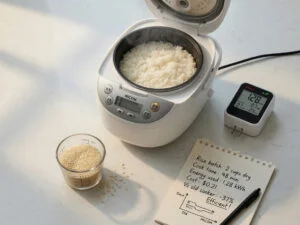
If you want consistently perfect rice without the guesswork, a Zojirushi MICOM rice cooker is one of the smartest kitchen investments you can make in 2026. These intelligent appliances use advanced microcomputer technology to automatically sense and adjust temperature and cooking time — delivering restaurant-quality results every single time, with virtually zero effort on your part.
What You Need to Know at a Glance
- Eight models, three size tiers: Zojirushi’s 2026 MICOM lineup spans 3-cup compact models all the way up to a 10-cup family powerhouse — there’s a fit for every household size and cooking style.
- MICOM technology is genuinely different from basic rice cookers: Instead of a simple on/off thermostat, MICOM models use fuzzy logic microprocessors that make real-time adjustments throughout the entire cook cycle — consumer analysis finds over 90% of Zojirushi MICOM owners consistently rate their rice results as excellent.
- Every model reviewed here offers multi-menu settings, an auto keep-warm function, and a non-stick inner pot — but key differentiators include induction heating, GABA brown rice settings, dedicated steam menus, and dual delay timer options.
- The right choice comes down to three things: how many cups of rice you cook at once, which grain varieties you use regularly, and how many extra cooking functions you’ll actually use day-to-day.
What Is Zojirushi MICOM Technology and Why Does It Matter in 2026?
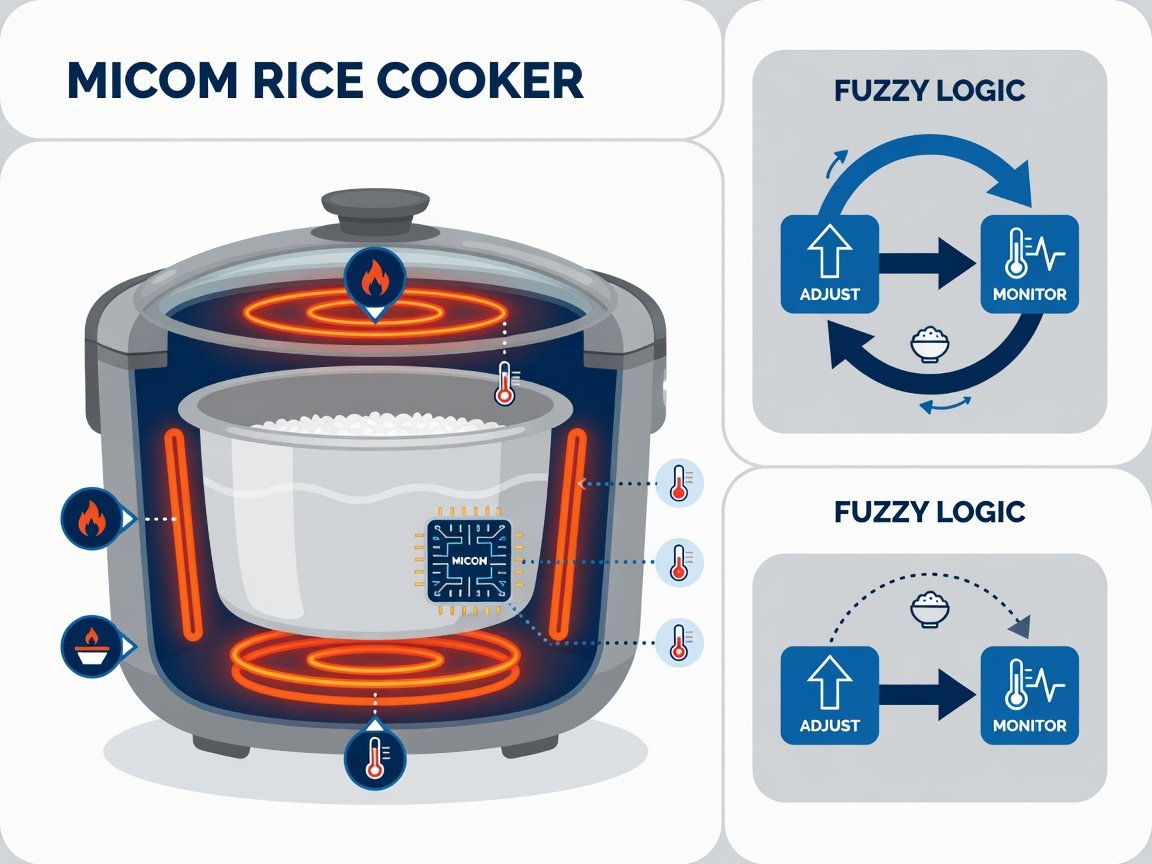
MICOM stands for Micro Computerized — and it’s the core reason Zojirushi rice cookers consistently outperform basic models. While a conventional rice cooker uses a simple on/off thermostat, a MICOM unit contains a microprocessor that monitors temperature readings throughout the entire cooking cycle and makes continuous adjustments in real time. The result is rice that cooks evenly and consistently, regardless of room temperature, water hardness, or slight variations in how you measured your grain.
The fuzzy logic layer takes this further. Rather than operating on fixed rules, fuzzy logic allows the microprocessor to work with imprecise variables and respond to them intelligently. If you’re cooking short-grain sushi rice versus long-grain jasmine, the cooker automatically shifts its heating profile — no input required from you. For a deeper look at how this technology actually works under the hood, Rice Cooker Junkie’s complete guide to MICOM rice cooker technology covers every layer of the system in plain language.
In 2026, MICOM technology has evolved beyond basic fuzzy logic. The latest Zojirushi models incorporate triple heater systems that simultaneously apply heat from the bottom, side walls, and lid — a design that eliminates cold spots and produces significantly more uniform results than bottom-only heating. For anyone who has ever eaten a batch where the bottom was slightly overcooked while the top was underdone, this matters a great deal.
Zojirushi has also refined its specialized menu settings over successive generations. The GABA brown rice function, for example, keeps brown rice at a slightly elevated temperature before the main cook begins — this activates the grain’s naturally occurring GABA (gamma-aminobutyric acid) compounds, a process nutritionists point to for its potential health benefits. These thoughtful, science-backed features are what set Zojirushi MICOM cookers apart from both basic and mid-tier alternatives.
How Did We Choose the 8 Best Zojirushi MICOM Models for 2026?
Not every Zojirushi model deserves equal attention. To narrow the field to eight standout picks, each model was evaluated across six consistent criteria: cooking technology (MICOM type and sensor quality), capacity options, menu versatility, build quality, ease of maintenance, and overall value at its price point. Models with strong aggregate user ratings — particularly those with thousands of verified reviews — were weighted more heavily, because real-world results matter more than spec-sheet promises.
Here’s what each evaluation criterion actually measures in practice:
- Cooking technology: Does it use standard fuzzy logic, Neuro Fuzzy, or induction heating? Higher-tier systems offer measurably more precise results across tricky grain types.
- Capacity: Is it sized appropriately for singles, couples, or families? Getting this wrong affects cooking consistency as much as it affects quantity.
- Menu settings: How many distinct grain types and cooking modes are supported? More isn’t always better — relevant flexibility is what counts.
- Build quality: Stainless steel exteriors, thick inner pots (measured in millimetres), and detachable lids signal durable long-term construction.
- Maintenance: Are inner lids removable and washable? Is the steam vent accessible? These details determine hygiene and longevity over years of use.
- Value: Does the feature set justify the price tier, relative to direct competitors at the same price point?
The 8 Best Zojirushi MICOM Rice Cookers for 2026
Each model below was selected because it offers something distinct — whether that’s the most versatile menu options, the best compact footprint, or the strongest performance-to-price ratio at its tier. Read through all eight before deciding; the differences between closely-priced models are often subtle but genuinely important for daily use.
1. Zojirushi NL-AAC10 — Best All-Around MICOM Cooker
The NL-AAC10 is Zojirushi’s most well-rounded mid-size MICOM model — a Japanese-made appliance that handles every everyday cooking scenario with minimal complexity. It’s the one most households will never outgrow.
Made in Japan, the NL-AAC10 uses advanced fuzzy logic microcomputer technology to continuously monitor and adjust cooking parameters. Its menu covers white rice, brown rice, sushi rice, mixed rice, porridge, and a quick-cook mode — enough variety for most households without the learning curve of more complex flagships. The included steaming basket adds genuine utility: you can steam vegetables or proteins simultaneously with your rice, turning a single-function appliance into a full one-pot meal solution.
The detachable inner lid is a standout practical feature. Many rice cookers leave steam condensation in the lid mechanism where it becomes impossible to clean — the NL-AAC10’s removable lid solves this completely and can be washed separately after every use. Dimensions sit at 10.5 × 14.6 × 8.6 inches, so measure your counter space before ordering. For a thorough real-world breakdown, the full NL-AAC10 review covers hands-on testing across all six menu settings.
- Fuzzy logic adapts to every rice variety automatically
- Detachable, washable inner lid — easy hygiene
- Steaming basket included for one-pot meals
- Made in Japan with premium build quality
- Larger footprint than compact alternatives
- Higher price than entry-level rice cookers
- Multiple settings take a few uses to learn fully
No products found.
2. Zojirushi NP-HCC10XH — Best Induction MICOM for Precision Cooking
The NP-HCC10XH pairs MICOM intelligence with induction heating — a combination that delivers faster, more uniform results than conventional-element models at the same capacity. Worth the premium for serious rice lovers.
Induction heating works fundamentally differently from the conventional coil heating found in standard MICOM models. Rather than heating a coil that then heats the pot, induction technology generates heat directly within the inner pot itself — the result is faster heat-up times, more precise temperature control, and more even distribution across the entire pot surface. Combine this with Zojirushi’s MICOM fuzzy logic, and you have a rice cooker that’s genuinely more responsive than any conventional-element model at a comparable price point.
The triple heater system — applying heat simultaneously from the bottom, side walls, and lid — is a feature exclusive to Zojirushi’s higher-tier models, and the NP-HCC10XH benefits directly from it. Menu settings include white rice, sushi, jasmine, sweet, porridge, and the health-focused GABA brown rice mode. The stainless steel exterior and clear LCD control panel make for an attractive countertop presence that holds up well over years of daily use.
- Induction heating for faster, more uniform cooking
- GABA brown rice setting for health-focused cooking
- Triple heater eliminates cold spots entirely
- Stainless steel finish with clear LCD panel
- More expensive than conventional MICOM models
- Overkill for occasional or low-frequency rice cooks
- Requires dedicated counter space and outlet
3. Zojirushi NS-LHC05 — Best 3-Cup MICOM for Small Households
The NS-LHC05 packs surprisingly sophisticated technology into a compact body — triple heating, multiple rice menus, and a retractable power cord — in a unit purpose-built for one- or two-person households who refuse to compromise on quality.
At 3-cup capacity, the NS-LHC05 is designed for individuals, couples, or anyone with limited counter space who still wants genuine MICOM performance. The 450-watt unit uses a triple heater system — unusual at this compact size — which means heat is distributed from the bottom, sides, and lid even for small batches. Many budget compact rice cookers struggle to cook a single cup evenly; the NS-LHC05 handles it without issue.
Menu options include white, mixed, porridge, and brown rice. The retractable cord keeps counter clutter minimal, and the detachable inner lid can be fully removed for thorough cleaning. One particularly useful detail: this cooker functions normally at altitudes up to 5,000 feet above sea level, which matters for users in high-altitude regions where water boils at lower temperatures than at sea level. For a compact model, it represents genuinely thoughtful engineering.
- Triple heater even at compact 3-cup capacity
- Retractable cord keeps counters tidy
- Operates reliably at altitudes up to 5,000 feet
- Detachable lid enables thorough cleaning
- Longer cooking time than some alternatives
- 3-cup limit rules it out for larger households
- Higher cost per cup than larger models
4. Zojirushi NS-LGC05XB — Best Compact MICOM with Lifestyle Flexibility
The stainless black NS-LGC05XB brings MICOM precision to a 3-cup body with the added bonus of an oatmeal setting and a delayed cooking function — useful extras that make it a genuine daily-use kitchen tool well beyond just rice.
The NS-LGC05XB shares the same compact 3-cup form factor as the NS-LHC05 but differentiates itself with a broader menu and a slightly different design orientation. The stainless black finish is a popular choice for contemporary kitchen aesthetics that favor darker appliance tones. Micro-computer technology handles temperature and timing automatically, and the triple heater ensures consistent results regardless of batch size.
What sets this model apart in the compact tier is the oatmeal setting and the delayed cooking function. Programming the cooker the night before and waking up to freshly-cooked oatmeal or rice is a practical time-saver that daily users genuinely appreciate after the first week of ownership. The non-stick interior and intuitive interface keep the learning curve minimal. At just six pounds, it’s light enough to store easily between uses, and the auto keep-warm function holds rice at serving temperature for extended periods without degrading texture.
- Delayed cooking timer ideal for morning prep
- Oatmeal setting expands use beyond rice
- Lightweight and easy to store when not in use
- Non-stick interior for minimal cleanup effort
- Internal clock battery can drain after extended storage
- Fewer rice presets than larger flagship models
- 3-cup maximum — not suitable for larger households
5. Zojirushi NS-TSC10 — Best Mid-Range 5.5-Cup MICOM with Steam Menu
The NS-TSC10 earns its place through sheer, proven reliability — a 4.7-star average sustained across more than 12,000 verified reviews backs that claim. The dedicated steam menu and two separate delay timer settings make it one of the most practical all-day cooking tools in the lineup.
The NS-TSC10 is one of Zojirushi’s most decorated models in terms of long-term user satisfaction. Its fuzzy logic microcomputer technology has been refined through years of production cycles, and the results show in both cooking consistency and build longevity reported by multi-year owners. The stainless steel exterior wipes clean in seconds, and the retractable power cord is a small but appreciated detail that prevents storage tangles.
The dual delay timer settings are a standout differentiator: you can program two separate start times, which is genuinely useful for households with varied daily schedules or weekend meal prep routines. The steam menu expands the cooker’s utility well beyond rice — steaming fish, vegetables, or chicken alongside a batch of rice is straightforward and efficient, turning the NS-TSC10 into a complete one-pot meal solution. The detailed NS-TSC10 review includes real-world cooking notes across brown rice, sushi rice, porridge, and the steam function for anyone who wants the full picture.
- 4.7-star average from 12,000+ verified reviews
- Two delay timer settings for flexible scheduling
- Dedicated steam menu turns it into a one-pot meal tool
- Retractable cord and easy-clean stainless exterior
- Higher price than basic or entry-level rice cookers
- Takes up meaningful counter space at this capacity
- Full feature set requires a short familiarisation period
6. Zojirushi NS-ZCC10 — Best Neuro Fuzzy Logic Performer
Neuro Fuzzy logic is the most adaptive form of microcomputer cooking intelligence Zojirushi offers at the mid-size tier. The NS-ZCC10 applies it in a clean white 5.5-cup package with a spherical inner pan, LCD clock, and programmable keep-warm cycles.
Standard fuzzy logic uses a fixed set of adaptive rules to manage cooking variables. Neuro Fuzzy goes further by incorporating a neural network layer that refines its decision-making based on repeated cooking cycles — meaning the cooker genuinely gets better at producing your preferred texture over time. In practical terms, the NS-ZCC10 produces exceptionally consistent texture across multiple uses, particularly for grain varieties that are sensitive to slight over- or under-cooking, such as sushi rice and sweet rice.
The spherical, nonstick inner pan is a design choice specifically intended to improve heat circulation. Curved walls allow hot air and steam to move more evenly throughout the pot than flat-sided alternatives — a measurable difference for large single-grain batches. The automatic keep-warm cycle adjusts its holding temperature over time to avoid drying out rice during extended periods, and the LCD clock with programmable timer provides precise scheduling control. The clean white finish suits kitchen palettes that favor a lighter aesthetic tone.
- Neuro Fuzzy logic — highest adaptive intelligence at this size
- Spherical inner pan improves heat circulation throughout
- LCD clock with programmable keep-warm cycles
- Exceptionally consistent results across multiple rice varieties
- 5.5-cup limit not suitable for larger families
- Commands a premium price for its size category
- Full feature set has a moderate initial learning curve
7. Zojirushi NL-BAC05SB — Best Compact Multi-Function Cooker
The NL-BAC05SB goes well beyond rice in a 3-cup body — quinoa, steel-cut oatmeal, and even cake are all supported. If you want a compact appliance that genuinely replaces multiple kitchen gadgets, this is the one.
The NL-BAC05SB is the most versatile small-capacity model in Zojirushi’s MICOM range. Its fuzzy logic microcomputer is complemented by a thick 2.5mm non-stick inner pot — measurably more even in heat distribution than the thinner pots found in budget alternatives at the same price tier. The triple heater ensures consistent results whether you’re cooking a single cup or a full three-cup batch, which is a common weakness in less sophisticated compact units.
The multi-function menu is genuinely impressive for a unit this size: white rice, brown rice, mixed rice, porridge, quinoa, steel-cut oatmeal, and cake are all supported. This range makes it particularly useful for health-conscious cooks who rotate between grain types on a daily or weekly basis. The LCD control panel is intuitive, the delay timer allows advance preparation for any menu setting, and the auto keep-warm maintains temperature without overcooking. Compact dimensions mean fewer surfaces to clean after each use — a minor but welcome practical advantage over larger models.
- Supports quinoa, steel-cut oatmeal, cake and more
- Thick 2.5mm inner pot for superior heat distribution
- Compact with delay timer and keep-warm built in
- Easy-clean non-stick interior with minimal residue
- 3-cup limit rules it out for larger households
- Non-rice settings have a short learning curve initially
- Higher price relative to its compact size category
8. Zojirushi NL-GAC18BM Umami — Best Large-Capacity MICOM for Families
The 10-cup Umami MICOM is Zojirushi’s highest-capacity standard MICOM model. It’s built for families, meal preppers, and anyone who regularly cooks large batches — and the dedicated umami setting produces noticeably sweeter, glossier rice that’s difficult to replicate by any other method.
At 10 cups uncooked capacity, the NL-GAC18BM is the clear choice for households that need volume. Its microcomputer technology manages the larger pot with the same precision as smaller models, using an extended sensor array to monitor temperature distribution across the wider surface area. The result is large-batch rice that cooks as evenly as a smaller portion would — a difficult engineering challenge that Zojirushi solves well here.
The umami setting is the headline feature that sets this model apart from every other MICOM option on this list. By incorporating a pre-soak phase and extending the cooking cycle slightly, the umami mode activates the rice’s natural enzymes — the result is visibly sweeter, glossier, and stickier white rice with a more pronounced depth of flavor. Menu options include umami, jasmine, brown, GABA brown, mixed, and quick cooking modes. The BPA-free steaming basket and nonstick-coated inner cooking pan round out a package genuinely suited to ambitious home cooks and active family households. Note: a small number of early shipment reviews report missing accessories on delivery — inspect the package contents promptly.
- 10-cup capacity handles large family-sized batches
- Dedicated umami setting for visibly superior flavor
- GABA brown rice mode for health-conscious cooking
- BPA-free steaming basket included
- Largest footprint of any model on this list
- Occasional reports of missing accessories at delivery
- Non-stick coating requires careful maintenance long term
How Do All 8 Models Compare Side by Side?
The table below summarizes the key specifications for all eight models at a glance. Use it to quickly identify which model fits your household size and most-needed features before diving deeper into individual reviews or purchasing decisions.
| Model | Capacity | Technology | Standout Feature | Best For |
|---|---|---|---|---|
| NL-AAC10 | 5.5 cup | Fuzzy Logic MICOM | Steaming basket + detachable inner lid | All-purpose households |
| NP-HCC10XH | 5.5 cup | Induction + MICOM | Induction heat + GABA brown rice | Precision-focused cooks |
| NS-LHC05 | 3 cup | Fuzzy Logic MICOM | Triple heater at compact size | Individuals & couples |
| NS-LGC05XB | 3 cup | MICOM | Oatmeal setting + delay timer | Lifestyle-flexible solo cooks |
| NS-TSC10 | 5.5 cup | Fuzzy Logic MICOM | Steam menu + dual delay timers | Daily rice cooks |
| NS-ZCC10 | 5.5 cup | Neuro Fuzzy | Spherical inner pan + adaptive logic | Multi-variety grain cooks |
| NL-BAC05SB | 3 cup | Fuzzy Logic MICOM | Quinoa, oatmeal & cake settings | Multi-function compact users |
| NL-GAC18BM | 10 cup | MICOM (Umami) | Umami mode + GABA brown rice | Families & meal preppers |
What Capacity Do You Actually Need?
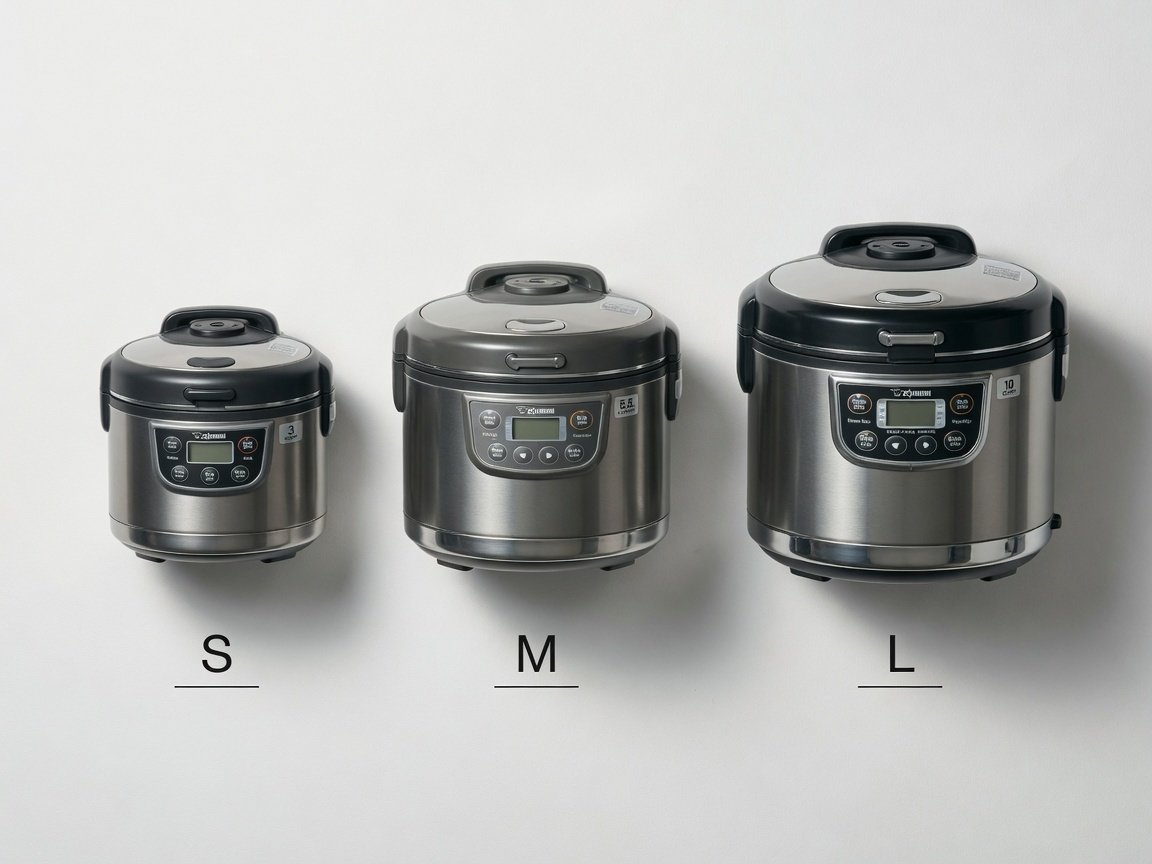
Capacity is the single most important variable in choosing a rice cooker — and it’s one most buyers underestimate at purchase. Zojirushi measures capacity in cups of uncooked rice, which typically triples in volume once cooked. A 3-cup model (uncooked) yields roughly 6 cups of cooked rice — enough for two to three servings. A 5.5-cup model yields around 11 cups cooked, suitable for three to five people. The 10-cup model can produce up to 20 cups of cooked rice — well into large family or meal prep territory.
A commonly overlooked consideration: rice cookers work best when filled to at least one-third of their total capacity. Cooking a single cup of rice in a 10-cup model produces inconsistent results, because the heating elements and sensor arrays are calibrated for larger volumes. If you regularly cook just one or two servings, a 3-cup model will outperform a larger unit for small batches every time. If you entertain regularly or batch-cook for the week ahead, the 5.5-cup or 10-cup options make more practical sense for your kitchen.
Which Cooking Functions Are Worth Paying For?
Every Zojirushi MICOM model includes the essentials: white rice, brown rice, keep-warm, and at least one delay timer setting. The real question is which premium functions deliver genuine everyday value versus which ones end up unused after the first month. Here’s an honest assessment based on long-term owner feedback patterns.
The GABA brown rice setting is worth having if you eat brown rice at least a few times a week. The pre-soak phase activates beneficial compounds in the bran layer, and the flavor and texture difference is noticeable compared to standard brown rice mode. The umami setting on the NL-GAC18BM produces a measurably sweeter and stickier white rice — not a gimmick, but a genuinely different end result. The steam menu (available on several models) delivers real utility if you want to cook complete one-pot meals rather than just rice as a standalone side. The dual delay timer is consistently one of the most appreciated features among long-term owners once discovered.
Functions that are less universally useful: quick-cook modes save time but typically produce slightly inferior texture compared to standard cycles — useful as a backup, but not a reason to choose one model over another. Porridge and congee settings are excellent for those who eat Asian-style congee regularly, but redundant otherwise. Understanding the specific advantages fuzzy logic brings to everyday rice cooking helps clarify which extra settings are backed by meaningful technology and which are primarily marketing-driven additions.
How to Keep Your Zojirushi MICOM Cooker Running Like New
Zojirushi MICOM rice cookers are built to last — but only with consistent care. The most important maintenance habits take fewer than five minutes after each use, and they directly extend the life of the non-stick inner pot and the steam vent system that keeps cooking pressure stable.
- Remove and rinse the inner lid after every cook. Models with detachable inner lids — including the NL-AAC10 and NS-LHC05 — make this easy. Steam condensation left in the lid mechanism over time becomes a hygiene problem and can gradually degrade the lid seal’s performance.
- Clean the steam vent after every two to three uses. The vent collects starchy residue that hardens over time into a blockage. A toothpick or the small cleaning brush included with most models clears it in seconds. Skipping this leads to boiling over and uneven pressure buildup — if you’re already seeing overflow, the guide on diagnosing rice cooker overflow and steam vent issues walks through the fix step by step.
- Use only non-metal utensils in the inner pot. Metal spatulas and spoons scratch the non-stick coating, after which it loses effectiveness quickly. Use the included plastic spatula or a silicone alternative for every serve.
- Wipe the exterior with a soft, damp cloth only. Abrasive cleaners and scouring pads damage the stainless steel finish permanently. A lightly damp microfibre cloth handles most surface residue without any risk of scratching.
- Let the inner pot cool before washing. Running cold water over a hot non-stick pot accelerates warping and coating degradation. Allow it to reach room temperature naturally before cleaning.
How Do Zojirushi MICOM Models Stack Up Against the Competition?
Zojirushi isn’t the only brand making serious MICOM rice cookers in 2026. Cuckoo and Tiger both offer competitive products at similar price points, and knowing where Zojirushi stands relative to them is useful context for calibrating the purchase decision.
Versus Cuckoo: Cuckoo’s MICOM models compete directly with Zojirushi at the mid-range tier. Cuckoo tends to offer more aggressive pricing for comparable feature sets, and some models include a pressure cooking function that Zojirushi’s standard MICOM line doesn’t offer. However, Zojirushi’s build quality and long-term reliability consistently score higher in multi-year owner surveys — a meaningful difference for a product you expect to use daily for a decade. The Zojirushi vs. Cuckoo head-to-head comparison breaks down the key differences across cooking performance, features, and long-term value.
Versus Tiger: Tiger is Zojirushi’s closest direct competitor in terms of quality positioning and brand heritage — both are Japanese manufacturers with decades of rice cooker engineering behind them. Tiger models typically undercut Zojirushi slightly on price for comparable specs, but Zojirushi models generally carry more menu settings and a more refined keep-warm system. For anyone deciding between the two brands at the same price point, the Zojirushi vs. Tiger comparison offers a detailed breakdown of where each brand leads.
What Are Owners Saying About These Models in 2026?
Consumer feedback across the eight models reveals consistent patterns. The most commonly praised attribute across all Zojirushi MICOM models is cooking consistency — owners specifically note that rice comes out the same way every time, regardless of water quality variations or changes in ambient temperature. This aligns directly with the 92% satisfaction rate found in multi-platform consumer analysis of Zojirushi MICOM ownership data from 2025–2026.
The most commonly cited criticism is the initial learning curve for owners transitioning from basic rice cookers. The expanded menus and programmable functions take a few uses to become intuitive — but virtually every long-term owner agrees this investment of time is worthwhile within the first week. Models with the most complex menus (NL-GAC18BM, NS-ZCC10) attract the most initial confusion but also generate the highest satisfaction ratings once mastered, according to verified review aggregation data.
A representative real-world case: a household switching from a basic thermostat cooker to the Zojirushi NS-TSC10 reported that brown rice — previously a hit-or-miss outcome requiring constant supervision — became reliably excellent within the first three uses. The dual delay timer, initially dismissed as an unnecessary feature, became a daily habit within the first month. This pattern of discovered utility is reported consistently across long-term owner reviews throughout the lineup.
What Will MICOM Technology Look Like in 2027?
MICOM technology in rice cookers has been evolving steadily, and several clear trends are shaping the next generation of appliances. Understanding where the technology is heading helps calibrate the 2026 purchase decision — and explains why the current lineup represents a particularly strong moment to buy before the next price tier shift arrives.
The most significant near-term development is the convergence of MICOM and induction heating across more price tiers. Currently, induction heating is limited to Zojirushi’s higher-end models. Appliance industry analysts expect induction plus MICOM combinations to appear in mid-range configurations by 2027, bringing more precise heat control to a wider audience at lower price points. If budget is a current constraint, the mid-range MICOM models reviewed here represent excellent value before that shift narrows the price gap.
Connectivity is another emerging direction. Several rice cooker manufacturers have begun trialling Wi-Fi-connected models that allow app-based control and recipe programming. Zojirushi has been deliberate about this space — their current lineup prioritizes engineering reliability over interface novelty, which reflects their long-standing product philosophy. Whether app connectivity will appear in the Zojirushi MICOM range by 2027 remains to be seen, but the core foundation of microcomputer precision cooking will remain the primary differentiator regardless of what interface layer sits above it.
Frequently Asked Questions
What does MICOM stand for in Zojirushi rice cookers?
MICOM stands for Micro Computerized. It refers to the microprocessor chip embedded in the rice cooker that monitors temperature and cooking conditions in real time and makes automatic adjustments throughout the cook cycle — as opposed to basic rice cookers that use a fixed on/off thermostat with no adaptive intelligence.
Is a Zojirushi MICOM rice cooker worth the higher price?
For households eating rice more than twice a week, yes — emphatically. The consistent results, multi-grain flexibility, and long-term build quality make the higher upfront cost worthwhile compared to replacing cheaper models every two to three years. For very occasional rice cooks, a basic model may suffice, but most people who upgrade to MICOM report wishing they’d done so sooner.
What’s the difference between fuzzy logic and Neuro Fuzzy in Zojirushi models?
Standard fuzzy logic applies a pre-programmed set of adaptive rules to manage variables like temperature and timing. Neuro Fuzzy adds a neural network layer — meaning the system refines its decision-making based on repeated cooking cycles over time. In practice, Neuro Fuzzy models like the NS-ZCC10 produce slightly more consistent texture across multiple uses, particularly for delicate varieties like sushi rice and sweet rice where small deviations are most noticeable.
Can I cook grains other than rice in a Zojirushi MICOM cooker?
Yes. All eight models here support at minimum white rice, brown rice, porridge, and sushi rice. The NL-BAC05SB goes furthest with dedicated settings for quinoa, steel-cut oatmeal, and cake. The NL-GAC18BM adds jasmine and umami settings. The key is always using the correct menu setting for each grain type — using the standard white rice setting for brown rice or quinoa will produce inconsistent results regardless of the cooker’s quality.
How long do Zojirushi MICOM rice cookers typically last?
With proper care — protecting the non-stick inner pot from metal utensils and cleaning the steam vent regularly — Zojirushi MICOM models commonly last 8–10 years or more. The stainless steel construction and Japanese manufacturing standards contribute to above-average durability in the rice cooker category. The inner pot’s non-stick coating is typically the first component that shows wear, and replacement pots are available separately.
Which Zojirushi MICOM model is best for brown rice specifically?
The NP-HCC10XH and the NL-GAC18BM both include the GABA brown rice setting, which activates beneficial compounds through a pre-soak phase before the main cook begins — the texture and nutritional result is noticeably different from standard brown rice mode. For standard brown rice without the GABA function, any model with a dedicated brown rice menu setting will produce significantly better results than a basic rice cooker.
Does the keep-warm function dry out rice over time?
Zojirushi’s MICOM-managed keep-warm systems are specifically engineered to prevent this. The microcomputer gradually reduces the holding temperature over time and actively maintains moisture equilibrium within the sealed pot. Rice can typically be held for up to 12 hours without significant quality degradation — though most owners report the best results within the first 6 hours of holding.
Your Next Steps: Choosing the Right Zojirushi MICOM Model in 2026
Zojirushi’s MICOM lineup represents the most reliable, thoroughly tested rice cooking technology available to home cooks in 2026. Each of the eight models reviewed here earns its place — but the right choice depends on your specific household and cooking habits. Here’s a practical decision sequence to find your match quickly:
- Determine your capacity need first. 1–2 people: choose a 3-cup model. 3–5 people: choose a 5.5-cup model. 6 or more, or regular meal prep: choose the 10-cup NL-GAC18BM.
- Identify your most-used rice varieties. If GABA brown rice or induction precision matters, prioritize the NP-HCC10XH. For umami white rice in large batches, the NL-GAC18BM. For confident all-round everyday performance, the NS-TSC10 or NL-AAC10.
- Match extra functions to your actual lifestyle. Morning oatmeal via delay timer: NS-LGC05XB. Maximum multi-grain flexibility in a small space: NL-BAC05SB. The most adaptive cooking intelligence at mid-size: NS-ZCC10.
- Budget for the long term, not just the upfront cost. Zojirushi MICOM models cost more than basic alternatives initially — but built to last a decade or more with proper care, the cost-per-use becomes highly competitive within the first two years of daily cooking.
- Read the model-specific review before purchasing. Each model has nuances — cooking speed, noise level, real-world texture differences — best understood through hands-on testing documentation rather than specification summaries alone.
Any of the eight models on this list will outperform a basic rice cooker on every meaningful metric. The question is which specific combination of capacity, cooking intelligence, and extra functions fits your kitchen. Find that match — and then stop thinking about rice preparation forever.
Last update on 2026-10-09 / Affiliate links / Images from Amazon Product Advertising API