Envision this: you’re standing at your kitchen sink, watching cloudy water swirl down the drain as you rinse your rice, and you can’t help but wonder—am I actually doing something useful here, or just wasting time? Well, we’ve all been there, staring at those tiny grains while our grandmother’s voice echoes in our heads about proper technique. The truth is, there’s real science behind this simple step, but maybe it’s not as straightforward as we think.
Why Rinsing Rice Matters for Your Rice Cooker
While you might think tossing rice straight into your rice cooker is the way to go, we’re actually missing a crucial step that can make or break our final dish. Rinsing removes that excess surface starch that’ll turn our rice into a gummy mess. Plus, it washes away dust and processing residue – honestly, you don’t want that in your dinner. The rice cooker benefits are huge when we start with clean grains. If you’re looking for rinsing alternatives, well, there really aren’t any great shortcuts that deliver the same fluffy, separated results. Additionally, rinsing rice also helps ensure that the water used during cooking yields the desired consistency and prevents overflow.
The Science Behind Starch Removal and Texture
Now that we comprehend how rinsing helps our rice cooker perform better, let’s look at what’s actually happening when we wash those grains. The starch composition of rice determines texture, and understanding this cooking chemistry helps us achieve better results.
When we rinse, we’re removing surface amylopectin—the sticky starch that makes grains clump together. Here’s what happens:
- Short grain varieties contain more amylopectin, requiring thorough rinsing.
- Long grain rice has higher amylose content, naturally resisting sticking.
- Water absorption begins during rinsing, improving cooking outcomes.
- Clear rinse water indicates effective starch removal.
- Proper rinsing creates fluffier, more separated grains. Additionally, using long-grain rice can enhance the light and fluffy texture you desire.
Best Techniques for Rinsing Different Rice Varieties
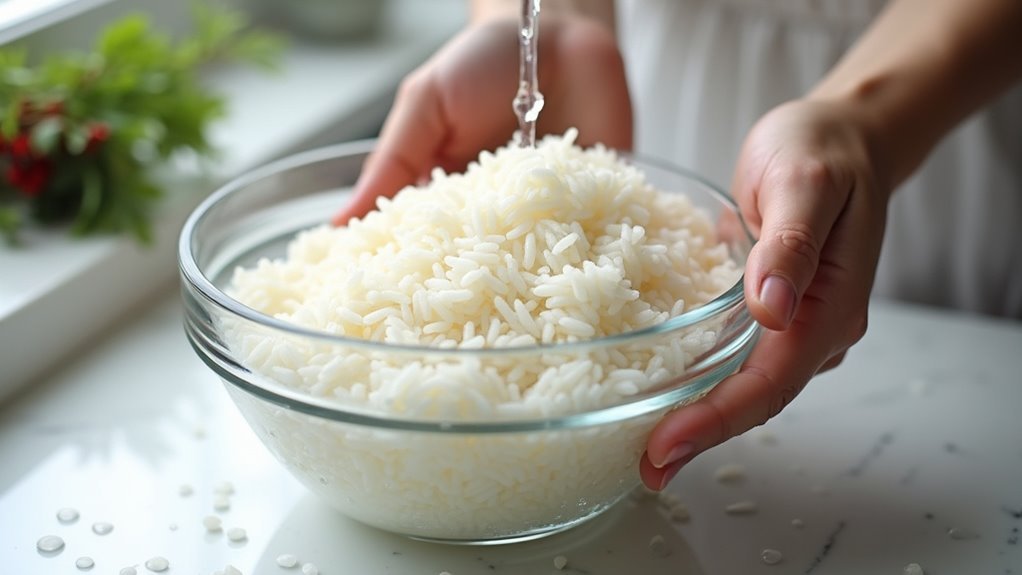
Different rice varieties are like different personalities—each one has its own quirks and needs special handling to bring out its best qualities. We’ve found that white rice responds well to the bowl method—just rinse with cool water until it runs clear. For brown rice, we prefer using a fine-mesh sieve since it’s gentler on that nutritious bran layer. Long-grain varieties like basmati really benefit from thorough rinsing to achieve those perfectly separated grains. Short-grain rice can be tricky, but rinsing helps reduce clumpiness. These rinsing techniques make all the difference for different rice varieties. Additionally, it’s important to note that brown rice requires more water when cooking, so adjusting your rinsing method can also enhance the final texture.
When to Skip Rinsing for Specific Dishes
Three specific situations call for keeping that starchy coating on your rice, and honestly, we used to make the mistake of rinsing everything until we learned better.
For risotto preparation and paella techniques, that natural starch is actually your best friend. Here’s when we skip the rinse:
- Risotto – The starch creates that signature creamy texture we’re after
- Paella with Calasparra rice – Helps develop the coveted crispy socarrat bottom
- Rice pudding – Starch provides essential creaminess and cohesiveness
- Steamed or baked rice dishes – The stickiness enhances flavor absorption
- Sushi rice – Starch contributes to proper texture and binding
Making risotto in a rice cooker is a convenient method that allows for consistent results without the need for constant stirring.
Sometimes less preparation creates better results.
Nutritional Impact of Rinsing Rice
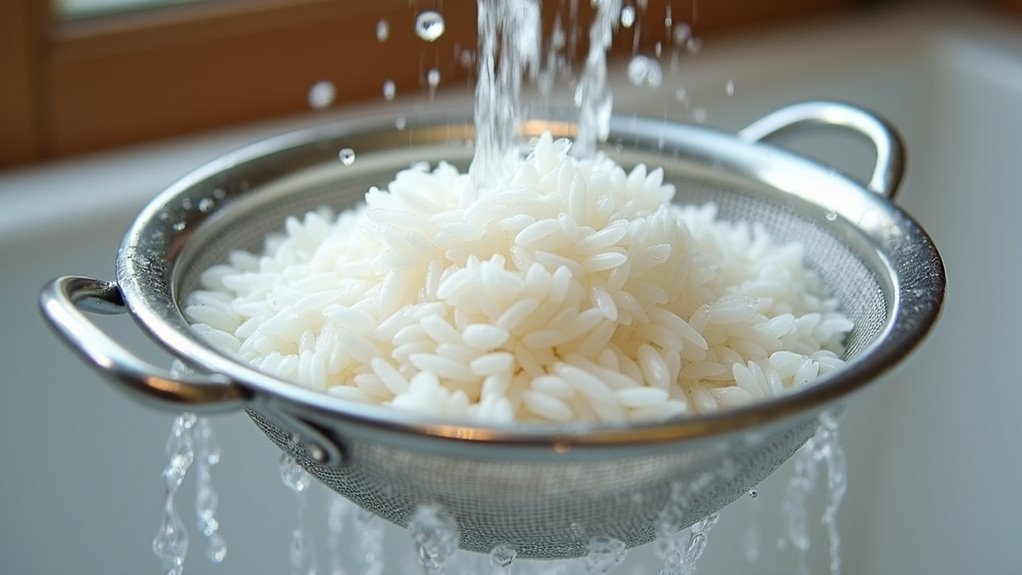
While we’ve been focusing on texture and cooking results, there’s actually another side to the rinsing debate that’s worth considering – what happens to the nutritional value of your rice.
Rinsing does cause some nutrient loss, particularly with water-soluble B vitamins. Enriched white rice gets hit the hardest since those added vitamins like folate and thiamine can literally wash down the drain. Brown rice fares better thanks to its protective bran layer offering superior vitamin retention. Additionally, brown rice is known for its health benefits, making it a nutritious choice regardless of rinsing.
But here’s the thing – we’re talking about pretty minimal nutritional impact overall. The benefits of cleaner, better-textured rice usually outweigh these small losses.
Frequently Asked Questions
What Happens if I Don’t Rinse Rice?
We’ll find varying starch levels create stickier, clumpier rice when unrinsed. While nutrient retention might slightly increase, we’re trading texture quality for minimal nutritional gains, plus risking debris and gummy consistency in our dishes.
Do Chefs Wash Rice Before Cooking?
Yes, most chefs wash rice as standard rice preparation. We follow this cooking technique because it removes excess starch, ensuring fluffy grains. However, we’ll skip rinsing for dishes requiring stickiness, like risotto.
Do Chinese Wash Rice Before Cooking?
Practice makes perfect—yes, we’ll find Chinese cooks consistently wash their rice before cooking. Chinese rice rinsing benefits include removing excess starch and achieving that coveted fluffy, separate-grain texture we’re after.
What Are the Pros and Cons of Rinsing Rice?
Rinsing rice improves rice texture through starch removal, preventing stickiness and ensuring fluffy grains. However, we’ll lose some water-soluble nutrients, especially in enriched varieties. The cleanliness benefits typically outweigh nutritional drawbacks for most cooking applications.