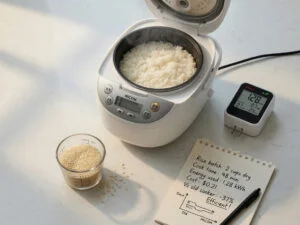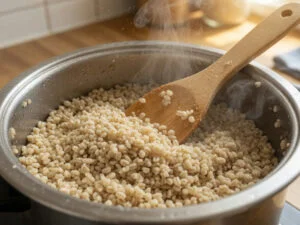
Funny how we were just discussing perfectly fluffy rice at dinner, and now here we are—probably because someone’s batch turned out less than stellar. We’ve all been there, staring at a pot of what should be simple white rice, wondering where things went wrong. The truth is, rice seems foolproof until it isn’t, and there are actually several sneaky mistakes that’ll sabotage your results before you even realize what’s happening.
Using the Wrong Water-to-Rice Ratio
While we’ve all probably been there—standing in the kitchen, confidently eyeballing the water and rice like we’re some kind of culinary genius—getting the water-to-rice ratio wrong is honestly one of the most common mistakes we make when cooking white rice. The standard rule? Two cups water per one cup rice. But here’s the thing—different rice varieties can be tricky, and proper water measurement matters more than we think. Too much creates mush; too little leaves you with crunchy disasters. Always check your package first, though, because some brands are sneaky with their ratios. Additionally, brown rice requires more water and a different cooking time, so be mindful of the type of rice you’re using.
Skipping the Rinse for Long Grain Varieties
Most of us probably grab that cup of rice and dump it straight into the pot without a second thought, but skipping the rinse for long grain varieties like Basmati and Jasmine is honestly setting ourselves up for disappointment. Those grains are coated with excess starch and processing residues that’ll turn our rice into a gummy mess. Proper rinsing methods involve cold water until it runs clear, followed by soaking for about thirty minutes. The soaking benefits include better texture and faster cooking. Without this step, we’re basically creating a sticky film around each grain. Additionally, rinsing helps to remove excess starch which contributes to the gummy texture of the cooked rice.
Cooking on High Heat Throughout
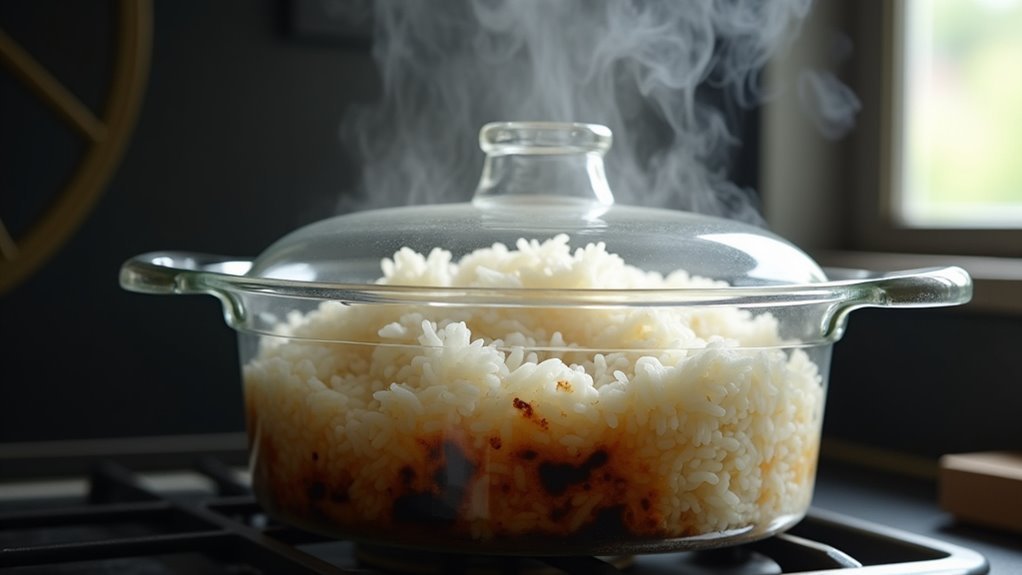
When we’re enthusiastic to get dinner on the table, cranking up the heat seems like the logical move, but it’s actually one of the worst things we can do to our rice. High heat creates chaos in our pot—water evaporates too fast, leaving us with crunchy, burnt disasters. Remember that gentle simmer is crucial for achieving perfectly cooked rice.
| Heat Level | Water Evaporation | Grain Texture | Our Dinner Dreams |
|---|---|---|---|
| High | Too Fast | Burnt/Hard | Crushed |
| Medium | Uncontrolled | Uneven | Frustrated |
| Low Simmer | Just Right | Fluffy | Fulfilled |
Even cooking requires patience. We need that gentle simmer for perfectly tender grains every time.
Stirring Rice While It Cooks
Our hands seem to have minds of their own around a pot of cooking rice—we can’t help but grab that spoon and give it a quick stir, thinking we’re helping things along. But here’s the thing: stirring rice while it cooks is actually sabotaging our efforts. Those stirring techniques we think are beneficial? They’re breaking the grains and activating excess starch, which creates that gloppy mess nobody wants.
- Broken rice grains clumping together like wet cement
- Sticky, gummy texture replacing the fluffy rice consistency we’re after
- Starch coating everything in an unappetizing, mushy layer
Additionally, proper water-to-rice ratio is crucial for achieving the ideal texture without stickiness.
Not Allowing Rice to Rest After Cooking
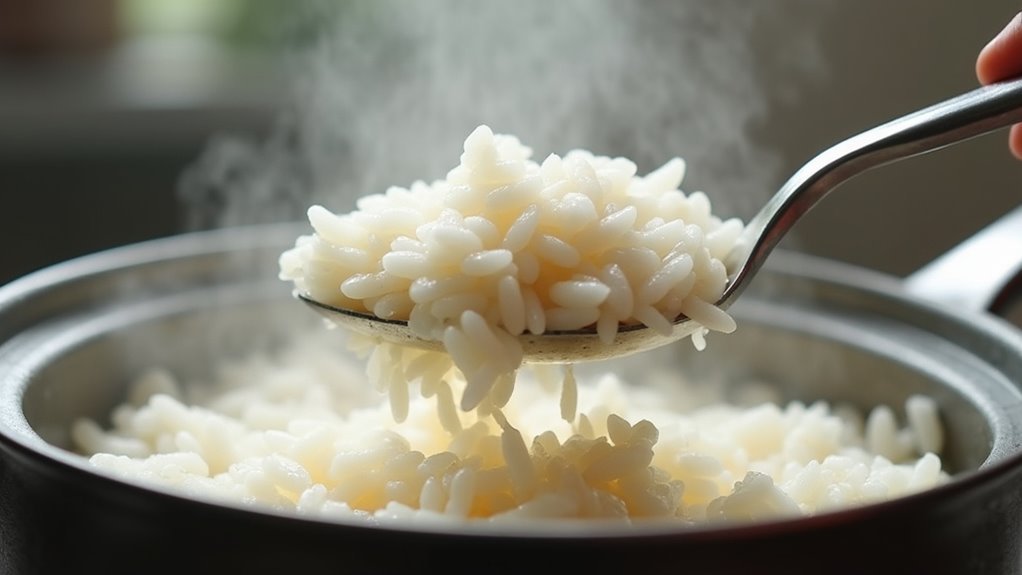
We’ve all been there—we’re hungry and ready to eat, so we serve the rice straight from the pot without letting it rest. Actually, I think this might be one of the most overlooked steps in rice cooking, but it’s essential for proper steam absorption and achieving that perfect fluffy texture. When we skip this resting period, we’re basically cutting short a natural process where the remaining moisture redistributes throughout the grains. Allowing the rice to sit for a few minutes can significantly enhance its texture and improve water absorption.
Steam Absorption Process
Although we’ve followed the cooking instructions to perfection, there’s one essential step that many of us—myself included—tend to rush through or skip entirely. The steam absorption process is actually vital for achieving that perfect rice texture we’re all after.
During those 10 minutes of resting, steam retention works its magic while moisture redistribution happens throughout each grain. Think of it like letting a sponge fully absorb water—you can’t rush it.
- Steam trapped under the lid continues cooking the rice gently
- Excess moisture moves from wet spots to drier grains
- Grains firm up and separate naturally without becoming mushy.
Additionally, this step is crucial because it allows the rice to take full advantage of the heating element that maintains the ideal temperature for fluffiness.
Texture Enhancement Benefits
Once the resting period does its work, you’ll notice something pretty remarkable about your rice’s texture. The resting benefits become obvious immediately – each grain feels distinct yet perfectly tender. It’s like the difference between a rushed conversation and one where everyone gets to finish their thoughts, you know? When we skip this step, we’re basically serving rice that hasn’t reached its full potential. The fluffing technique comes next – gently separating grains with a fork reveals that light, airy consistency we’re all after. Trust me, this simple step transforms ordinary rice into something actually worth eating. Additionally, allowing brown rice to rest can enhance its texture even further, making it a nutritious alternative to white rice.
Treating All Rice Types the Same Way
We often make the mistake of thinking rice is rice, but actually, different varieties need completely different approaches when it comes to water ratios, rinsing, and cooking times. You know, it’s like assuming all pasta cooks the same way – well, it just doesn’t work that way. Let’s look at why your long-grain rice method might be ruining your short-grain dishes, and how adjusting these three key factors can transform your results. Additionally, understanding the unique characteristics of different rice types can help you achieve the perfect texture and flavor for each dish.
Water Ratio Variations
Since we’ve all probably grabbed whatever measuring cup was handy and used the same water ratio for every type of rice, it’s no wonder our results can be, well, pretty inconsistent. Different rice varieties have unique water absorption properties that we can’t ignore.
Here’s what we’re dealing with:
- Jasmine rice needs about 1½ cups of water per cup of rice
- Basmati rice requires roughly 1¾ cups of water for proper cooking
- Brown rice demands around 2¼ cups of water due to its bran layer
Understanding these variations means we’ll finally get consistent, perfectly cooked rice every time. Additionally, optimal water-to-grain ratio is crucial for achieving the desired texture and taste in your rice dishes.
Rinsing Requirements Differ
Although most of us have been taught that rinsing rice is always the right move, this one-size-fits-all approach is actually working against us with certain varieties. We’re washing away nutrients and altering intended textures without realizing it.
| Rice Type | Rinse? | Reason | Soaking Techniques |
|---|---|---|---|
| Short grain | Yes | Removes excess starch | Brief rinse only |
| Jasmine | No | Preserves natural starch | Skip entirely |
| Basmati | No | Maintains cooking properties | Avoid pre-soaking |
| Sushi rice | Yes | Controls stickiness | Quick rinse, then cook |
Understanding these rinsing benefits helps us avoid texture disasters and achieve restaurant-quality results at home. For instance, properly rinsing and soaking Calrose rice enhances its texture for a fluffier outcome.
Cooking Time Adjustments
When we treat every grain the same way, we’re fundamentally asking a marathon runner and a sprinter to finish at identical times—it just doesn’t work. Different rice varieties demand distinct cooking time adjustments. Brown rice needs 40-50 minutes because its bran layer slows water absorption, while white rice finishes in 15-20 minutes. We can’t rush this process.
- Long grain varieties like Basmati cook faster and need less water than sticky short grain types
- Aromatic rice varieties benefit from 30-minute soaking before cooking
- Packaging instructions vary greatly between brands and should guide timing decisions
Forgetting to Season the Cooking Water
Most of us don’t think twice about the water we’re cooking rice in, but that’s actually one of the biggest mistakes we can make. When we skip seasoning techniques for our cooking water, we’re missing out on serious flavor absorption potential. Rice grains soak up whatever’s in that water—kind of like tiny sponges. Adding just ½ to 1 teaspoon of salt per cup makes a huge difference. Without it, you’ll end up with bland, disappointing rice. Well, you can also experiment with herbs or spices for even better results.
Frequently Asked Questions
What Are the Most Common Rice Cooking Mistakes?
Like when Sarah’s dinner party rice turned gummy and clumpy, we often make mistakes like not rinsing rice properly, overcooking rice, using wrong water ratios, stirring too much, and skipping rest time.
What Is the 5 5 5 Rule for Cooking Rice?
We use the 5-5-5 rule with five cups water, five cups rice, cooking five minutes in pressure cookers. This rice ratios method simplifies cooking techniques, ensuring consistent results for white rice without guesswork.
What Is the 1/2/3 Rule of Rice?
We use the 1/2/3 rule for perfect rice ratios: one cup rice, two cups water, three minutes cooking time after boiling. This method guarantees proper water absorption for fluffy, well-cooked grains every time.
What’s the Secret to Cooking Perfect Rice?
Picture fluffy, separate grains dancing in your bowl. We’ve mastered rice varieties through proper cooking techniques: rinse thoroughly, use correct ratios, avoid stirring, and let steam rest undisturbed for perfection.