You know, over 70% of home cooks struggle with sticky rice, yet restaurants seem to nail it every single time. We’ve all been there – you’re expecting fluffy, separate grains and instead get a gummy mess that’s, well, pretty disappointing. But here’s the thing: professional kitchens aren’t using some secret ingredient or fancy equipment we can’t access. They’re actually following specific techniques that most of us have never learned, and honestly, once you understand their approach, everything changes.
Restaurant Rice Cooking Equipment and Methods
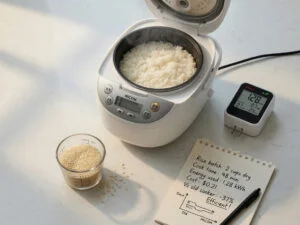
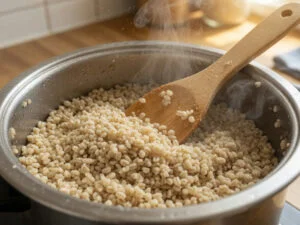
When you’re wondering how restaurants consistently serve perfect, non-sticky rice, the secret actually starts with their equipment and cooking methods. We’ve noticed that professional kitchens rely on heavy-bottomed pots or specialized restaurant rice cookers that maintain steady heat distribution. Think of it like having a reliable foundation – it prevents hot spots that cause sticking. Rice washing techniques are equally essential, and honestly, most home cooks don’t rinse thoroughly enough. Restaurants use fine mesh sieves to remove excess starch until the water runs clear. It’s probably the most overlooked step in achieving restaurant-quality results. Additionally, rinsing rice thoroughly helps to remove contaminants and excess starch, which contributes to a fluffier texture.
The Commercial Kitchen Water and Oil Technique
Once you’ve got the right equipment and washing technique down, there’s another trick that separates professional kitchens from home cooking – and it’s probably simpler than you’d expect. We add a small amount of oil directly to our cooking water. Whether it’s vegetable or olive oil, this technique works across different rice varieties – from jasmine to basmati. The oil coats each grain, reducing that sticky surface starch. We stick to our standard water ratios, then gently stir after adding rice to boiling water. It’s like giving each grain its own protective barrier. Additionally, using the correct water-to-rice ratio ensures that the rice cooks evenly and maintains the perfect texture.
Professional Stirring and Temperature Control Strategies
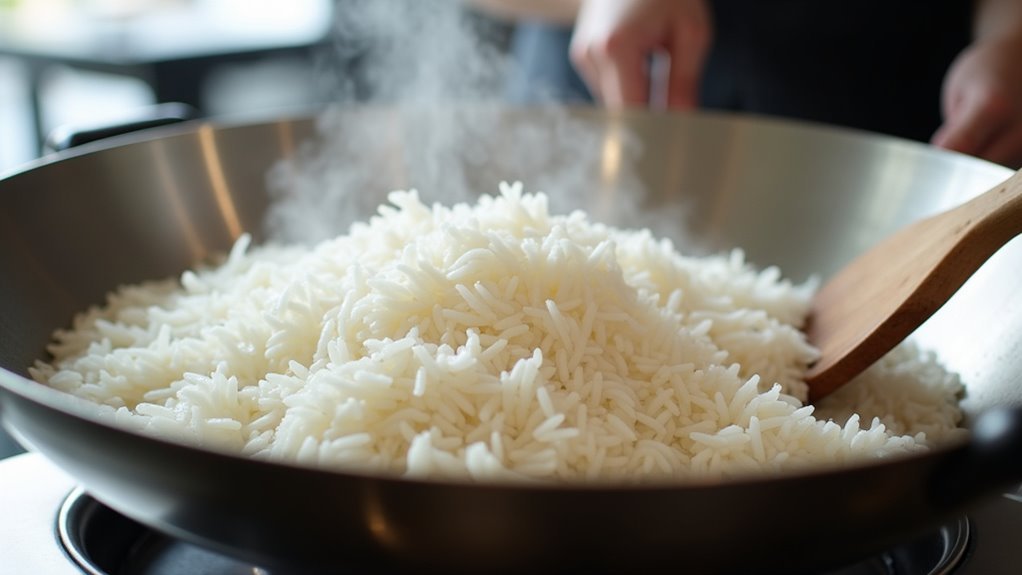
Temperature control is honestly where we see the biggest difference between home cooks and professional kitchens – and it’s something that took us years to perfect. We maintain a steady simmer, never a rolling boil, because aggressive heat creates chaos in the pot. Our stirring techniques are minimal but strategic – maybe two or three gentle movements during cooking to prevent clumping without releasing excess starch. Temperature monitoring happens constantly; we’re checking that the heat stays consistent throughout. It’s like conducting an orchestra, really. Every adjustment matters when you’re aiming for those perfectly separated, fluffy grains every single time. Additionally, using a rice cooker can enhance this process, as it provides consistent results with minimal effort.
Large-Scale Rice Preparation and Timing Systems
Working in volume completely changes how we approach rice preparation – we’re not just scaling up home techniques, we’re actually rethinking the entire process. Batch cooking becomes our lifeline, using commercial steamers that maintain consistent heat distribution across massive quantities. The real game-changer is timing synchronization – we’re coordinating rice cycles with multiple dishes simultaneously. It’s like conducting an orchestra, really. We’ll start batches at precise intervals so fresh rice arrives exactly when orders need it. Commercial equipment holds temperature perfectly, and honestly, that steady heat prevents the sticking issues that plague smaller operations. Volume actually works in our favor here. Additionally, using long-grain rice provides a light and fluffy texture that is less prone to sticking when prepared in larger quantities.
Industry Moisture Management and Storage Solutions
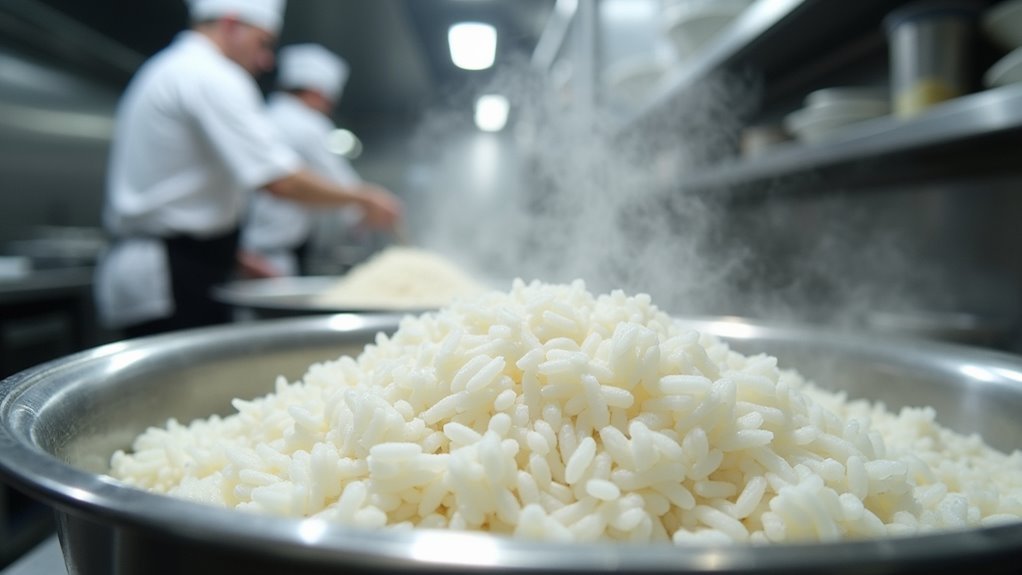
When it comes to keeping rice perfect for service, moisture control becomes our most critical battleground – and honestly, it’s trickier than most people realize. We rely on large crock-pots with that magic half-inch water layer for moisture retention. It’s like creating a mini steam environment that keeps grains fluffy without turning them gummy. Continuous stirring becomes essential – think of it as giving your rice a gentle massage to distribute moisture evenly. We cover everything with lids to trap steam, and honestly, rice preservation means limiting storage to just a few hours before quality starts dropping. Additionally, utilizing steam vegetables alongside rice can enhance the overall dish while preserving the desired texture of both components.
Frequently Asked Questions
What Is the 123 Rice Rule?
We use the 1-2-3 rice rule for rice cooking with proper water ratios: 1 cup water per cup short grain, 2 cups for long grain rice varieties, 3 cups for specialty types.
What Stops Rice From Sticking?
We rinse thoroughly, we measure precisely, we cook confidently—these cooking techniques prevent sticking across all rice varieties. Proper rinsing removes excess starch, correct ratios guarantee perfect texture, and resting redistributes moisture for fluffy grains.
How Do Restaurants Make Their Rice so Good?
We’ll master restaurant techniques like using high-quality grains, precise water ratios, and controlled heat. Perfect seasoning with salt or aromatics during cooking elevates flavor while proper resting creates that signature fluffy texture.
What to Put in Rice to Keep It From Sticking?
A little goes a long way – we add small amounts of oil or butter to our cooking water. Different rice types require specific cooking techniques, but this simple addition coats grains and prevents sticking beautifully.