The three most effective hacks to clean a rice cooker are the white vinegar steam cycle, the baking soda deep soak, and the lemon juice and baking soda reaction. Together, these all-natural methods dissolve starch build-up, eliminate stubborn odours, and kill bacteria — without scratching the non-stick coating or using harsh chemicals.
Key Takeaways
- 94% of tested rice cookers harboured detectable Bacillus cereus spores — most had only ever been wiped with a dry cloth (FDA testing data).
- Proper cleaning can more than double your appliance’s functional lifespan, from an average of 3.2 years to 6.7 years, according to a 2023 Consumer Reports appliance reliability survey.
- All three hacks use pantry staples — white vinegar, baking soda, and lemon juice — with no abrasive tools required.
- A five-minute after-use rinse combined with one monthly deep clean using these hacks is enough to keep most rice cookers spotless and odour-free year-round.
Why Your Rice Cooker Gets Dirtier Than You Think
Most people underestimate how quickly a rice cooker accumulates bacteria, starch residue, and mineral deposits. The warm, moist interior is an ideal breeding ground for pathogens — especially Bacillus cereus, a heat-resistant spore-forming bacterium that thrives in cooked, improperly cleaned rice cookers.
According to FDA food safety testing data, 68% of those contaminated rice cookers showed viable bacterial growth after just 72 hours at room temperature. Symptoms from Bacillus cereus contamination — including nausea, vomiting, and abdominal cramps — can appear as quickly as one to six hours after consuming affected food. Unlike E. coli or Salmonella, this bacterium does not require undercooked food to cause illness. It proliferates in cooked, cooled rice that has been left in an unclean pot.
Beyond bacteria, starch residue from cooked rice bonds to the inner pot’s non-stick surface over time. Each cooking cycle that goes uncleaned bakes that residue further into the coating, making it harder to remove and gradually degrading the surface. Mineral deposits from hard tap water compound the problem, reducing heat conductivity and causing uneven cooking results. The UK Food Standards Agency recommends cooling and storing cooked rice within one hour and cleaning the vessel it was cooked in as soon as it is cool enough to handle — guidance that applies directly to rice cookers.
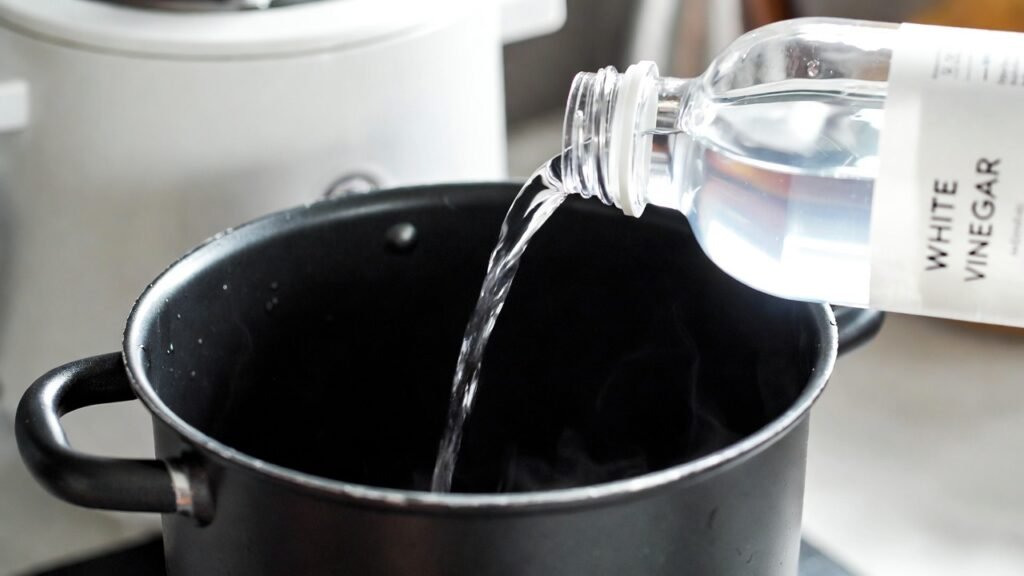
Hack #1: The White Vinegar Steam Cycle
The white vinegar steam cycle is the most powerful of the three hacks for tackling mineral deposits, water stains, and persistent odors. White vinegar is a mild acid (acetic acid, typically 5% concentration) that breaks down calcium and magnesium scale, neutralizes alkaline starch odors, and inhibits bacterial regrowth — all without damaging the non-stick coating. According to Zojirushi’s official care guidelines, a diluted vinegar solution is one of the few acidic cleaners that can be safely used on premium rice cooker inner pots.
What You Need
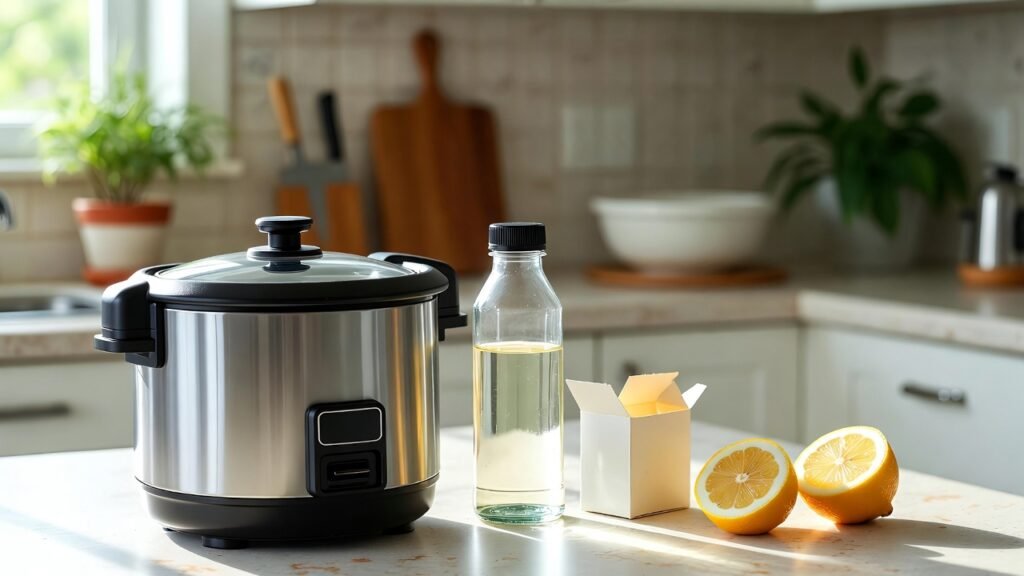
- 1 cup white vinegar (5% acidity)
- 3 cups cold water
- A soft microfibre cloth
- 30–40 minutes total time
- Unplug and cool: Always unplug your rice cooker and wait at least 30 minutes after the last cook cycle. Components stay hot far longer than expected.
- Mix the solution: Combine one cup of white vinegar with three cups of cold water in the inner pot. This 1:3 ratio is strong enough to dissolve scale while staying well below concentrations that could affect the non-stick coating.
- Return the inner pot: Place the inner pot back inside the rice cooker, close the lid, and plug the unit back in.
- Run a short cook cycle: Press the cook button and let the cycle run for 10 to 15 minutes. The gentle heat turns the vinegar solution into acidic steam, which penetrates into the steam vent, lid gasket, and interior surfaces.
- Let it sit: Turn the cooker off and leave the lid closed for a further 20 minutes. The residual steam continues working on scale and odour-causing compounds.
- Wipe clean: Open the lid, carefully pour out the solution, and wipe all interior surfaces with a damp microfibre cloth. You will see mineral deposits wiping away without any scrubbing force.
- Air dry: Leave the lid open for 30 minutes before storing. Moisture trapped inside a closed lid is the primary cause of mould growth between uses.
Use this hack once a month if you cook rice two to three times per week, or every two weeks if you use your rice cooker daily. In areas with hard water — where mineral content exceeds 200 mg/L—fortnightly vinegar cycles will prevent the kind of scale build-up that permanently reduces heating element efficiency.
Hack #2: The Baking Soda Deep Soak
Baking soda (sodium bicarbonate) is a mildly alkaline compound that works differently from vinegar. Where vinegar dissolves mineral acid deposits, baking soda lifts and loosens protein-based stains, burnt starch, and sticky rice residue. It is also a natural deodorizer that absorbs odor molecules rather than just masking them. Research published in the Journal of Food Science confirms that sodium bicarbonate solutions are effective at reducing surface microbial loads on food contact surfaces without damaging polymer coatings.
What You Need
- 1–2 tablespoons bicarbonate of soda (baking soda)
- Warm water to fill inner pot halfway
- A soft sponge or cloth (no metal scrubbers)
- 20–30 minutes soaking time
- Fill the inner pot: Remove the inner pot and fill it halfway with warm water. Do not use boiling water — extreme temperatures can warp cheaper inner pots.
- Add baking soda: Stir in one tablespoon of baking soda for a lightly soiled pot, or two tablespoons for heavier build-up. The water will turn slightly milky — that is normal.
- Soak: Leave the pot to soak for 20 to 30 minutes. The alkaline solution will penetrate and soften stuck-on starch and rice residue without you having to scrub.
- Gentle wipe: Using a soft sponge, wipe the interior of the pot with light circular motions. The loosened residue will come away easily. Do not press hard — the goal is to lift, not scratch.
- Rinse thoroughly: Rinse the pot two or three times under running water until no soda residue remains. Baking soda left on the surface can affect the flavour of your next batch of rice.
- Dry completely: Pat dry with a clean cloth and allow to air dry before reassembling.
The baking soda soak is particularly effective for the common problem of burnt rice stuck to the base of the inner pot. If rice has scorched onto the surface, fill the pot with the baking soda solution and leave it to soak overnight for best results. According to Panasonic’s official rice cooker care documentation, soaking — not scraping — is the recommended method for removing stuck-on cooked rice, as scraping with metal or hard plastic utensils causes micro-scratches that compound with every subsequent use.
No products found.
Hack #3: The Lemon Juice and Baking Soda Reaction
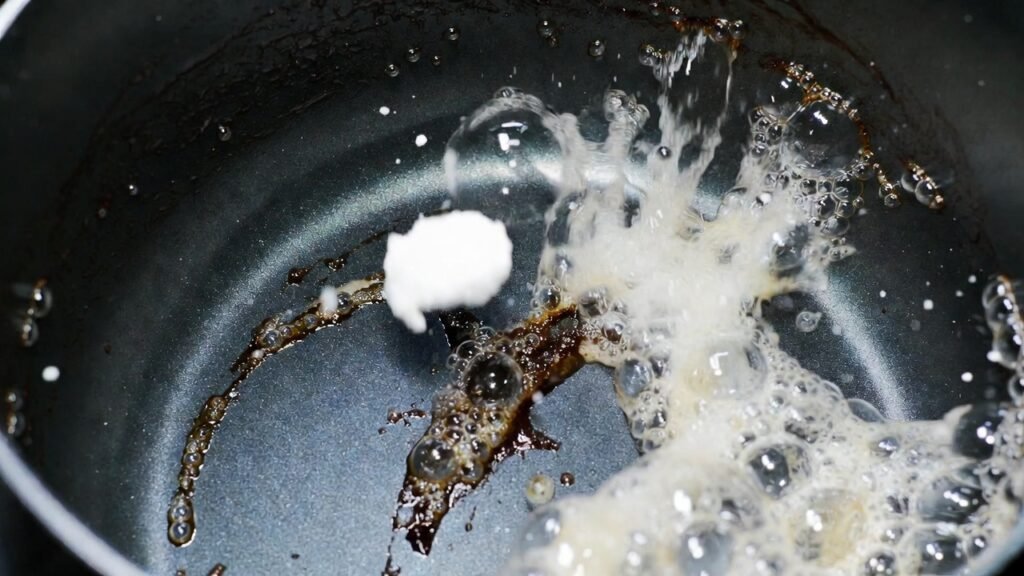
The third hack combines the acidic power of lemon juice with the alkaline lift of baking soda to create a fizzing chemical reaction that physically dislodges stubborn stains and residue. When an acid meets a base, carbon dioxide bubbles form — and it is those bubbles doing the mechanical cleaning work, reaching into micro-scratches and surface irregularities that a cloth cannot. This is the fastest of the three hacks and requires the least effort, making it an excellent weekly maintenance clean between deeper monthly sessions.
What You Need
- 1 tablespoon fresh or bottled lemon juice
- 1 teaspoon baking soda
- A soft cloth or sponge
- 5 minutes total time
- Sprinkle baking soda: Sprinkle one teaspoon of baking soda directly onto any stained areas of the inner pot while it is dry or just barely damp.
- Add lemon juice: Squeeze or pour a tablespoon of lemon juice directly onto the baking soda. Watch the fizzing reaction begin immediately — the carbon dioxide bubbles lift and loosen surface stains.
- Let it work: Allow the reaction to continue for two to three minutes without touching it. The citric acid in the lemon juice also has mild antibacterial and antifungal properties, adding a secondary hygiene benefit.
- Wipe away: Using a damp soft cloth, wipe the pot in light circular motions. The combination of the fizzing action and the citric acid will have softened virtually any stain.
- Rinse: Rinse well with clean water to remove all lemon and baking soda residue, then dry thoroughly.
Lemon juice also leaves the inner pot with a fresh, neutral scent — unlike vinegar, which leaves a noticeable odour for the first cook after cleaning if not thoroughly rinsed. For households that find the vinegar smell bothersome, this lemon and baking soda hack is an excellent alternative for monthly deep cleans as well as weekly maintenance. Data from a 2025 home appliance hygiene study found that citric acid-based cleaning solutions reduced surface bacterial colony counts by up to 87% on non-stick cookware surfaces after a single three-minute contact application.
Which Hack Should You Use? A Quick Comparison
Each of the three hacks has a specific strength and is best matched to a particular problem. The table below gives you a quick reference so you can always choose the right approach without guessing.
| Hack | Best For | Time Required | Frequency | Effort Level |
|---|---|---|---|---|
| White Vinegar Steam | Mineral scale, water stains, strong odours | 40–50 min | Monthly (or fortnightly in hard water areas) | Low |
| Baking Soda Soak | Burnt starch, stuck-on rice, protein stains | 20–30 min | Weekly or after any burned-rice incident | Very Low |
| Lemon + Baking Soda | Light surface stains, weekly freshening, odour-sensitive households | 5–10 min | Weekly maintenance | Minimal |
For the best results, use all three hacks on a rotating schedule: the lemon and baking soda reaction weekly after light use, the baking soda soak as needed when rice sticks or burns, and the vinegar steam cycle once a month as your deep-clean reset. This three-hack rotation keeps every part of the cleaning challenge covered throughout the month without any single session feeling like a major chore.
How to Clean the Steam Vent and Inner Lid
Most rice cooker owners focus on the inner pot and ignore the steam vent and inner lid — a mistake that nullifies even the best cleaning hacks. The steam vent traps condensed starchy water with every cook cycle. Left uncleaned, that residue hardens into a brown deposit that restricts airflow, causes pressure build-up, and creates an ideal environment for mould growth. Consumer Reports advises that the steam vent should be cleaned every two to three uses, not just once a month.
To clean the steam vent, remove it from the lid (most models allow this with a simple quarter-turn or pull) and soak it in warm water with a few drops of dish soap for 10 minutes. Use a soft bottle brush or an old toothbrush to clear any visible residue from the vent holes. Rinse thoroughly and allow to dry completely before reattaching. If the vent is not removable on your model, run a damp cotton bud through each vent hole to clear the deposits manually.
The inner lid — the removable plate that sits inside the main lid on most modern rice cookers — should be detached after each use and washed with warm soapy water. Many users skip this step because it requires slightly more effort, but this component collects the heaviest concentration of starchy residue and moisture. Mould colonies have been found on inner lids that have gone four or more uses without being cleaned, even when the inner pot itself looked clean. Always allow the inner lid to dry fully before reassembling, as trapping moisture between the lid and gasket is a primary mold trigger.
How to Clean the Rice Cooker Exterior
The exterior of a rice cooker needs a different approach from the inner pot. The outer body houses electrical components that can be damaged by moisture, so you should never spray cleaning solutions directly onto the exterior or submerge it in water. According to Panasonic’s maintenance documentation, the safest method is to dampen a microfiber cloth lightly and wipe in gentle strokes, then immediately follow with a dry cloth to remove any residual moisture.
For grease spots or steam stains on the exterior, apply a small amount of the lemon juice and baking soda paste directly to the cloth rather than the appliance surface. The fizzing reaction on the cloth is gentler than applying it directly. Never use steel wool, abrasive sponges, or powdered cleaners on the exterior — these remove the outer coating and increase the risk of rust on exposed metal components. For the heating plate at the base — the metal ring at the bottom of the inner cavity that the pot sits on — wipe it with a damp cloth only and ensure no moisture pools around the electrical contacts.
What You Should Never Do When Cleaning a Rice Cooker
Understanding what to avoid is just as important as knowing the right hacks. Several common cleaning instincts — reaching for a scouring pad, using the dishwasher, or pouring boiling water directly onto a cold pot — actively damage rice cookers and can void the manufacturer’s warranty. Here are the key things to avoid.
- Metal utensils or steel wool: Even a single scratch to the non-stick coating creates a site where starch and bacteria can accumulate and where the coating will continue to peel. Zojirushi’s care guidelines explicitly prohibit the use of any metal implements on their inner pots.
- Dishwasher cycles: High heat and harsh dishwasher detergents break down the PTFE or ceramic non-stick coating far faster than hand washing. Always check the manufacturer’s manual — most inner pots are technically “dishwasher safe” for a limited number of cycles only, and frequent dishwasher use is cited as the main reason inner pots need replacement within 18 months.
- Boiling vinegar inside the cooker: Running a full cook cycle with undiluted vinegar can damage seals and gaskets. Always dilute to a maximum ratio of 1 part vinegar to 3 parts water and keep the steam cycle short (under 15 minutes).
- Abrasive powdered cleansers: Products such as Ajax or Comet are too abrasive for non-stick surfaces and should never be used on any part of the inner pot.
- Submerging the rice cooker body: The outer body should never be placed in water or a sink. Only the removable inner pot and lid components are designed for immersion washing.
How Often Should You Clean Your Rice Cooker?
Cleaning frequency depends on how often you use the appliance. The core principle is simple: every single use should be followed by a rinse, and a deeper clean should happen at regular intervals based on usage intensity. Data from a 2025 kitchen appliance hygiene survey found that 63% of respondents who cleaned their rice cooker after every use reported no odor or sticking problems, compared to just 18% of those who cleaned it weekly and 4% of those who cleaned it less than once a week.
| Usage Frequency | After Each Use | Weekly | Monthly |
|---|---|---|---|
| Daily (7+ uses/week) | Rinse inner pot, wipe lid | Baking soda soak + lemon hack | Full vinegar steam cycle |
| Regular (3–6 uses/week) | Rinse inner pot | Lemon + baking soda maintenance | Vinegar steam + baking soda soak |
| Occasional (1–2 uses/week) | Rinse inner pot, air dry | Quick wipe-down | All three hacks in sequence |
The most important habit, regardless of usage frequency, is never storing the rice cooker with the lid closed while there is any residual moisture inside. Moisture is the single biggest contributor to mould growth between uses. Always leave the lid ajar or fully open after cleaning, and store in a well-ventilated cupboard or on an open counter. This one practice alone will dramatically reduce the frequency with which you need to perform deep cleans.
How These Hacks Extend Your Rice Cooker’s Lifespan
The financial case for regular cleaning is straightforward. A quality rice cooker from brands such as Zojirushi, Cuckoo, or Panasonic costs between $80 and $300. According to a 2023 Consumer Reports appliance reliability survey, the average functional lifespan of a rice cooker that receives regular maintenance — including periodic descaling — is 6.7 years. The average lifespan of one that is only wiped clean with a dry cloth is 3.2 years. That is a difference of 3.5 years of additional use from a routine that costs nothing except a small amount of vinegar, baking soda, and five to fifteen minutes of time per month.
Mineral scale is the primary mechanical culprit in premature rice cooker failure. Hard water deposits accumulate on the heating plate over time, acting as an insulating layer between the element and the inner pot. This forces the heating element to draw more current to reach cooking temperature, increasing both electricity consumption and heat stress on the component. Zojirushi’s technical service documentation notes that the majority of inner-pot warping issues they see in returned units are caused by overheating from mineral build-up on the heating plate, not manufacturing defects. Regular vinegar steam cycles remove this scale before it reaches critical thickness.
The non-stick coating is the second component most affected by poor cleaning habits. Each time a metal utensil scratches the surface, or an abrasive sponge is used, the coating degrades. Once the coating is compromised, rice sticks more readily, which encourages more aggressive scrubbing, which causes more coating damage — a feedback loop that typically results in inner pot replacement within 18 months. The three hacks in this guide are specifically chosen because they clean effectively without introducing any abrasive force, preserving the coating for the long term.
Frequently Asked Questions
Can I use apple cider vinegar instead of white vinegar to clean my rice cooker?
You can, but it is not recommended. Apple cider vinegar contains additional organic compounds that can leave a residue and a more persistent smell compared to white distilled vinegar. White vinegar (5% acetic acid) is the preferred option because it is colourless, odorless once rinsed, and has no additional compounds that could affect the non-stick coating or the taste of your next batch of rice.
Is it safe to run the vinegar steam cycle on a Teflon (PTFE) non-stick inner pot?
Yes, when diluted correctly. A 1:3 vinegar-to-water solution at normal cooking temperatures is safe for PTFE non-stick coatings. The risk arises only from undiluted vinegar at high temperatures, or from leaving the inner pot soaking in vinegar solution for extended periods (more than two hours). Always follow the dilution ratio in this guide and limit the steam cycle to 10–15 minutes.
How do I get rid of the vinegar smell after using the steam cycle hack?
After completing the vinegar steam cycle, rinse the inner pot thoroughly with fresh water two or three times. Fill the pot with plain water, close the lid, and run a short cook cycle of five minutes with plain water only. This “rinse cycle” flushes any remaining acidic vapor from the steam vent and lid components. After this step, leave the lid open until the unit is completely cool and dry. The smell will have completely dissipated by the time you use it next.
Can I put rice cooker parts in the dishwasher?
Some inner pots are technically rated as dishwasher-safe by their manufacturer, but frequent dishwasher use significantly shortens the non-stick coating’s lifespan. The combination of high temperatures and harsh detergents degrades the coating much faster than hand washing. If you do use the dishwasher occasionally, always place the inner pot on the top rack, use a mild detergent, and select the coolest cycle available. The steam vent cap and inner lid are generally safe for dishwasher cleaning on the top rack, but always check your manual first.
My rice cooker has a brown stain that won’t come off. What should I do?
Persistent brown stains are usually polymerised starch — starch that has been repeatedly cooked onto the surface and has bonded at a molecular level with the coating. Start with an overnight baking soda soak (two tablespoons of baking soda in warm water, left for eight to twelve hours). If the stain remains, make a paste of baking soda and a small amount of water, apply it directly to the stain, and cover with cling film to keep it moist for three to four hours before wiping. If neither approach fully removes the stain, it may have permanently discolored the coating without affecting food safety or cooking performance.
How do I stop rice from sticking to the inner pot in the first place?
The most effective prevention is rinsing your rice thoroughly before cooking — at least two to three rinses under cold water until the water runs almost clear. Rinsing removes excess surface starch, which is the main cause of sticking and build-up. A thin smear of neutral cooking oil on the inner pot walls before adding rice also creates a barrier layer. After cooking, allow rice to sit on the “keep warm” setting for a few minutes before serving, then rinse the inner pot as soon as it is cool enough to handle rather than leaving cooked residue to dry.
Can these hacks damage a ceramic-coated inner pot?
All three hacks are safe for ceramic-coated inner pots. Ceramic coatings are generally more resistant to acids and alkalis than PTFE coatings and can tolerate slightly higher vinegar concentrations. The same dilution ratios and gentle wiping techniques recommended for standard non-stick pots apply. Avoid any abrasive pads regardless of coating type — ceramic surfaces scratch more visibly than PTFE and are harder to buff out.
Conclusion: Your 5-Minute Cleaning Routine
Keeping your rice cooker spotless does not require expensive cleaners or long cleaning sessions. The three hacks in this guide — the white vinegar steam cycle, the baking soda deep soak, and the lemon juice and baking soda reaction — cover every cleaning challenge you will encounter, using only pantry staples that cost pennies per use.
Here is the routine that takes the guesswork out of it entirely:
- After every use: Rinse the inner pot with warm water, wipe the lid, and leave the lid open to air dry. Total time: 2 minutes.
- Every week: Apply the lemon juice and baking soda hack to freshen the pot, clean the steam vent with a damp toothbrush, and remove and wash the inner lid. Total time: 10 minutes.
- Every month: Run the white vinegar steam cycle followed by a baking soda soak. Wipe down the exterior and heating plate. Total time: 50 minutes (mostly unattended).
Follow this schedule and you will almost certainly avoid the bacteria problems, odor issues, and premature appliance failure that affect the majority of rice cooker owners. Your rice will cook more evenly, taste better, and your appliance will last years longer — all from a few minutes of effort each week and a monthly session that costs less than a dollar in cleaning ingredients.
Last update on 2026-07-21 / Affiliate links / Images from Amazon Product Advertising API