
Most people don’t realize that digital rice cookers actually “think” before they shut off, while analog ones just react to heat. We’re talking about fundamentally different approaches here – it’s like comparing a smartphone to a simple alarm clock. Digital models use sensors and microchips to make calculated decisions about when your rice is perfectly done. Analog cookers? Well, they’re basically waiting for the water to disappear. But here’s where it gets interesting…
What Makes Digital Rice Cookers Automatically Shut Off
When we’re talking about digital rice cookers, the magic really happens with those built-in sensors that are constantly monitoring what’s going on inside the pot.
These digital models use precise control to track temperature and moisture levels, automatically calculating when your rice is perfectly done.
The microchip technology is pretty impressive—it actually figures out cooking time based on what type of rice you’re making.
Once cooking’s finished, the automatic shut-off kicks in, and most units switch to keep warm mode.
It’s like having a tiny chef watching your rice so you don’t have to worry about overcooking. Additionally, these advanced models often feature fuzzy logic technology, which enhances the precision of cooking various rice types.
How Analog Rice Cookers Handle Power Management
While digital rice cookers impress us with their fancy sensors and microchips, analog models take a much simpler approach to power management that’s actually pretty clever in its own right.
These analog models rely on a basic mechanical thermostat – think of it like a simple on-off switch that responds to heat.
During the cooking process, once water evaporates and temperature spikes, the thermostat triggers automatic shut-off and switches to ‘keep warm’ mode.
It’s not as precise as digital versions, but this straightforward power management system has been reliably cooking rice for decades without fancy electronics.
Technology Behind Smart Shut-Off Systems
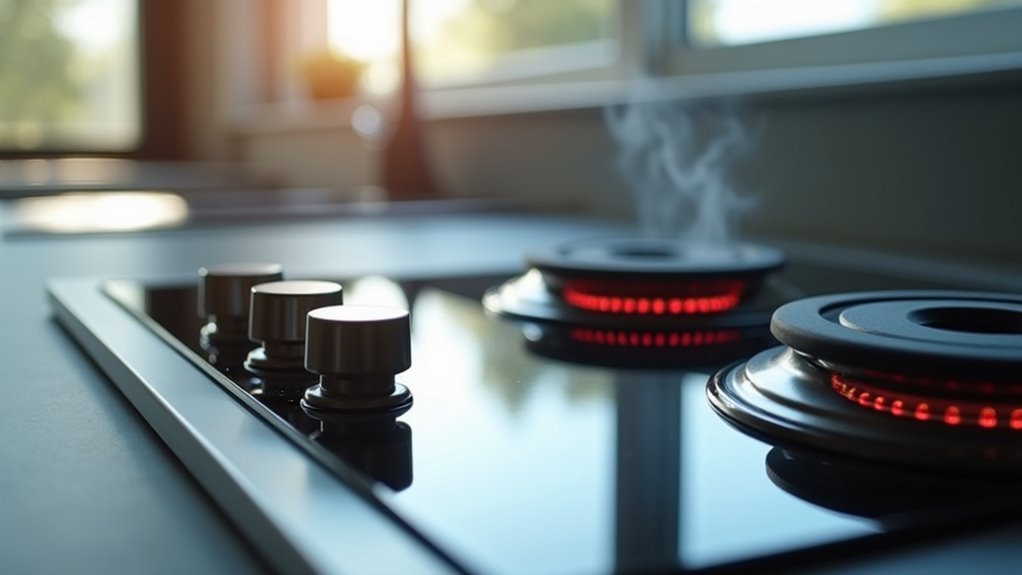
If you think digital rice cookers are impressive now, wait until you plunge into the actual technology that makes their smart shut-off systems work. These digital cookers use built-in sensors that constantly monitor temperature and cooking duration. When your rice reaches perfection, the system automatically cuts power—it’s like having a vigilant chef watching your meal. Additionally, these cookers utilize sensors and signals technology to ensure that the moisture levels are just right for perfectly fluffy rice.
| Feature | Benefit |
|---|---|
| Temperature Sensors | Prevent overcooking |
| Programmable Timers | Enhanced convenience |
| Overheating Protection | Improved user safety |
| Auto Power-Off | Better energy efficiency |
This sophisticated technology transforms cooking from guesswork into precision, ensuring consistent results every time.
Safety Benefits of Automatic Power Cut-Off
False assumptions about kitchen safety lead many to overlook automatic shut-off benefits.
We’ve all probably left something cooking longer than intended – it’s human nature. Digital cookers with automatic shut-off act like a safety net, preventing overheating and fire hazards when we’re distracted or forget.
Analog cookers, well, they don’t offer this protection. You’re fundamentally on your own timing-wise.
Studies show these smart features greatly reduce kitchen accidents, especially for busy households.
Think of automatic shut-off as your cooking guardian angel – it’s there when you need it most, ensuring safety and peace of mind. Additionally, this feature enhances food safety by thoroughly cooking food and reducing the risk of foodborne illnesses.
Energy Efficiency Comparison Between Digital and Analog Models
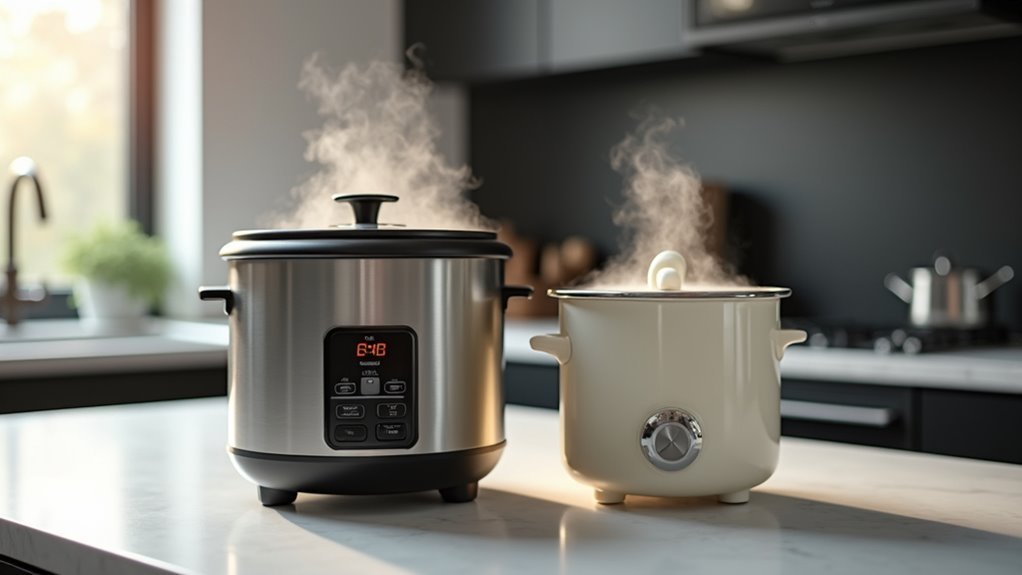
When it comes to your monthly electricity bill, digital and analog cookers couldn’t be more different – and honestly, the gap is pretty eye-opening.
We’re talking about energy efficiency that can actually save you money. Digital cookers pack serious advantages with their automatic shut-off features and precise temperature controls.
They’ll switch to “keep warm” mode automatically, while analog cookers just keep running until you remember to turn them off.
Studies show digital models can slash energy consumption by up to 30%. Additionally, investing in energy-efficient rice cookers can lead to long-term savings on your utility bills.
Sure, they cost more upfront, but those lower utility bills? They add up fast.
Choosing the Right Shut-Off Feature for Your Kitchen Needs
Since we’re all cooking differently these days, picking the right shut-off feature really comes down to how you actually use your kitchen. Your cooking habits determine whether digital or analog makes sense.
| Feature | Digital | Analog |
|---|---|---|
| Monitoring | Automatic | Manual required |
| Precision | High accuracy | Basic timing |
| Convenience | Set-and-forget | Hands-on approach |
Digital models offer automatic shut-off features plus keep-warm functions – perfect if you’re multitasking or, well, slightly forgetful like me. Analog cookers need your attention but give you complete control. Think about whether you prefer convenience or being actively involved in your cooking process. Additionally, consider how a rice cooker can eliminate the risk of burning or overcooking rice, which may influence your choice.
Frequently Asked Questions
What Are the Disadvantages of Digital Timers?
We’ve found digital timers suffer from poor user experience due to complex settings, reduced timer accuracy from electromagnetic interference, higher power consumption, and significant maintenance challenges including frequent replacements and environmental sensitivity.
Which Is Better, Mechanical or Digital Timers?
Different strokes for different folks—we’d recommend digital timers for timer accuracy and cooking precision, while mechanical ones excel in maintenance ease. Your user preference should guide this choice based on your priorities.
What Is the Difference Between Analog and Digital Timers?
We’ll find analog timers use mechanical parts with lower maintenance requirements and power consumption, while digital timers offer superior timer accuracy and user interface through electronic displays and programmable settings.
What Does Analog Timer Mean?
Ironically, analog timers are “old-school” mechanical devices that often outlast their high-tech digital cousins. We’ll find their simple dial timer functionality offers reliable cooking precision, straightforward user experience, and minimal maintenance considerations.