Like Goldilocks testing porridge, we’ve all lifted that pot lid wondering if our rice has reached that “just right” moment. You know the feeling – you’re not entirely sure if those grains are perfectly tender or still need a few more minutes. Well, there’s actually a simple finger test that’ll tell you everything you need to know, but most people don’t realize they’re probably checking too early in the process.
Visual Signs Your Rice Has Finished Cooking
When we’re cooking rice, the most reliable way to know if it’s done is actually through what we can see happening in the pot. These visual cues work across different cooking methods, and honestly, they’re pretty straightforward once you know what to look for.
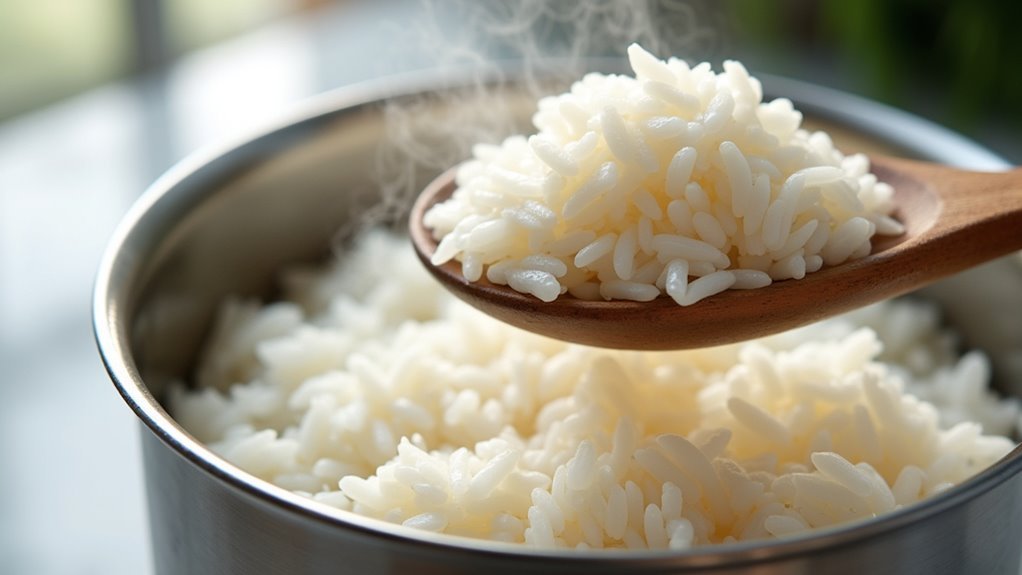
First, check if there’s no visible liquid on the surface—the rice should’ve absorbed everything. The grains will look fluffy and separate, not clumped together. You’ll also notice a slightly glossy appearance when it’s finished. Well, that’s basically your rice telling you it’s ready to eat. Additionally, paying close attention to the cooking process can help prevent overcooked rice.
Testing Rice Texture and Doneness
Looking at the rice is helpful, but the real test comes down to actually feeling how it’s cooked. We’re testing rice texture by gently pressing a grain between our fingers—it should feel tender yet slightly firm, like pasta al dente. Well, evaluating doneness means checking about four minutes before the timer goes off. If water’s still pooling at the bottom, we’ll need more cooking time. Actually, I think the best method is fluffing with a fork to see if grains separate easily without being mushy or—wait, hard spots mean it needs longer. Remember that soaking rice before cooking can also influence its final texture and doneness.
Checking Water Absorption Levels
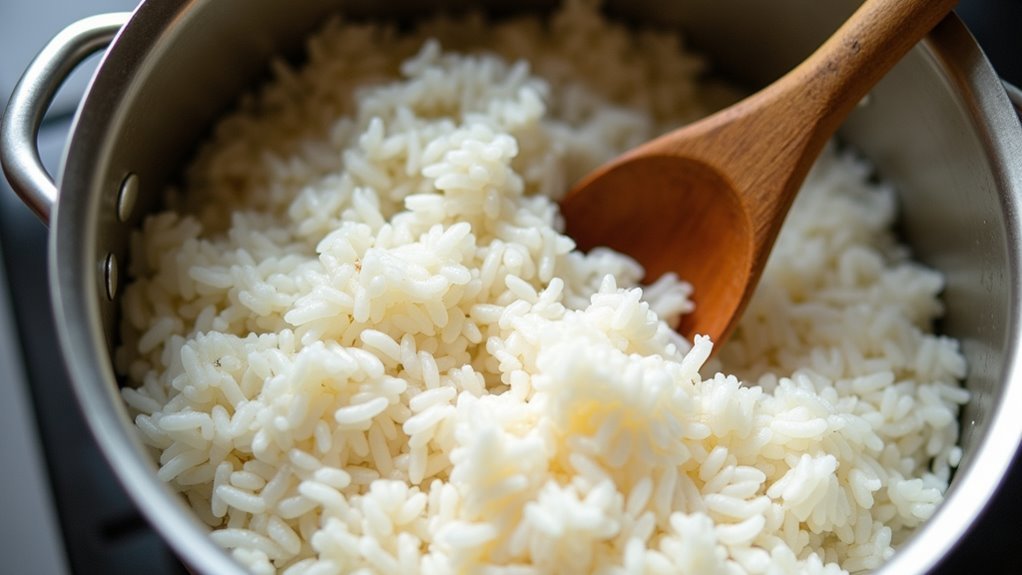
Why do we check water absorption when we’re already testing texture? Well, it’s actually a vital step that different cooking methods require. About four minutes before your timer goes off, lift that lid and inspect the surface for visible liquid. If water’s still hanging around, cover tightly and let it finish cooking. Gently tilt the pot—think of it like checking a puddle after rain. Any water pooling at the bottom? Uncover and cook on low heat to evaporate excess moisture. Proper water absorption means fluffy grains without sogginess. It’s the difference between perfect rice and, well, rice soup. Additionally, using distilled water helps prevent mineral buildup that could affect cooking performance.
Timing Guidelines for Different Rice Types
Timing’s everything in the rice game, and honestly, it’s probably the most straightforward part once you know the basics. Different rice varieties need different cooking methods and times, so we’ve got to adjust accordingly.
- White rice: 15-20 minutes on stovetop, 25-30 minutes in oven at 350°F
- Brown rice: 40-45 minutes stovetop, 50-60 minutes oven cooking
- Parboiled rice: 25-30 minutes, making it a solid middle-ground option
- Check 4 minutes early: Always monitor water absorption before time’s up. Proper water ratio is essential for achieving fluffy brown rice.
What to Do When Rice Isn’t Fully Cooked
When rice doesn’t turn out quite right, don’t panic—we’ve all been there, and there’s usually a simple fix. Rice cooking techniques can be tricky, but troubleshooting rice issues is actually pretty straightforward once you know what to do.
| Problem | Solution |
|---|---|
| Hard/chewy rice | Add 2 tablespoons water per cup uncooked rice, cover tightly |
| Too wet but cooked | Uncover and cook on low heat to evaporate moisture |
| Scorched rice | Check top layer for off flavors, save the good portions |
| Large batches cooking unevenly | Make smaller batches for better control |
We’re basically creating steam to finish the cooking process properly. If you find your rice is still undercooked, consider adjusting the water-to-rice ratio to ensure even cooking next time.
Frequently Asked Questions
How Do I Know if My Rice Is Cooked?
Surprisingly, 40% of home cooks overcook rice! We’ll know our rice cooking is complete when grains are tender, water’s absorbed, and different rice types fluff easily with a fork—never mushy or hard.
How to Visually Tell When Rice Is Done?
We’ll look for visual cues like rice grains expanded three times their size with a slight sheen. The rice texture should appear fluffy and separated, not wet or sticky on the surface.
How Do I Know if I’ve Overcooked Rice?
We’ll know we’ve overcooked rice when it has a mushy appearance and gummy, sticky overcooked texture. The grains clump together instead of staying separate, and it becomes difficult to fluff properly.
How to Know When Rice Is Done Without Lifting the Lid?
We’ll monitor steam indicators and follow recommended cooking times without peeking. When steam decreases considerably and bubbling sounds fade after 15-20 minutes, our rice is likely done and ready for resting.