We’ve all been there—standing over a pot of mushy or burnt rice, wondering where we went wrong. Rice cookers promise foolproof results, but let’s be honest, they’re only as good as the technique you bring to them. Maybe you’ve grabbed one thinking it’ll solve all your rice problems, or perhaps you’re still on the fence about whether it’s worth the counter space. Either way, there’s actually a method to getting consistently perfect rice every time.
What Is a Rice Cooker and Why Use One
Convenience – that’s really what a rice cooker is all about.
We’re talking about one of those kitchen appliances that actually delivers on its promise to make rice perfectly every time. You know, cooking rice on the stovetop can be tricky – too much water in the rice and it’s mushy, too little and it burns.
A rice cooker eliminates that guesswork completely. It’ll cook a variety of rice types, keep rice warm for hours, and honestly, once you cook in a rice cooker, you’ll wonder why you waited so long to get perfect rice this easily. Additionally, its nutrient retention capabilities ensure that your meals are not only convenient but also healthy.
Essential Tools and Ingredients You’ll Need
Now that we’ve covered why a rice cooker’s worth having, let’s talk about what you’ll actually need to get started. First, you’ll want a reliable rice cooker with a nonstick interior pot—it makes cleanup so much easier. You’ll also need a measuring cup to nail that rice to water ratio.
| Essential Items | Optional Ingredients |
|---|---|
| Rice cooker | Salt |
| Fresh water | Butter |
| Measuring cup | Bay leaves |
| Fine mesh sieve | Garlic |
| Rice (jasmine rice, etc.) | Other aromatics |
Don’t forget to rinse your rice beforehand to remove excess starch. Additionally, it’s essential to measure the water correctly based on the type of rice you’re using to achieve the desired consistency.
How to Properly Rinse and Prepare Your Rice

Proper rinsing might seem like an unnecessary step, but it’s actually one of the most important things we can do to guarantee fluffy, separate grains instead of a sticky mess.
When we rinse rice under cold water using a bowl or mesh sieve, we’re removing excess starch that causes clumping.
Here’s our simple process:
- Use a measuring cup for accurate portions, then rinse 3-4 times until water runs clear.
- Add water to the rice using proper ratio—1:1 for short grain rice, 1:2 for long grain rice.
- Include a pinch of salt to enhance texture.
This foundation helps us cook rice perfectly every time. Additionally, rinsing can improve the overall rice texture and flavor, resulting in a more enjoyable dish.
Getting the Water-to-Rice Ratio Right
Getting the water-to-rice ratio right is essential for ideal cooking results. For short grain rice, we’ll use a 1:1 ratio, while long grain rice needs 1:2. Most white rice varieties work well with 1.5 to 2 cups of liquid per cup of rice. Brown rice is trickier—it needs more water and time. Measuring ingredients accurately makes all the difference when cooking your rice. Brown rice requires about 2.25 cups of water per 1 cup of dry rice, so don’t eyeball it; proper measurements prevent disasters.
Step-by-Step Cooking Process

With our water measurements sorted out, we can actually start cooking our rice. The cooking process is pretty straightforward once you’ve got your rice-to-water ratio dialed in.
Here’s what we’ll do next:
- Add the rinsed rice to our rice cooker – make sure it’s still slightly damp from rinsing.
- Close the lid securely and select the white rice setting – don’t peek during cooking!
- Let it rest for 15 minutes after it beeps – this step’s essential for perfect texture. This resting period allows the rice to finish cooking by utilizing the residual heat, which is a key aspect of how a rice cooker works.
Once that’s done, we’ll do some gentle fluffing with a rice paddle. Trust me, patience makes all the difference here.
Resting and Fluffing Your Finished Rice
Although your rice cooker’s just beeped and you’re probably tempted to dive right in, this is actually where patience becomes your best friend.
We need to let our cooked rice rest for fifteen minutes—I know, it’s tough! This resting period allows the grains to absorb remaining steam, creating better texture and consistency.
Don’t peek under that lid or you’ll release precious steam. After resting, we’ll gently fluff with a rice paddle to separate the grains.
Maybe add some seasoning or butter at this point. Trust me, this simple step transforms ordinary rice into something special. Additionally, using distilled water can prevent mineral buildup and enhance the quality of your rice.
Cleaning and Maintaining Your Rice Cooker
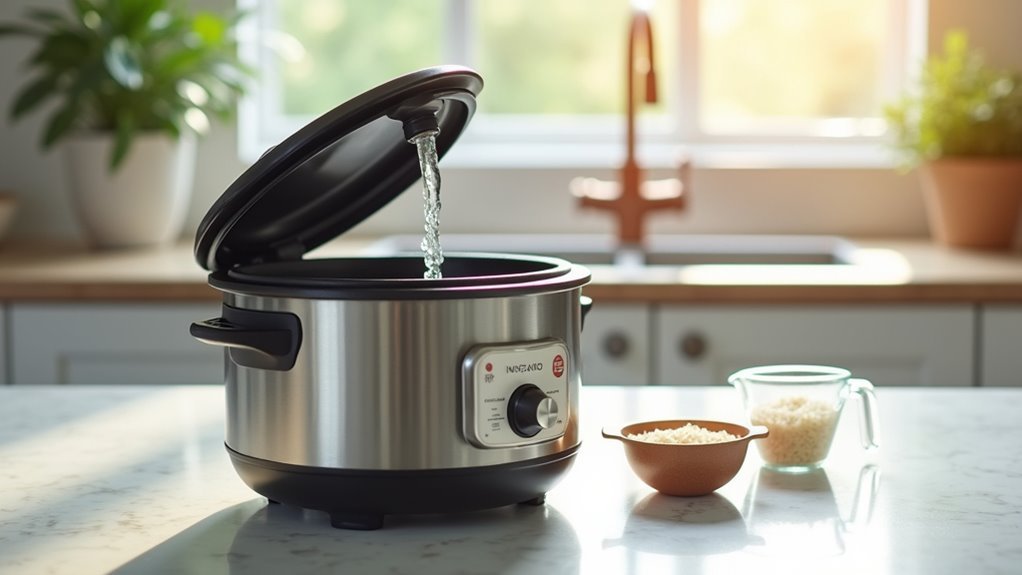
Now that we’ve enjoyed our perfectly cooked rice, let’s talk about keeping your rice cooker in top shape—because honestly, proper maintenance is what separates a rice cooker that lasts for years from one that becomes a kitchen disappointment.
Here’s what we need to focus on for proper cleaning:
- Cool completely first – Never rush into cleaning while it’s still hot.
- Hand wash the nonstick basket – Use warm soapy water and gentle sponges to preserve that nonstick coating.
- Check the steam vent regularly – Clogs here can mess up everything.
Wipe the exterior down, maintain good hygiene, and store somewhere dry to prevent moisture buildup. Additionally, to remove unpleasant odors, consider using a vinegar solution on the hot plate and soaked parts for a fresher clean.
Frequently Asked Questions
How to Operate a Rice Cooker Step by Step?
We’ll rinse rice, use proper water ratios for different rice cooker types, add flavor enhancements if desired, press cook, wait for completion, then let it rest before fluffing to avoid common mistakes.
What Is the 5 5 5 Rule for Rice?
We use equal water ratios—one cup rice to one cup water—for most rice varieties. This prevents common mistakes like mushy texture, guarantees proper cooking times, and creates the perfect base for recipe ideas.
How to Cook Rice Step by Step 5 Steps?
First, we’ll rinse rice until clear. Second, we’ll measure water using proper ratios for different rice types. Third, we’ll add both to our rice cooker. Fourth, we’ll select appropriate settings. Finally, we’ll let it rest before serving.
What Is the 123 Rice Rule?
The 123 rice rule uses water ratios of 1:2:3 – one cup rice, two cups water, three minutes cooking time per tablespoon. We’ll avoid common mistakes by adjusting for different rice varieties and adding flavor enhancements.