
Like the emperor’s new clothes, we might not notice our rice cooker’s non-stick coating gradually disappearing until it’s too late. You know, those tiny black flakes in your rice aren’t seasoning – they’re actually pieces of PTFE coating that’s peeling away. While we don’t want to alarm you, this isn’t just a cosmetic issue. There’s more to this story than meets the eye, and frankly, your health might depend on understanding what’s really happening.
Understanding the Health Risks of Peeling PTFE Coating
When we notice that familiar black flaking in our rice cooker’s bowl, our first instinct is probably to panic—I mean, we’re eating food that’s been cooked in there, right? Well, here’s the thing about peeling coating: it’s actually not as scary as it looks. The nonstick coating is made from PTFE, and while nobody wants to eat chunks of it, the health risks are surprisingly minimal. Our bodies can’t absorb PTFE, so it just passes right through us. I think that’s pretty reassuring, honestly—much better than I initially feared.
Safe Methods for Removing Damaged Non-Stick Coating
Once you’ve decided the coating has to go, we’re faced with a few different approaches—and honestly, some are way better than others. Chemical solvents like N-methyl-pyrrolidone work well—just let it sit for 1-2 hours before rinsing. For a gentler approach, try soaking in warm, soapy water first to loosen flakes, then use a nylon scrubber for cleaning the inner pot. Baking soda paste acts as a mild abrasive without harsh chemicals. If you’re feeling ambitious, walnut shell blasting can remove coating safely, though sandblasting might damage the aluminum underneath.
Proper Cleaning Techniques to Prevent Coating Damage
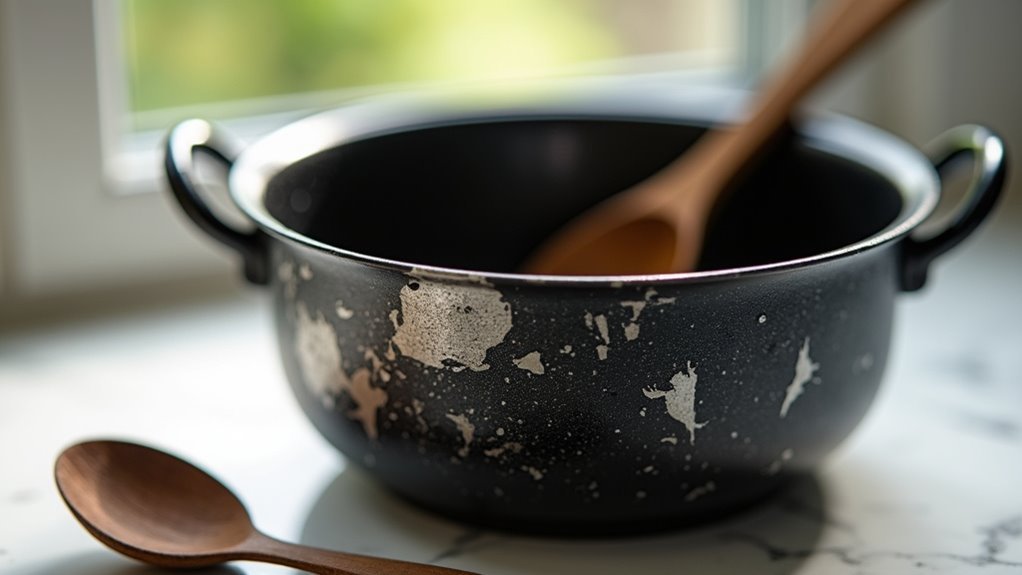
While we can’t always prevent coating damage entirely, the way we clean our rice cookers makes a huge difference in how long that non-stick surface lasts. First, we’ll want to remove the inner pot completely after each use. Soaking it in warm soapy water helps loosen stubborn rice without scrubbing. Actually, proper cleaning techniques are simpler than you’d think—just use soft cloths or sponges, never steel wool. I think it’s like caring for a good frying pan, you know? Additionally, avoiding scratching off food scraps is essential to maintain the integrity of the non-stick coating. Also, we should dry everything thoroughly before reassembling to prevent moisture damage underneath.
When to Replace Your Rice Cooker’s Inner Pot
Even with the best cleaning habits, there comes a point where we need to face the music—our rice cooker’s inner pot has reached the end of its useful life. When the non-stick coating starts peeling or flaking, it’s time to replace the pot immediately. Those scratches aren’t just cosmetic issues—they can actually become a serious health hazard. The damaged coating may release harmful chemicals like perfluorooctanoic acid ammonium, which poses cancer risks. We can’t stress this enough: manufacturers recommend replacement at the first signs of significant wear. Your safety is worth more than trying to squeeze extra life from a compromised pot. Additionally, using a rice cooker with a damaged pot can lead to bacterial growth if rice is left in it for too long, posing further health risks.
Essential Safety Precautions for Rice Cooker Maintenance
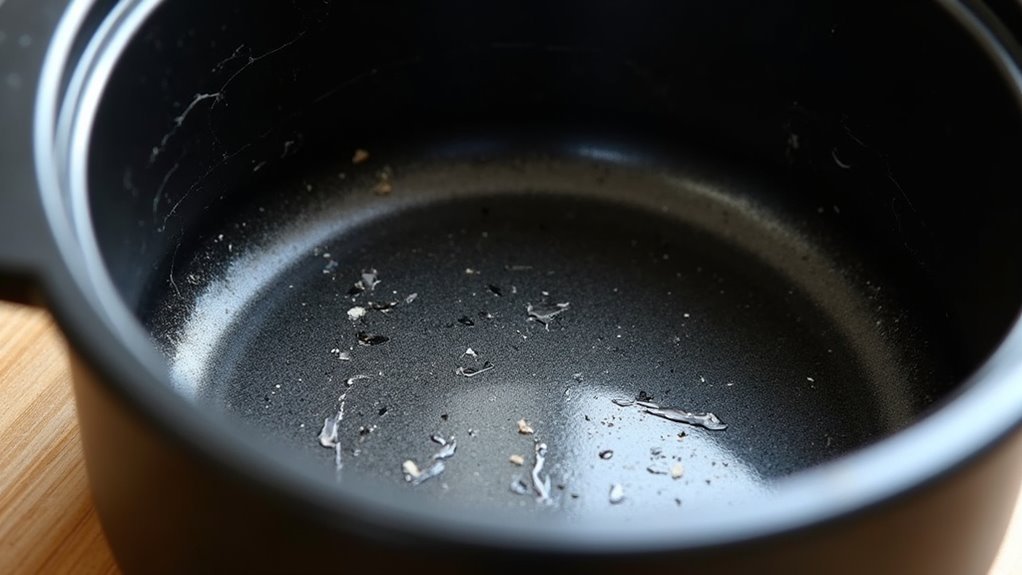
Since we’ve covered when it’s time to throw in the towel on a damaged pot, let’s talk about how we can actually prevent getting to that point in the first place. Think of rice cookers like a delicate relationship – they need proper care to last. We should always use wooden or silicone utensils instead of metal ones. When cleaning, a soft cloth with warm soapy water works best. Don’t use abrasive materials that’ll scratch the non-stick coating. Store your cooker somewhere dry and cool, making sure everything’s completely dry first. Regular maintenance and cleaning of the components will also help ensure a longer lifespan for your rice cooker.
Frequently Asked Questions
Is Non-Stick Coating in Rice Cooker Safe?
We’ll find non-stick safety reassuring since coating materials like PTFE aren’t absorbed by our bodies. While health concerns exist with peeling, rice cookers operate safely below toxic temperatures, making normal usage generally safe.
What Is the Common Problem of Rice Cookers?
We often encounter peeling non-stick coatings as rice cookers’ most common problem. This affects cooking efficiency and requires proper rice cooker maintenance. Understanding these common features helps us prevent coating damage and food safety concerns.
What Are Rice Cookers Coated With?
Most rice cookers use PTFE (Teflon) coatings, though we’re seeing more ceramic coatings and stainless steel options. These Teflon alternatives offer better durability and safety, especially when traditional non-stick surfaces start peeling.
When Should You Replace Your Rice Cooker?
Most rice cookers last 3-5 years, but we should replace ours when we notice peeling coatings or scratches. Signs to replace include damaged non-stick surfaces affecting our rice cooker lifespan despite following maintenance tips.