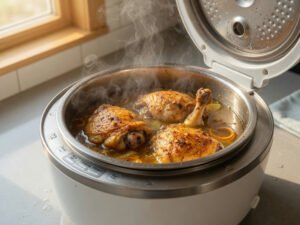
We’ve all been there—you’re cooking dinner and suddenly your cooker just shuts off on its own. It’s frustrating, actually, and honestly makes you wonder if something’s seriously wrong with the appliance. Well, turns out there are several culprits behind this annoying behavior. From faulty temperature sensors giving bad readings to thermal fuses that trip when things get too hot, these automatic shut-offs aren’t random. But here’s what we need to understand first…
Faulty Temperature Sensor Causing Incorrect Heat Readings
When your cooker keeps shutting off unexpectedly, there’s a good chance the temperature sensor has gone rogue on you.
This faulty temperature sensor sends inaccurate readings to the control board, which then triggers automatic shut-off as a safety measure to prevent overheating.
Well, it’s actually pretty smart when you think about it – like a protective parent who’s maybe a bit too cautious.
The problem is you’ll end up with undercooked food and inconsistent cooking results.
Regular calibration helps, but honestly, replacement is often your best bet for getting things back to normal cooking again. Additionally, regular maintenance can help identify issues early and extend the lifespan of your cooker.
Thermal Fuse Activation Due to Overheating
Although it might sound intimidating, the thermal fuse is actually one of the most straightforward safety features in your cooker – think of it as the ultimate circuit breaker that doesn’t mess around. This safety device interrupts electrical flow when overheating occurs, and honestly, it’s a lifesaver for preventing fires. Additionally, the use of a rice cooker can enhance nutrient retention by maintaining consistent heat during cooking.
| Common Causes | Prevention Methods |
|---|---|
| Blocked ventilation | Clean vents regularly |
| Faulty cooling fans | Professional inspection |
| Extended high-temperature cooking | Monitor cooking times |
| Poor airflow | Guarantee proper spacing |
Once tripped, you’ll need replacement to restore functionality. Regular maintenance prevents most overheating issues.
Malfunctioning Control Board or Circuit Issues
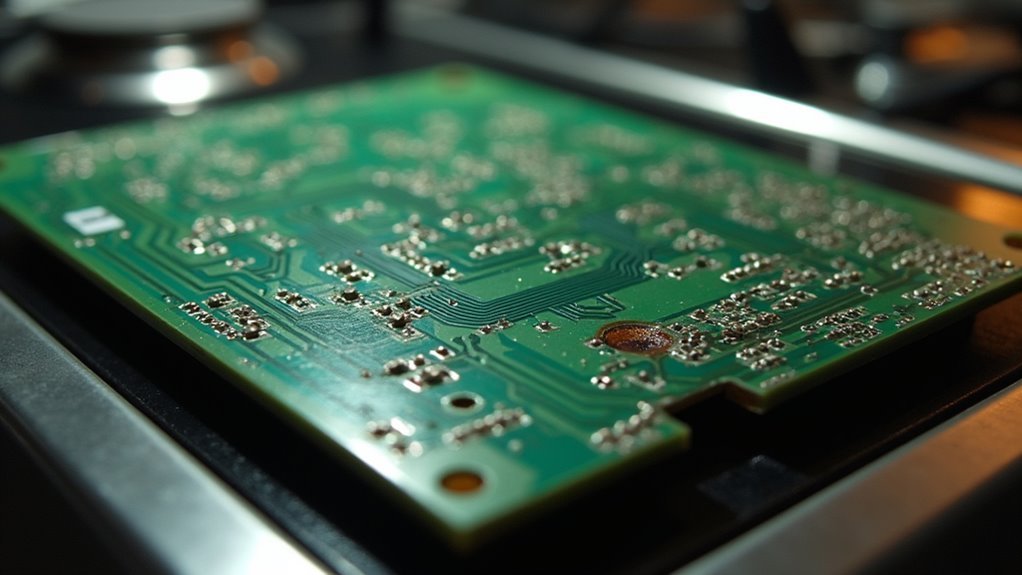
If you’ve ruled out the thermal fuse but your cooker’s still playing dead, we’re probably looking at a control board or circuit problem – and honestly, this is where things get a bit more complicated.
A malfunctioning control board basically acts like a confused brain, sending mixed signals that trigger automatic shut-offs.
Here’s what we’re dealing with:
- Circuit issues disrupting your power supply through loose connections
- Control boards causing erratic behavior when they fail
- Visual inspections that won’t reveal internal problems
- Diagnostic tools needed to actually identify the faults
- Replacement requiring professional assistance for safety reasons
Well, you know what? Sometimes it’s better to call the pros.
Steam Vent Blockage Affecting Pressure Regulation
Since we’ve covered the electrical gremlins, let’s talk about something that’s actually pretty straightforward to fix – steam vent blockages.
When your steam vent gets clogged with food debris or mineral buildup, it can’t regulate pressure properly. This creates excessive pressure inside the cooker, which triggers those safety mechanisms we mentioned earlier, causing an automatic shut-off.
Think of it like a kettle with a blocked spout – the steam has nowhere to go.
Regular proper cleaning of the vent prevents these issues. Your user manual probably has specific maintenance tips for keeping everything clear and functioning smoothly.
Defective Heating Element or Power Supply Problems
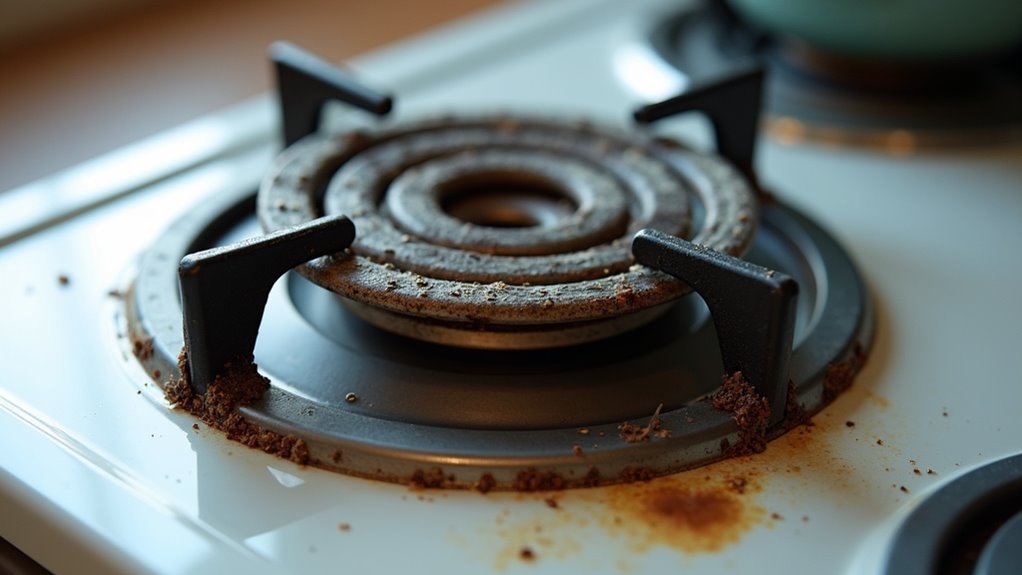
When your cooker’s heating element starts to fail, it’s basically like having a car engine that can’t maintain speed – everything just goes haywire.
We’ve seen how defective heating element issues and power supply problems trigger automatic shut-off mechanisms that’ll frustrate any home cook.
Here’s what we typically check when troubleshooting these issues:
- Visual inspection of heating elements for breaks or discoloration
- Electrical outlet testing for consistent power delivery
- Power supply cord examination for damage or wear
- Tripped circuit breaker verification at your main panel
- Insufficient voltage measurement using a multimeter
These problems don’t fix themselves, unfortunately.
Internal Timer Mechanism Failure
Although most people don’t think twice about their cooker’s timer, it’s actually one of the most critical components that keeps your appliance running smoothly – and we’ve seen way too many cases where a faulty timer mechanism becomes the silent culprit behind mysterious shut-offs.
When your internal timer mechanism starts to malfunction, it can’t properly track cooking time, leading to unexpected automatic shut-off. Electrical faults, wear and tear, or software glitches often cause these issues.
Regular maintenance helps, but sometimes you’ll need control board replacement to restore full functionality.
Frequently Asked Questions
Why Does My Cooker Shut off by Itself?
We’ve identified several automatic shutdown causes: temperature fluctuations triggering safety mechanisms, electrical issues from power surges, incorrect timer settings, user error, appliance age, and maintenance neglect. Let’s review troubleshooting steps together.
Why Did My Oven Automatically Turn Off?
Like a car’s engine shutting down when overheated, your oven’s overheating protection kicked in. We’d check for temperature fluctuations, electrical issues, faulty components, or timer settings—basic troubleshooting guarantees oven safety and prevents future shutdowns.
Why Is My Gas Oven Shutting off by Itself?
We’ve found gas oven troubleshooting reveals several causes: thermostat malfunction, gas supply issues, overheating protection activation, pilot light problems, electrical faults, burner blockages, ignition failures, and occasionally user error triggering oven safety features.
Do Ovens Shut off Automatically?
Back in grandma’s day, we’d never worry about this! Yes, we’ve got ovens with oven timers, safety features preventing temperature fluctuations, and sensors detecting power outages or faulty wiring. Model differences affect these automatic shut-offs considerably.