Red Beans in a Rice Cooker
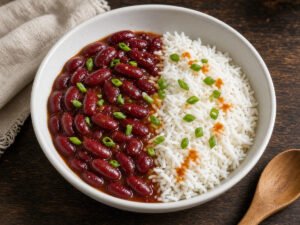
Southern red beans and rice is a Monday-night tradition that hardly anyone makes on a Monday anymore — not when you can load everything into your rice cooker before dinner and walk away. This version uses canned kidney beans, the classic Creole “holy trinity” of onion, bell pepper, and celery, and a short list of bold spices. The cooker handles the timing; you handle the hot sauce.
Red beans and rice has been a New Orleans staple for well over a century, traditionally made on Mondays using the leftover ham bone from Sunday’s dinner. The modern rice cooker adaptation strips away the long, watchful simmer — but keeps everything that matters: the layered spice, the creamy beans, the aromatic vegetable base. Because canned kidney beans are already fully cooked, a standard White Rice cycle is all they need to absorb the surrounding flavours and heat through completely. The hardest part is dicing the vegetables.
A note on the method: unlike stovetop red beans — which benefit from an hour of gentle stirring — the rice cooker is a sealed, hands-off environment. That changes what you do with the aromatics. You have two paths: dice them fine and add them raw (the cooker will soften them during the rice cycle), or take an extra five minutes to sauté them in a pan first for deeper, slightly caramelised flavour. Both produce a genuinely good result. The sauté step is optional but rewarding if you have the time.
Ingredients
Equipment
- Rice cooker (any capacity — see tip below)
- Fine-mesh strainer or colander
- Cutting board & sharp knife
- Rice paddle or wooden spoon
- Skillet (optional, for pre-sauté)
- Measuring cups & spoons
- Can opener
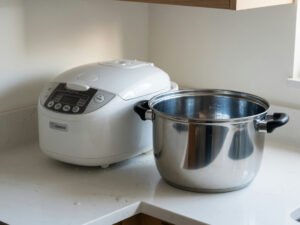
Rice cooker size: A 3-cup (uncooked) or larger cooker is ideal for 4 servings of this recipe. The beans add volume, so a compact 1-cup machine will reach its fill line quickly. If you’re working with a small cooker, halve the recipe or see our guide to choosing the right rice cooker size for your kitchen.
Method
-
1Rinse the rice ~2 min
Place the rice in a fine-mesh strainer and rinse under cold running water, stirring gently with your fingers, until the water runs mostly clear — about 1 to 2 minutes. Drain well before adding to the cooker.
Pro tip
Don’t skip the rinse. The extra surface starch on unrinsed rice makes the mixture stickier and can contribute to foaming in the pot. Clear water isn’t required — just mostly clear. -
2Dice the aromatics ~8 min
Finely dice the onion, bell pepper, and celery into small, even pieces (aim for roughly ¼-inch). Mince the garlic. Small, uniform pieces are important here — in a standard rice cooker with no pre-sauté, the size of your cut determines how well the vegetables cook through during the cycle.
Want more flavour? Pre-sauté
If your cooker has a sauté or multi-cook function, use it now: add a tablespoon of oil, then cook the onion, bell pepper, and celery for 4–5 minutes until softened. Add the garlic and cook 1 minute more. Otherwise, do this in a small skillet and transfer the cooked aromatics into the pot in the next step. Pre-sautéing builds depth through caramelisation that boiling alone can’t replicate. -
3Drain and rinse the beans ~2 min
Open the cans of kidney beans, tip into a colander, and rinse under cold water for 20–30 seconds. This removes the canning liquid, which is high in sodium and starch. Shake to drain well.
Why rinse canned beans?
The liquid in the can — sometimes called “aquafaba” — adds significant starch and sodium. Rinsing reduces the sodium content of the dish and helps prevent excess foaming in the cooker. If you are intentionally making a creamier, saucier version (see the Variations section), you can skip the rinse and reduce the broth by ¼ cup. -
4Build the pot ~3 min
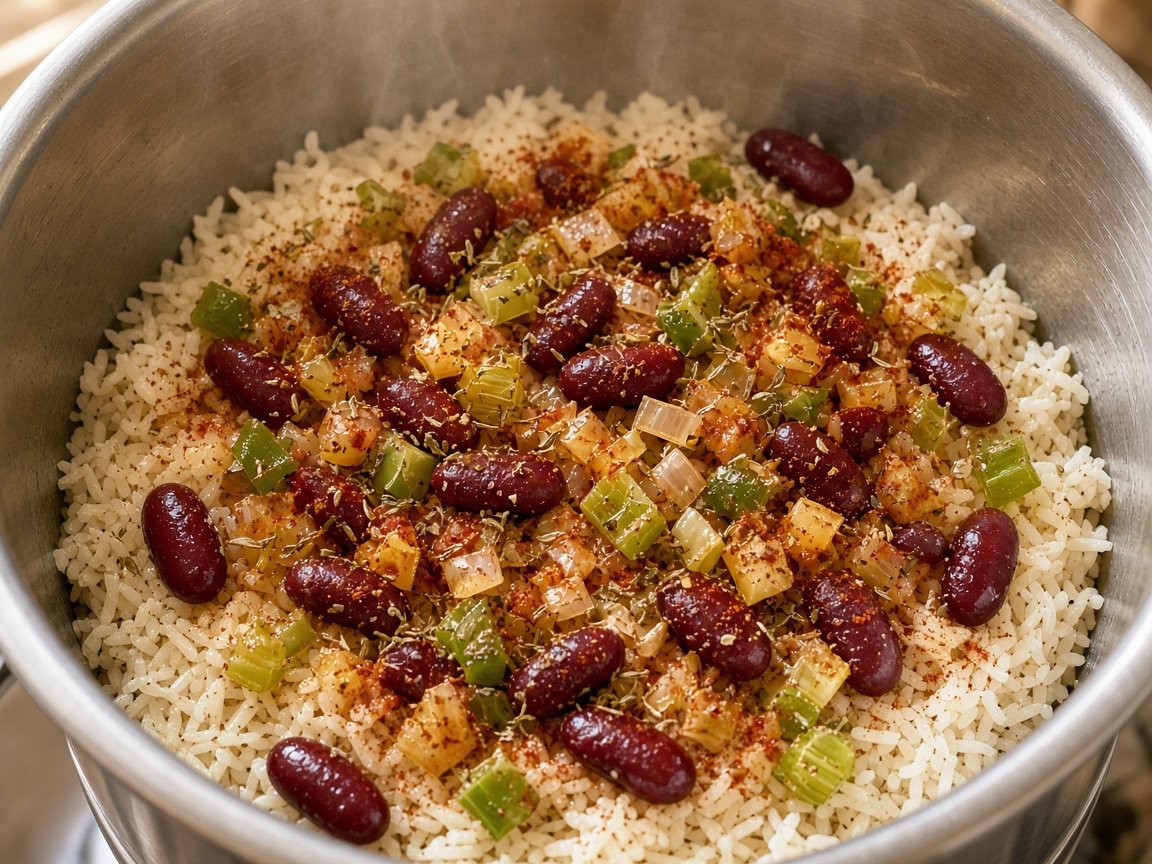
Add the rinsed rice to the inner pot first, then pour in the broth. Add the drained beans, the diced aromatics (raw, or pre-sautéed if you did step 2), the smoked paprika, thyme, cumin, cayenne, salt, pepper, and both bay leaves. If you’re using sliced sausage, add it now. Give everything a gentle stir to distribute the spices — but keep the rice largely settled at the bottom so it cooks evenly in the liquid.
Check your fill line before closing the lid
Beans produce starch foam during cooking that can block the steam vent or cause the lid to lift. Keep the contents at least an inch below the maximum fill line. If your pot looks very full, reduce the filling by a quarter of the beans and save them to stir in after cooking. For more on this, see our rundown of common rice cooker overflow and steam vent issues. -
5Start the cook cycle 25–35 min
Close the lid firmly and select White Rice or Regular on your cooker. If your model has a Mixed Rice, Beans, or Multi-grain setting, that’s an even better choice — it typically runs a few minutes longer at a slightly lower temperature, giving the flavours more time to develop. Press start and step away. The timer in the section below can help you track the cycle.
Using a delay timer?
If you want dinner ready when you get home, most mid-range to premium rice cookers include a delay start feature. Load everything into the pot (keep it in the fridge if your cooker allows), set the delay, and walk out. For a full guide to how the feature works, see our article on how rice cooker delay timers work. -
6Rest with the lid on 10 min
When the cycle ends and the cooker clicks over to Keep Warm, leave the lid completely closed for 10 minutes. This resting period lets residual steam finish cooking the top layer of rice and allows the whole dish to tighten into a cohesive texture. Opening the lid too early releases the steam before it has done its job.
About the Keep Warm function
The automatic Keep Warm setting typically holds the pot at around 65–75°C (150–167°F) — warm enough to prevent bacterial growth but gentle enough not to dry out the rice. The dish will stay in good shape on Keep Warm for up to an hour. For a deeper look at what the function does and when to use it, see our guide on the rice cooker’s automatic Keep Warm feature. -
7Fluff, season, and serve ~3 min
Lift the lid and fish out both bay leaves. Using a rice paddle, fluff the contents with a gentle folding motion — you want to mix without mashing the beans. Taste and adjust: a little more salt, an extra pinch of paprika, or a squeeze of hot sauce added now will lift the whole dish. Serve straight from the pot into bowls, topped with sliced green onions, fresh parsley, and hot sauce on the side.
If the rice is a little sticky on the bottom
A light crust on the bottom of the pot is normal and, in many Creole kitchens, considered the best bit. If you have a scorched rice or crust setting on your cooker, you can intentionally develop this after the cycle. For accidental sticking, let the pot cool slightly before cleaning — beans and starch release from non-stick surfaces much more easily once they’ve had a few minutes to contract.
Kitchen Timers
Start each timer as you reach that stage. The rice cooker cycle timer is adjustable — set it to match your machine.
Browser notifications will be requested when you start a timer — you can decline and timers still work normally.
Nutrition
| Nutrient | Amount |
|---|---|
| Calories | ~390 kcal |
| Protein | 16 g |
| Carbohydrates | 72 g |
| Dietary Fibre | 11 g |
| Sugars | 3 g |
| Total Fat | 4 g |
| Saturated Fat | 0.5 g |
| Sodium | 620 mg |
| Iron | ~20% DV |
| Potassium | ~700 mg |
Values are approximations based on the nutritional composition of the listed ingredients at 4 servings. Actual values vary with specific brands, substitutions, and cooking method.
Variations
Fully Vegan & Vegetarian
- The base recipe is already plant-based — just use vegetable broth instead of chicken broth.
- Skip the optional sausage, or use a plant-based smoked sausage (many brands are available and add a good smoky depth).
- Add a strip of kombu (dried seaweed) to the pot for a subtle umami boost that’s reminiscent of the ham bone in the traditional version.
- A tablespoon of tomato paste stirred into the broth deepens the flavour and adds a slight body to the sauce.
- Liquid smoke (just ¼ tsp) can replicate the smokiness that the sausage or ham bone would otherwise provide.
Extra Spicy
- Double the cayenne pepper to ½ tsp — this is a noticeable but not overwhelming heat level.
- Add one finely diced jalapeño or serrano to the aromatics at the dicing stage.
- Stir in 1–2 tsp of your favourite Louisiana hot sauce (Crystal, Tabasco, or Frank’s RedHot) directly into the pot before cooking.
- Add ½ tsp of crushed red pepper flakes alongside the other spices.
- At the table, offer pickled jalapeños, sliced fresh chillies, and extra hot sauce as condiments.
Andouille Sausage Version
- Use 6 oz (170 g) of andouille or smoked sausage, sliced into ¼-inch coins. Andouille is the traditional New Orleans choice; smoked kielbasa or any good smoked pork sausage work well too.
- If pre-sautéing, brown the sausage slices in the skillet first (1–2 minutes per side) before adding the aromatics — this caramelises the edges and renders a little fat for extra depth.
- Otherwise, add the sliced sausage directly to the pot when building the layers.
- Nutrition note: adding sausage increases the calorie count per serving by roughly 100–150 kcal, depending on the sausage variety.
Brown Rice Version
- Swap long-grain white rice for an equal volume of long-grain brown rice.
- Increase the broth to 1¾ cups — brown rice needs more liquid.
- Use your cooker’s Brown Rice cycle, which typically adds 15–25 minutes to the cook time.
- The beans will be slightly softer and the texture a little more integrated — which works well for a saucier, more stew-like result.
- Add an extra pinch of salt; whole-grain rice can taste slightly flat without it.
Saucy Red Bean Stew (over rice)
- Cook the beans separately from the rice for a traditional New Orleans presentation: cook plain white rice in the cooker, and simmer the beans in a small saucepan on the stovetop with 1 cup of broth, diced aromatics, and spices for 20 minutes until saucy.
- Alternatively, skip rinsing the beans (keep the canning liquid), use ½ cup less broth, and mash about ¼ of the beans against the side of the pot before starting the cycle — this produces a creamier, more integrated sauce.
- Your cooker may also have a dedicated soup or stew setting that works well for a looser, broth-forward version — worth trying if the option is available to you.
- Serve with a ladle of beans spooned generously over a mound of plain rice in a shallow bowl.
Caribbean-Inspired
- Replace ½ cup of the broth with full-fat coconut milk for a rich, slightly sweet base reminiscent of Jamaican rice and peas.
- Swap the smoked paprika and cumin for ¾ tsp allspice and ¼ tsp ground cinnamon.
- Add a whole Scotch bonnet pepper to the pot (do not chop — leave it whole so it flavours without releasing too much heat), then remove before serving. If Scotch bonnet is unavailable, a whole habanero works similarly.
- Add 3–4 sprigs of fresh thyme alongside the dried thyme for a more aromatic result.
- Garnish with sliced mango and a squeeze of lime juice at serving.
Chef’s Tips
Liquid Ratio Is Everything
The standard ratio for white rice is around 1:1.5 to 1:2 (rice to water). With canned beans in the pot, you have extra moisture from the beans themselves — that’s why this recipe uses only 1½ cups broth for 1 cup of rice. If you add extra vegetables with high water content (tomatoes, fresh corn), reduce the broth by another 2 tablespoons.
Dice Small for the Dump Method
If you’re not pre-sautéing, the size of your vegetable pieces is the main variable affecting the final texture. Quarter-inch (6mm) dice will soften fully during a 30-minute White Rice cycle. Larger chunks may still have a bit of bite — which some people prefer, but is worth knowing going in.
Which Cooker Works Best?
Basic on/off cookers work, but watch the steam vent more carefully. Fuzzy logic and induction heating machines give more even, consistent results — their Mixed Rice or Multi-grain settings are excellent for bean dishes. If you have a multi-cooker with a sauté function, you can do the whole recipe in one vessel without a separate pan.
Don’t Overfill
Beans produce starch foam as they heat. The rule is simple: don’t let the contents go above the maximum fill line, and leave a bit of headroom beyond that. If your pot is close to the line, hold back a quarter of the beans and stir them in after the cycle ends — they’re already cooked and just need to warm through.
Season at the End
Salt, acid, and fresh herbs all taste different after a pressure-free rice cooker cycle than they would raw. Season the pot before cooking, then taste and adjust again after the rest. A final pinch of salt and a hit of hot sauce often make a noticeable difference after everything has had a chance to meld.
Fluff Gently, Don’t Stir
Kidney beans are softer after the cook cycle than they are from the can. Use a rice paddle and a gentle folding motion rather than stirring vigorously — aggressive mixing will mash the beans into the rice and lose the contrast in texture that makes the dish interesting.
Troubleshooting
-
The cooker is overflowing or bubbling through the steam ventThe pot is too full, or there’s too much starch in the liquid. Open the lid briefly in the first 10 minutes of cooking to release pressure, reduce the contents, and use less liquid next time. Rinsing the beans more thoroughly before adding them helps significantly.
-
The rice switched to Keep Warm but is still undercookedThis usually means there was too much liquid — the cooker’s thermal sensor detected heat above the water line and switched off early, before all the liquid was absorbed. Add slightly less broth next time. If this happens during a cook, switch back to the Cook setting and let it run another 5 minutes.
-
The mixture is too dry or the rice is crunchy at the topThe lid may have vented more steam than usual, or the beans were very well-drained and contributed less moisture. For the rest of this batch, add 2–3 tablespoons of water, close the lid, and return to Cook for 5 minutes. Next time, add an extra ¼ cup of broth.
-
The beans are mushy and have broken downThe cycle ran too long or the beans were particularly soft to begin with. Some mashing is expected and even traditional — classic red beans are intentionally creamy and “broken down” in Creole cooking. If you want more intact beans, reduce the cook time by using a Plain White Rice cycle rather than a Mixed Rice or Beans cycle, and stir very gently when done.
-
The flavour is flat or blandThis is almost always a seasoning issue. Taste after cooking and add salt incrementally — it often takes more than expected to lift a bean dish. Hot sauce, a small squeeze of lemon or lime, and a few drops of Worcestershire sauce are all effective quick fixes at the table.
-
Rice stuck to the bottom of the potA little crust is normal and prized in many cuisines. For stubborn sticking, fill the pot with warm water and let it soak for 15–20 minutes before cleaning. For a detailed walkthrough of cleaning your rice cooker thoroughly — including starch and bean residue — see our dedicated guide.
Storage & Reheating
Red beans and rice is genuinely one of those dishes that many cooks argue tastes better on day two, once the spices have had time to settle into every grain of rice. Making a double batch and freezing half is worth the minimal extra effort at prep time.
Frequently Asked Questions
-
Dried beans are significantly more difficult to cook in a standard rice cooker. A White Rice cycle typically reaches 100°C (212°F) but doesn’t generate the sustained pressure needed to fully hydrate and soften dried kidney beans from raw. If you use dried beans, they would need to be pre-soaked for at least 8 hours and then pre-cooked (by simmering or pressure cooking) until tender before going into the rice cooker. Some premium cookers with dedicated pressure-cooking or slow-cook modes can handle dried beans in the pot directly, but this requires the specific function. For most home cooks using a standard machine, canned beans are the right call.
-
Yes — any canned bean that is already fully cooked will work well. Pinto beans are the most common substitute and produce a slightly creamier texture. Small red beans (adzuki-style) are closer to the original New Orleans version than kidney beans. Black beans work and shift the dish toward a Tex-Mex or Cuban direction. Cannellini beans produce a milder, slightly sweet result. Adjust the seasoning to suit the bean — lighter beans like cannellini benefit from a little more thyme and less paprika.
-
Rice cookers switch to Keep Warm when the internal temperature rises above boiling — which happens when all the free liquid has been absorbed. If the rice is undercooked, it means the cooker detected heat above the liquid line earlier than the rice was ready. This can happen when the beans released extra moisture and unbalanced the ratio. Use slightly less broth next time (reduce by 2 tablespoons). If it happens during a cook, switch back to the Cook or White Rice setting and let it run another 5–8 minutes with the lid closed.
-
Absolutely. Diced tomatoes (fresh or canned, drained), frozen corn, diced jalapeño, frozen okra, and diced carrot all work well added when building the pot. For high-moisture vegetables like fresh tomatoes or courgette, reduce the broth by 2–3 tablespoons to compensate for the extra liquid they release. Leafy greens like spinach or kale are better added after the cycle ends — stir them in, close the lid for 3 minutes, and let the residual heat wilt them without overcooking.
-
Three things drive sodium in this recipe: the canned beans, the broth, and the added salt. Use no-salt-added kidney beans (widely available at most grocery stores), low-sodium or unsalted broth, and reduce the added salt to ½ tsp. Rinsing the beans thoroughly also removes a meaningful amount of the canning sodium. If you’ve already cooked the dish and it’s too salty, adding a small raw potato to the pot and cooking for 10 minutes (then discarding it) can absorb some of the excess salt — this is a known kitchen technique, though the effect is modest.
-
Yes, with halved quantities. Use ½ cup rice, ¾ cup broth, and 1 can (15 oz) of beans. The fill level will be proportionally similar and the method is identical. The key is not exceeding the fill line — beans expand and foam more than plain rice, so leave even a little more headroom than usual. Compact 1-cup and 3-cup cookers are well-suited to a 2-serving version of this recipe.
-
The base recipe as written is naturally gluten-free — rice, kidney beans, vegetables, and spices all contain no gluten. If using sausage, check the label; some processed sausages contain wheat-based fillers or are manufactured in facilities that handle gluten. The same applies to broth — look for a certified gluten-free label if you are cooking for someone with coeliac disease.
My Notes
Jot down your tweaks, substitutions, or reminders for next time. Notes are saved to your browser.