
Most people don’t realize that rice cooker thermal sensors actually work like tiny digital thermometers embedded throughout the cooking chamber. We’re talking about sophisticated technology that’s constantly measuring temperature changes to prevent your rice from turning into mush or, well, burning to a crisp. These sensors aren’t just monitoring heat—they’re actually detecting moisture levels and making split-second decisions about when to adjust power. There’s more happening beneath that simple “cook” button than you’d expect.
Temperature Measurement and Monitoring Functions
When you think about it, thermal sensors in rice cookers are basically the unsung heroes that make perfect rice possible every single time.
These temperature sensing devices continuously track what’s happening during the cooking process, feeding real-time data to the control system.
Well, they’re positioned right where the action is—either touching the rice directly or monitoring steam levels.
The rice cooker uses this temperature measurement info to adjust the heating element automatically.
It’s actually pretty smart how the monitoring system prevents undercooking or, you know, that dreaded burnt bottom situation, ensuring ideal rice doneness. Additionally, these sensors play a crucial role in maintaining even heat distribution, which is essential for consistent cooking results.
Sensor Types and Technology Components
Although we’ve covered how thermal sensors monitor temperature, let’s explore the actual types of sensors that make this magic happen.
These thermal sensors are the unsung heroes enabling precise temperature measurement in your rice cooker’s control system.
Here’s what’s actually inside your rice cooker:
- Thermocouples – Quick-response sensors for real-time adjustments near the inner cooking pot
- Thermistors – Cost-effective temperature sensing components that change resistance with heat
- RTDs – Highly accurate sensors for ideal cooking temperature control
- Strategic positioning – Sensors placed for continuous monitoring of rice and steam
- Smart integration – Connected to heating elements for automatic switching between cooking modes
Additionally, advanced sensors detect minor changes in temperature and moisture levels, ensuring optimal cooking results.
Strategic Placement Within Cooking Chambers

Since we’ve got these clever sensors doing the heavy lifting, let’s talk about where they’re actually positioned—because placement isn’t just important, it’s everything.
These thermal sensors are strategically placed near the bottom or sides of your inner cooking pot, maintaining close contact with the cooking medium. This positioning guarantees accurate temperature readings throughout the cooking process.
Real-Time Control System Integration
While those sensors are busy gathering temperature data, the real magic happens when that information flows into the rice cooker’s control system—think of it as the brain that never sleeps.
We’re talking about continuous temperature readings that trigger real-time adjustments instantly.
Here’s how the control system works its magic:
- Predefined algorithms analyze temperature sensing of rice for different grain types
- Heating elements receive immediate power adjustments when temps fluctuate
- Optimal cooking conditions stay consistent throughout the entire cooking cycle
- Even doneness gets maintained through precise thermal sensors monitoring
- Real-time data displays lets track progress without lifting the lid
- Additionally, real-time adjustments help ensure energy-efficient cooking, leading to reduced electricity consumption over time.
Heating Element Power Regulation
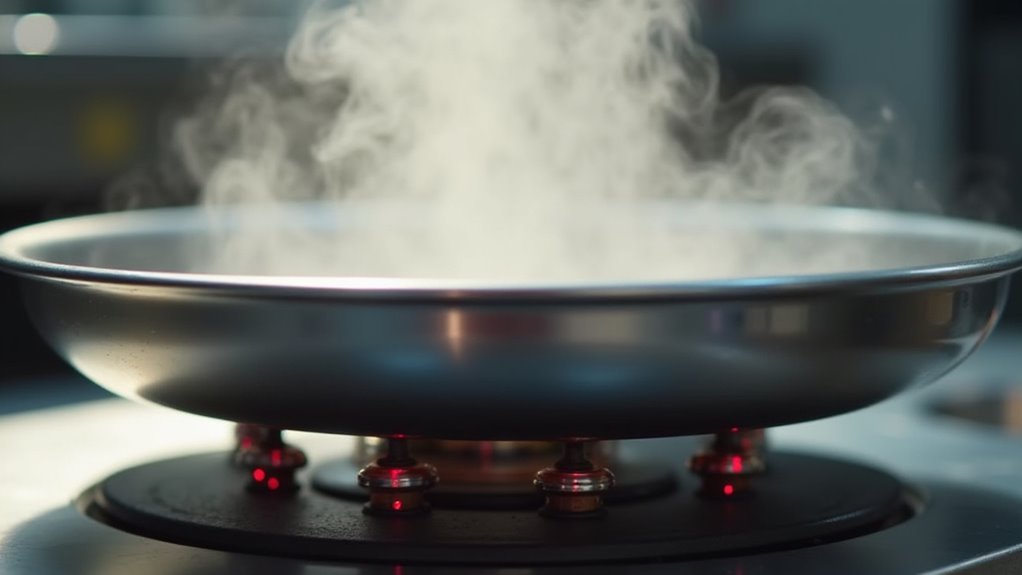
The moment our rice cooker’s thermal sensors detect a temperature that’s straying from the target range, they don’t just sit there—they immediately communicate with the heating element to make power adjustments.
Think of it like a thermostat that’s constantly fine-tuning things. When temperatures drop below the desired level, the control system cranks up the heating element power. Too hot? It dials things back down.
These real-time adjustments happen throughout the entire cooking cycle, ensuring proper regulation for even cooking. This precise temperature control is what separates perfectly fluffy rice from mushy disasters—it’s all about achieving that ideal doneness we’re after. Moreover, this consistent heat distribution is essential for preserving nutrients and ensuring a healthy meal.
Cooking Cycle Management and Completion Detection
As our rice cooker heats up and does its thing, those thermal sensors are actually orchestrating the entire cooking process like a conductor leading an orchestra.
These smart little devices handle cooking cycle management through precise temperature feedback, making real-time adjustments to keep everything at ideal levels.
Here’s how they manage the whole process:
- Monitor temperature continuously throughout the cooking cycle
- Signal the control system when water’s absorbed and cooking’s complete
- Automatically switch to keep warm mode for convenience
- Provide completion detection so we don’t have to guess
- Guarantee consistent cooking results across different rice types
- They also ensure the rice cooker can adapt to various cooking methods, enhancing the overall cooking flexibility of the appliance.
User Experience Enhancement Through Automation
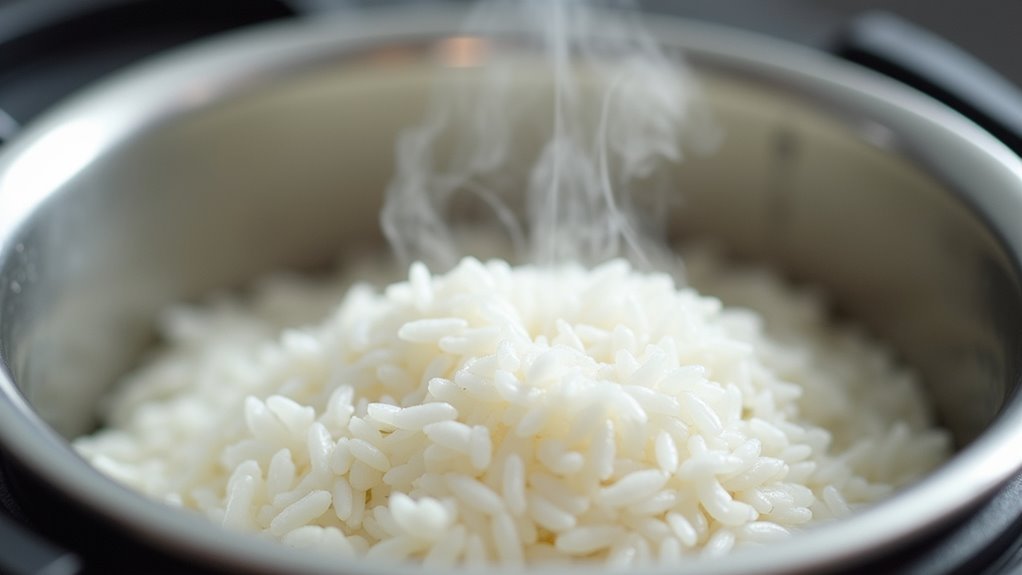
When rice cookers handle everything automatically, they’re basically turning us into kitchen wizards without any of the actual work.
These thermal sensors completely transform our user experience by managing cooking temperature without constant babysitting. We don’t need to hover over the stove anymore—automated temperature control handles real-time adjustments while we’re doing other things. Additionally, the heating element ensures that the pot reaches the right temperature efficiently, further enhancing the cooking process. Digital displays keep us informed about progress, and honestly, it’s pretty satisfying watching those indicator lights do their thing.
The cooking process becomes foolproof when rice cookers automatically switch to keep warm mode, delivering consistent cooking results every single time.
Frequently Asked Questions
What Is the Thermal Sensing Device of a Rice Cooker?
We’ve found rice cooker technology relies on thermal sensor types like thermocouples for temperature regulation and cooking efficiency. These safety mechanisms guarantee cooking consistency through sensor calibration, optimizing energy consumption while enhancing user experience.
Is It Okay to Use a Rice Cooker Without a Thermal Fuse?
We don’t recommend using a rice cooker without its thermal fuse due to serious overheating risks and safety concerns. This essential thermal protection guarantees appliance longevity and prevents dangerous temperature spikes that compromise cooking efficiency.
What Is the Purpose of the Thermal Sensor?
We monitor, we measure, we maintain—thermal sensors guarantee precise temperature regulation during rice cooking, optimizing cooking time and rice quality while providing essential safety features and energy efficiency across different cooking modes.
How Does a Rice Cooker Sensor Work?
We’ll explain how rice cooker sensors monitor temperature continuously, providing sensor accuracy for cooking automation. They detect when water’s absorbed, ensuring cooking efficiency and food safety while optimizing energy consumption through precise temperature control.