We’ve all been there – you think microwaving rice is foolproof, but somehow it turns into a disaster. Maybe it’s burnt on the bottom, or it’s this weird mushy mess that’s nothing like what you expected. The thing is, there are actually several sneaky mistakes we tend to make without realizing it. I mean, how hard can it be, right? Well, apparently harder than we thought, and these common slip-ups might surprise you.
Using the Wrong Water-to-Rice Ratio
When we’re rushing to get dinner on the table, it’s tempting to eyeball the water and rice measurements – but honestly, this is where most of us mess up our microwave rice. Different rice types need specific ratios for proper water absorption. Brown rice demands about 2¼ cups water per cup of rice, while white rice typically follows a 2:1 ratio. I’ve learned that using too little water burns the rice, and too much creates a mushy disaster. Your microwave’s wattage might require slight adjustments, so don’t be afraid to monitor and tweak as needed. Additionally, it’s crucial to measure the water accurately to achieve the best results.
Failing to Cover the Rice Container
Although it seems like a minor detail, skipping the cover on your rice container is probably one of the biggest mistakes we make – and honestly, I didn’t realize how essential this step was until I’d ruined countless batches. Without proper steam retention, your rice turns into this sad, dry mess that’s honestly embarrassing to serve.
| Covered Rice | Uncovered Rice | Result |
|---|---|---|
| Fluffy texture | Dried out grains | Night and day difference |
| Even cooking | Uneven results | Some undercooked, some overcooked |
| Proper cooking times | Extended times needed | Frustrating guesswork |
Use a microwave-safe lid with small vents.
Stirring Rice During the Cooking Process
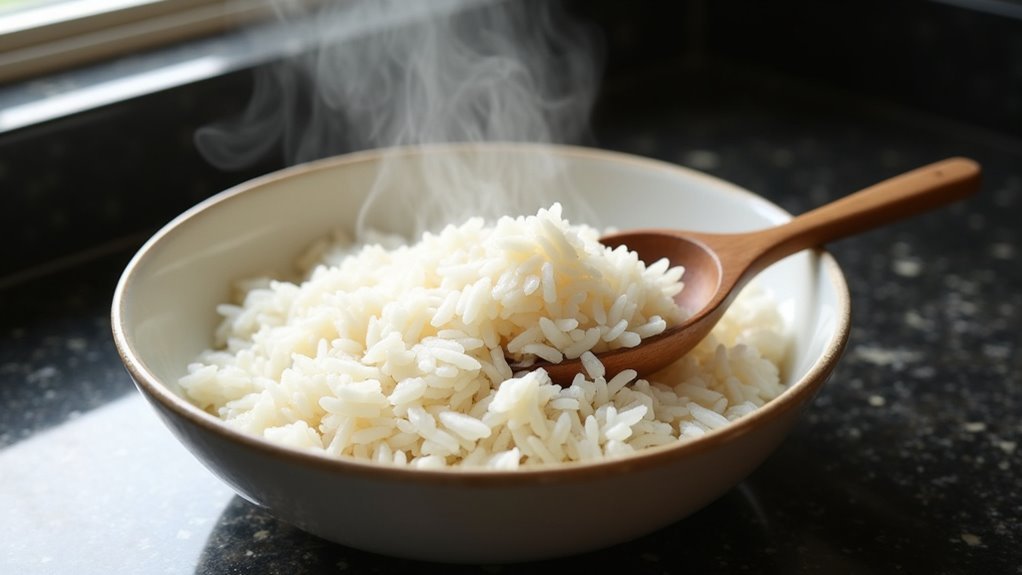
If there’s one thing that’ll turn your perfectly good rice into a mushy disaster, it’s getting impatient and stirring it while it cooks. We’ve all been there—thinking we’re helping by giving it a quick stir. But actually, this cooking technique completely disrupts the steam environment that’s essential for proper rice texture.
When we stir, we’re literally breaking those delicate grains apart. Instead, let it cook undisturbed, then rest for five minutes. Trust me on this one. A rice cooker can provide an optimal steam environment for cooking rice perfectly.
- Steam swirling around untouched grains like a gentle sauna
- Broken rice pieces clumping together like wet cement
- Fork gently separating perfectly fluffy grains
- Gummy, mushy rice sticking to your spoon
Not Allowing Rice to Rest After Cooking
Just as important as not stirring is resisting the urge to dive right into your rice the second that microwave beeps. We understand it’s tempting, but trust us—those extra 5 to 10 minutes of resting benefits are absolutely essential. The steam retention that happens when you keep that bowl covered allows the grains to absorb remaining moisture and redistribute heat evenly. Without this step, you’ll end up with rice that’s partly hard, partly mushy—basically a texture nightmare. Think of it like letting a cake cool; patience here makes all the difference in achieving perfectly fluffy rice. Additionally, using a rice cooker can simplify the cooking process and help achieve consistent results in your rice texture.
Choosing the Wrong Microwave Power Setting
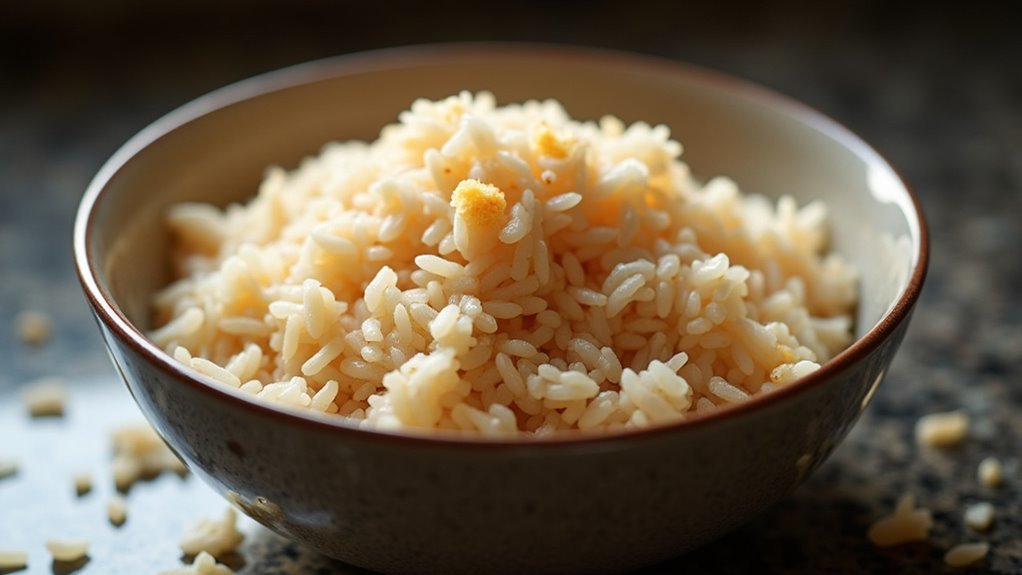
When you blast your rice on full power for the entire cooking time, you’re basically setting yourself up for disaster—and we’ve all been there. The key is understanding how microwave wattage affects your cooking times. Start with high power to get things boiling, then drop to 50% power—trust me on this.
Here’s what happens when you get it wrong:
- Steam erupting like a volcano, rice grains exploding everywhere
- Mushy, waterlogged rice that looks like porridge
- Hard, crunchy kernels hiding beneath a soft surface
- Dried-out rice stuck to your bowl like concrete
Every microwave’s different, so experiment a bit.
Skipping the Rice Rinsing Step
Look, I get it—rinsing rice feels like an extra step that nobody has time for, especially when you’re already cutting corners by using the microwave. But here’s the thing: skipping this step is actually sabotaging your results. The rinsing benefits are real—we’re talking about proper starch removal that prevents your rice from turning into a gummy mess. Without rinsing, excess starch creates clumping and uneven cooking. Just two minutes under cold water until it runs clear makes all the difference. Trust me, that small effort transforms sticky, clumpy rice into fluffy, separate grains that actually taste good. Additionally, brown rice, with its higher levels of vitamins and minerals, benefits from rinsing as it helps improve the overall texture.
Using Non-Microwave Safe Containers
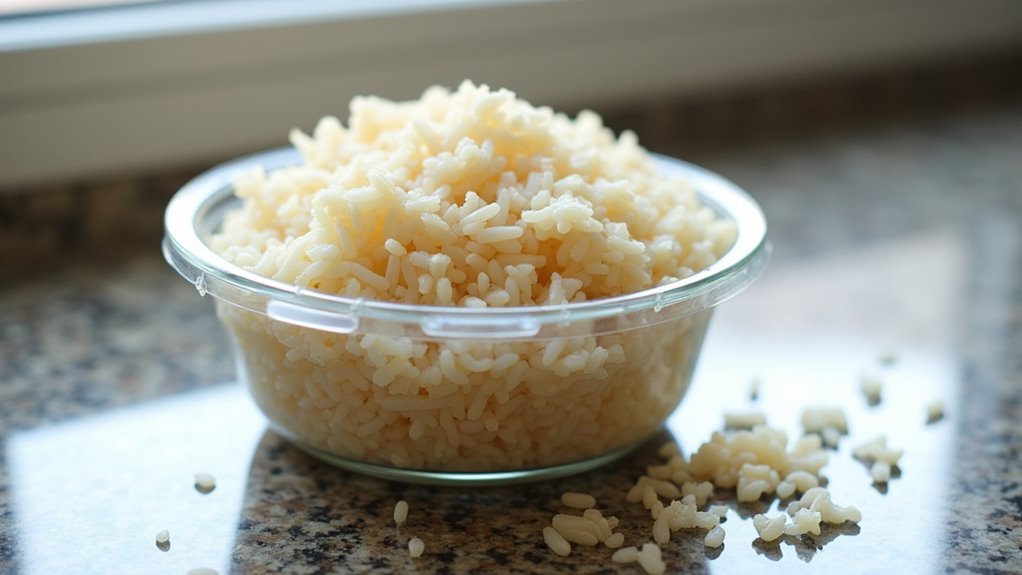
After you’ve got your rice properly rinsed, the next thing that can completely derail your microwave rice game is grabbing the wrong container. We’ve all been there—thinking any bowl will do. But microwave container safety isn’t just about convenience; it’s about avoiding harmful chemicals leaching into your food.
Metal containers spark like fireworks, while certain plastics can melt or release toxins. Always look for that “microwave safe” label on glass, ceramic, or approved plastic containers.
- Sparks flying from a metal pot
- Melted plastic dripping onto rice
- Warped containers cracking under heat
- Chemical fumes rising from unsafe materials
Frequently Asked Questions
What Are the Common Mistakes When Microwaving Rice?
We’ve all wondered why our rice turns out wrong—it’s usually because we don’t rinse grains, use incorrect water ratios, skip covering, stir unnecessarily, affecting rice texture and cooking times.
What Is the Trick to Microwave Rice?
We’ll use proper water ratios and cover the bowl to trap steam. These microwave tips guarantee perfect rice texture—two cups water per cup rice, then let it rest undisturbed after cooking.
Why Shouldn’t You Microwave Cooked Rice?
Studies show 20% of food poisoning cases involve rice. We shouldn’t microwave cooked rice without proper precautions because inadequate reheating compromises rice safety, potentially leaving harmful bacteria alive and risking serious foodborne illness.
What Is the 5 5 5 Rule for Rice?
We use the 5-5-5 rule by microwaving rice on high for 5 minutes, resting 5 minutes, then cooking on medium 5 minutes. This cooking technique works best with long-grain rice varieties for fluffy results.