
Please note: This content is for informational purposes only and does not constitute medical or dietary advice. Consult your healthcare provider before making changes to your diet or treatment plan.
Like a silent assassin lurking in yesterday’s takeout, fried rice syndrome strikes when we least expect it. We’ve probably all done it—left that container of rice sitting on the counter a bit too long, thinking it’s harmless enough. But here’s the thing: Bacillus cereus doesn’t care about our convenience. This sneaky bacterium turns innocent grains into, well, let’s just say your stomach won’t thank you later. The real kicker? It’s completely preventable if you know what you’re dealing with.
Understanding Bacillus Cereus and Its Role in Food Poisoning
When we think about food poisoning, most of us probably picture undercooked chicken or spoiled milk, but there’s actually a sneaky culprit that’s hiding in plain sight—leftover rice. Meet Bacillus cereus, a spore-forming bacterium that’s basically the ninja of food safety threats. This little troublemaker loves starchy foods and can survive even when we cook rice at high temperatures. What makes it dangerous are the bacterial toxins it produces—one causes diarrhea, while the other triggers vomiting. It’s like having two different weapons in its arsenal, and both can make us seriously sick within hours.
How Rice Becomes a Breeding Ground for Harmful Bacteria
Rice might seem harmless sitting in your kitchen, but it’s actually the perfect storm for bacterial growth—and honestly, that’s pretty terrifying if you think about it. The real culprit here is how we handle rice after cooking. Those tiny grains create massive surface area where Bacillus cereus spores can hide and multiply rapidly.
| Temperature Range | Bacterial Activity | Time Frame | Risk Level |
|---|---|---|---|
| 40-135°F | Active growth | 2+ hours | High |
| Below 40°F | Dormant | Indefinite | Low |
| Above 135°F | Killed/Inactive | During cooking | Low |
| Room temp | Rapid multiplication | 1-6 hours | Extremely high |
Poor rice handling and improper cooling methods after cooking create that dangerous zone where bacteria thrive.
Recognizing the Symptoms of Fried Rice Syndrome

When we’re dealing with fried rice syndrome, it’s essential that we can spot the early warning signs before things get worse. The tricky part is that symptoms hit fast—we’re talking anywhere from one to six hours after eating that sketchy leftover rice, which is way quicker than your typical stomach bug. We need to understand how severe these symptoms can get and, well, when it’s time to actually worry versus when we can just ride it out at home.
Early Warning Signs
Although it might sound like something you’d only read about in medical textbooks, fried rice syndrome can actually hit closer to home than we’d like to think. The early symptoms don’t exactly announce themselves with fanfare—they’re more like unwelcome guests that show up unannounced. Within hours of eating that questionable leftover rice, we might notice our stomach starting to feel, well, off. The warning signs include nausea creeping in, followed by vomiting and diarrhea. It’s probably worth noting that stomach cramps often join the party too. These symptoms can feel like the flu, but they’re actually food poisoning.
Onset Timeline Patterns
If we’re trying to pin down exactly when fried rice syndrome hits, the timing can be pretty unforgiving. The symptom timeline is remarkably fast—we’re talking about onset duration that’s way quicker than your typical food poisoning.
Here’s what we typically see:
- Symptoms appear within 1-6 hours after eating contaminated rice
- Nausea and vomiting often hit first, sometimes within an hour
- Diarrhea and stomach pain usually follow shortly after
- Fever may develop as your body fights the toxins
- Most symptoms peak quickly but resolve within 24 hours
It’s like your body’s alarm system goes off immediately when those Bacillus cereus toxins start wreaking havoc.
Severity Assessment Indicators
Since we’ve covered how quickly fried rice syndrome can hit you, let’s talk about figuring out just how bad your situation actually is. We’re looking for severity assessment clues that’ll tell us if this is manageable at home or needs medical attention.
If you’re experiencing intense stomach pain, can’t keep fluids down, or notice blood in your stool – well, that’s probably when we need professional help. Risk factors like being elderly, pregnant, or having compromised immunity make things trickier. High fever above 101°F isn’t something to mess around with either, honestly.
The Science Behind Heat-Resistant Bacterial Spores

When we think about cooking food, we’re usually confident that high heat kills off dangerous bacteria – but Bacillus cereus spores are basically the exception that proves we can’t always rely on that rule.
Here’s what makes these spores so resilient:
-
- Spore formation creates a protective shell that’s nearly indestructible
- Heat resistance allows survival at temperatures exceeding 212°F
- Dormancy lets them wait patiently until conditions improve
- Rapid multiplication occurs once they’re in their comfort zone
- Toxin production happens faster than we’d expect
- Spore formation creates a protective shell that’s nearly indestructible
It’s honestly pretty unsettling – or maybe fascinating? – how these microscopic survivors outsmart our kitchen safety assumptions.
Safe Storage and Temperature Guidelines for Cooked Rice
Now that we grasp how those heat-resistant spores can survive cooking, let’s talk about what we can actually do to keep ourselves safe—and honestly, it’s probably simpler than you think. The key is following some basic temperature rules: getting that rice into the fridge within two hours, keeping it cold at 40°F or below, and making sure it’s steaming hot (165°F) when we reheat it. Think of it like a temperature safety net—stay outside those danger zone temps between 40°F and 140°F, and you’re cutting off the bacteria’s chance to multiply. Additionally, it’s best to keep rice for up to 4 hours in the rice cooker to prevent spoilage.
Proper Refrigeration Temperatures
How essential is temperature control in preventing fried rice syndrome? Well, it’s absolutely critical for food safety. When we don’t follow proper refrigeration techniques, we’re basically creating a playground for bacteria like Bacillus cereus. Here’s what we need to remember:
-
-
- Refrigerate rice at 40°F (4°C) or below within two hours
- Keep serving temperatures at or above 135°F (57°C)
- Discard rice left at room temperature over two hours
- Use rice within four days of refrigeration
- Divide large portions into smaller containers for faster cooling
-
These temperature guidelines aren’t suggestions—they’re our defense against foodborne illness. Additionally, proper storage methods, such as using airtight containers, can further prevent bacterial contamination and spoilage.
Two Hour Rule
Building on those temperature guidelines, there’s one rule that’s probably the most important thing we can remember about rice safety—and honestly, it’s pretty straightforward. We can’t leave cooked rice at room temperature for more than two hours. That’s it. Well, actually there’s a catch—if it’s really hot outside, like above 90°F, we’ve only got one hour for safe storage. Think of it like milk sitting on the counter. After those time limits, harmful bacteria start throwing their own little party in our rice, and trust me, we don’t want that invitation. Additionally, proper water-to-rice ratio is essential for preventing issues with undercooked rice, which can also lead to safety concerns.
Reheating Safety Standards
Once we’ve got our rice safely tucked away in the fridge, we need to think about how we’re actually going to reheat it—and honestly, this is where a lot of people mess up without realizing it.
Proper reheating methods are vital for food safety. Here’s what we need to remember:
-
-
- Heat rice to 165°F (73.8°C) throughout—no cold spots allowed
- Stir halfway through reheating for even heat distribution
- Use a food thermometer to verify temperature
- Add a splash of water if rice seems dry
- Never reheat rice more than once
-
These steps aren’t just suggestions—they’re essential for killing any bacteria that might’ve developed during storage. Regular cleaning of the rice cooker can also help prevent residue buildup that contributes to food safety issues.
Proper Reheating Techniques to Eliminate Risk
When it comes to eliminating the risk of fried rice syndrome, proper reheating is honestly your best defense—and it’s not as complicated as you might think. We need to get that rice steaming hot throughout, reaching at least 165°F to kill harmful bacteria. The best reheating methods include stovetop, microwave, or oven—just make sure you’re stirring halfway through for even heating. High heat during frying works great too, actually. Don’t let leftovers sit around at room temperature for too long, as that encourages bacterial growth. Always double-check it’s thoroughly heated before serving.
Prevention Strategies for Rice Cooker Users
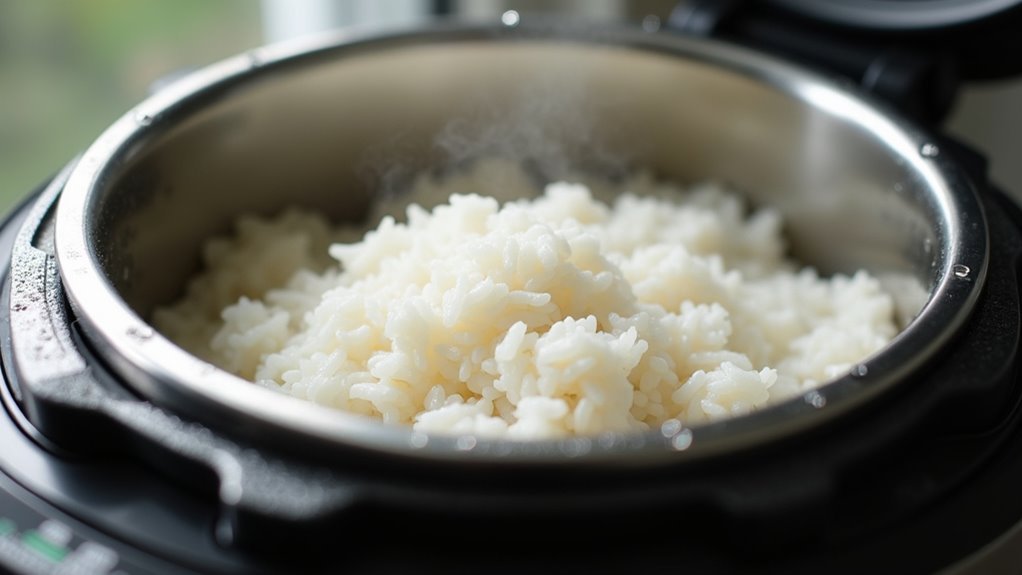
Since rice cookers have become kitchen staples for so many of us, it’s essential we comprehend how to use them safely to prevent fried rice syndrome. Different cooking techniques and rice varieties don’t change the fundamental safety rules we need to follow.
Here’s what we should always remember:
-
-
- Store uncooked rice in cool, dry places to prevent bacterial growth
- Cook rice thoroughly to at least 165°F before serving
- Keep cooked rice warm above 135°F if serving later
- Refrigerate leftovers within two hours at 40°F or below
- Clean rice cookers and utensils thoroughly before and after use
- Avoid leaving cooked rice at room temperature for more than 2 hours to minimize bacterial growth.
-
These simple steps protect us from Bacillus cereus contamination.
Frequently Asked Questions
What Causes Fried Rice Syndrome?
Like invisible seeds sprouting in neglected soil, bacterial contamination from Bacillus cereus causes fried rice syndrome when we leave cooked rice at room temperature, compromising food safety through toxin-producing spores.
How Long Does It Take for Fried Rice Syndrome to Go Away?
We’ll typically see fried rice syndrome’s recovery timeline span about 24 hours. The symptom duration varies by individual health, but most people recover naturally without medical help as toxins clear from their system.
What Are the Symptoms of Rice Syndrome?
Coincidentally, we’ve seen symptoms include nausea, vomiting, diarrhea, stomach pain, and fever—remarkably similar to stomach flu. These develop when we ignore proper cooking techniques and food safety practices with leftover rice.
What Does Fried Rice Syndrome Look Like?
Fried rice syndrome appears as sudden stomach flu-like symptoms including nausea, vomiting, diarrhea, and abdominal cramps occurring within hours of eating contaminated rice, highlighting critical food safety concerns we shouldn’t ignore.