
Picture yourself standing in the rice aisle, staring at dozens of options while wondering which ones might be silently harboring the most arsenic. Well, we’ve got some news that’ll probably surprise you – brown rice, the one we’re told is healthier, actually contains about 80% more arsenic than white rice. It’s like a cruel irony, isn’t it? The “better” choice might not be so clear-cut after all, and there’s more to this story than most people realize.
How Heavy Metals Enter Rice Plants During Growth
When we think about rice growing in those flooded paddies, it’s actually like the plant is sitting in a giant soup bowl where everything dissolved in the soil gets concentrated. Rice plants are surprisingly efficient at heavy metal absorption – probably more so than we’d like them to be. The flooding creates these unique conditions where arsenic becomes more available in the soil, and well, rice just soaks it right up through its roots. Soil contamination from past agricultural practices makes this even worse in certain regions, turning what should be nourishing fields into problematic growing environments.
Brown Rice Vs White Rice Arsenic Content Comparison
Here’s something that might surprise you – brown rice, the one we’ve all been told is the healthier choice, actually contains about 80% more arsenic than white rice. The FDA’s findings show brown rice averaging 154 ppb compared to white rice’s 92 ppb. It’s because those outer layers we praise for brown rice benefits are exactly where arsenic accumulates.
| Rice Type | Average Arsenic (ppb) | Difference |
|---|---|---|
| Brown Rice | 154 | 80% higher |
| White Rice | 92 | Baseline |
| SE US Brown | 180+ | Highest risk |
While white rice nutrition gets criticized, it’s actually safer regarding heavy metal exposure.
Geographic Origins That Produce High-Arsenic Rice
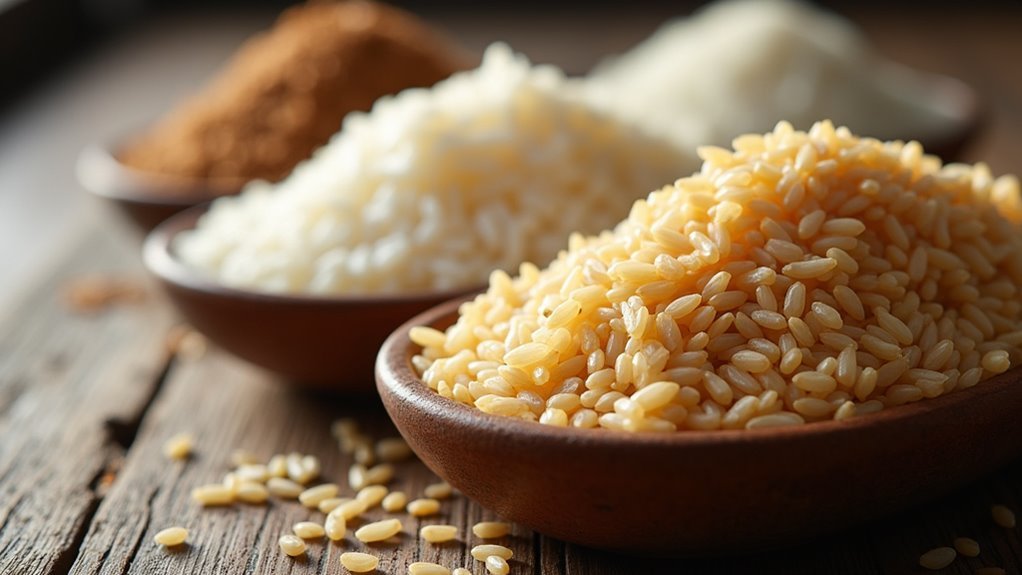
When we look at where our rice comes from, it’s pretty clear that geography plays a huge role in arsenic levels. The Southeastern United States stands out as a major problem area—we’re talking about rice fields that were actually built on old cotton farms where arsenic-based pesticides were heavily used for decades. These flooded paddy systems, well, they basically create the perfect storm for arsenic to leach from contaminated soil into the rice plants.
Southeastern U.S. Rice Fields
Although rice fields dot agricultural landscapes across America, there’s something particularly troubling about the paddies stretching across the Southeastern United States. We’re talking about a region where cotton once reigned supreme, leaving behind a toxic legacy that’s now contaminating our rice supply.
The soil contamination sources here aren’t mysterious—they’re the result of decades of arsenic-based pesticides used in cotton farming. When farmers shifted to rice cultivation practices in these same fields, well, the arsenic didn’t just disappear. Those flooded paddies actually make things worse, creating conditions that help rice absorb more arsenic than other grains would.
Legacy Cotton Farming Impact
Since the cotton belt stretched across states like Arkansas, Louisiana, Mississippi, and Texas for over a century, we’re now dealing with what’s fundamentally an environmental time bomb buried in the soil. Cotton farming relied heavily on arsenic-based pesticides like lead arsenate to control boll weevils. Well, those chemicals didn’t just disappear after the crops were harvested. The soil contamination persists decades later, and when we flood rice paddies in these same areas, we’re basically mobilizing that arsenic. It’s probably one of the clearest examples of how past agricultural practices continue affecting our food supply today.
Flooded Paddy Systems
While we’ve established that legacy contamination plays a huge role, the flooding process itself is what really amplifies the arsenic problem in rice. You see, flooded agriculture creates these oxygen-starved conditions that basically release arsenic from soil particles. It’s like—well, imagine arsenic being trapped in a safe, and flooding is the key that opens it up.
When paddies stay waterlogged for months, arsenic uptake becomes inevitable. The rice plants can’t help but absorb what’s now freely available in the water. This is why even clean soils can produce problematic rice when traditional flooding methods are used.
Rice Varieties and Brands With Elevated Heavy Metal Levels
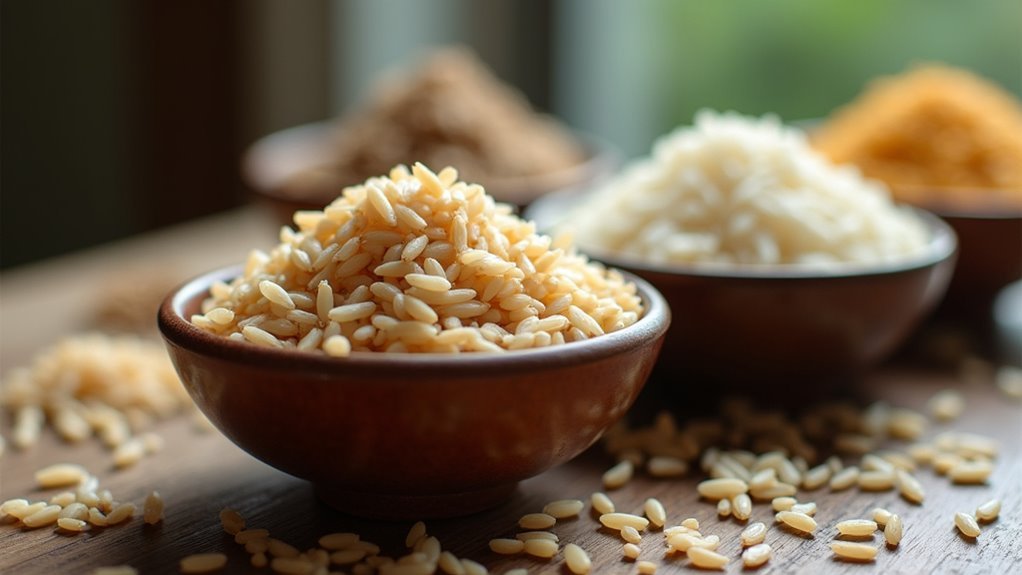
When we look at specific rice varieties and where they’re grown, the differences in arsenic levels are honestly pretty striking. Brown rice from the Southeast – we’re talking about places like Arkansas and Louisiana – can pack nearly twice as much arsenic as white rice, which makes you think twice about that “healthier” choice. It’s not just about color though; even fancy Arborio rice from Italy shows up with surprisingly high contamination levels that rival what we see in domestic brown varieties.
Brown Rice Contamination Levels
Although we’d all love to think that choosing brown rice over white automatically makes us healthier, the reality about arsenic contamination might make you reconsider that assumption. The FDA’s data is pretty eye-opening – brown rice contains 154 ppb of inorganic arsenic compared to white rice‘s 92 ppb. That’s a significant jump. We’re looking at arsenic sources that make brown rice 72.2% to 98.3% more contaminated than white varieties, especially from Southeastern regions. It’s like thinking you’re choosing the healthier option, but you’re actually getting more of what you don’t want.
High-Risk Geographic Origins
The contamination story gets more complicated when we start looking at where our rice actually comes from. Rice farming in the Southeastern United States produces some of the highest arsenic levels we’ve seen, particularly in brown varieties. Italy’s Arborio rice isn’t much better, containing nearly equivalent amounts. Well, it’s probably because arsenic regulations vary dramatically between regions, and past agricultural practices left their mark on soil quality. Anything labeled “Grown in the USA” tends to have elevated levels. I think it’s like a geographic lottery—some regions just hit the contamination jackpot unfortunately.
Safest Rice Types and Growing Regions to Choose
Since we’re maneuvering through this arsenic minefield, let’s talk about which rice types won’t leave us worrying about our next meal. When it comes to safe rice and smart rice sourcing, we’ve got some solid options that’ll actually let us enjoy dinner.
| Rice Type | Origin | Arsenic Level |
|---|---|---|
| Jasmine | Thailand | Lowest |
| Basmati | India | 30% Lower |
| Calrose | California | Reduced |
Thai jasmine rice stands out as probably our safest bet. Indian basmati’s another winner—well, it contains about 30% less arsenic than most varieties. California-grown options like Calrose aren’t bad either, thanks to better cultivation practices there.
Cooking Methods That Reduce Arsenic Exposure
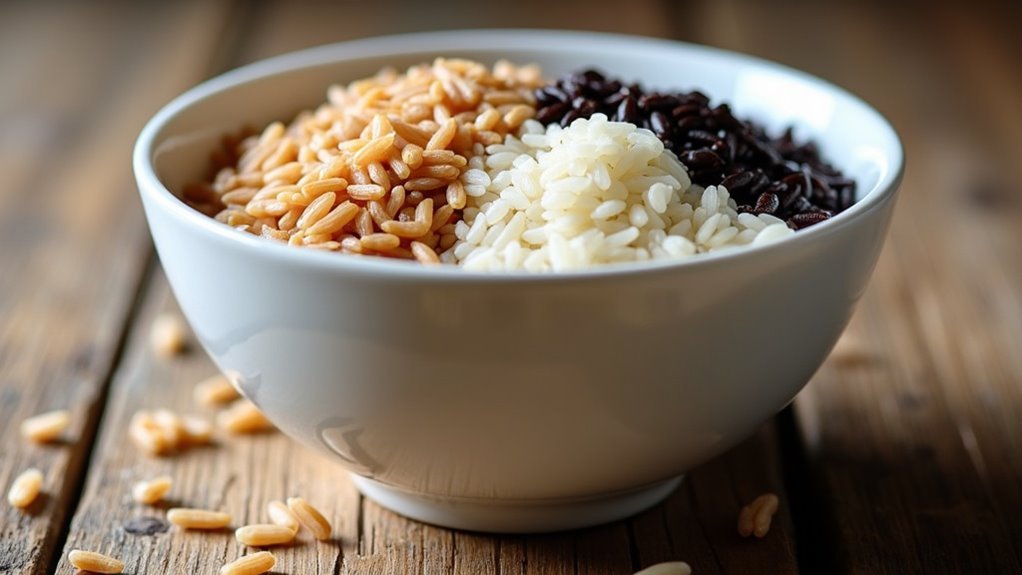
Picking the right rice variety is only half the battle—how we actually cook it makes a huge difference in cutting down arsenic exposure. We’ve found that cooking techniques really matter here. The pasta method—well, it’s probably the most effective approach for arsenic reduction. We’re talking about boiling rice in tons of water (like 6-10 cups per cup of rice) then draining it off. This can slash arsenic by up to 60%. Soaking beforehand helps too. Traditional steaming? Not so great. Think of it like washing away the bad stuff rather than trapping it.
Health Risks Associated With Long-Term Arsenic Consumption
While we’re focusing on cooking methods to reduce arsenic, we can’t ignore what happens when people don’t take these precautions—or simply aren’t aware they need to. Long-term arsenic exposure through rice consumption creates serious health implications that accumulate over time, kind of like filling a bucket drop by drop.
The research is pretty sobering, actually. Chronic exposure increases cancer risks—lung, bladder, and skin cancers specifically. Children under five face the greatest danger, with developmental issues becoming a real concern. We’re also seeing links to cardiovascular disease and metabolic problems like insulin resistance.
Frequently Asked Questions
Which Rice Has the Least Amount of Arsenic?
When maneuvering dietary concerns, we’d recommend Thai jasmine, California varieties, and Indian basmati as healthy rice options. These rice alternatives contain considerably lower arsenic levels, helping us make safer choices for our families.
What Rice to Avoid?
We’d recommend avoiding brown rice from the Southeastern US, Arborio rice, US-grown white rice, and pre-cooked varieties. These rice varieties pose greater health concerns due to elevated arsenic levels from growing conditions and processing methods.
What Rice Has the Most Arsenic in It?
Brown rice from Southeastern United States contains the most arsenic we’ve found, with 72-98% more than white rice. We’d also avoid Arborio and pre-cooked varieties for their elevated levels.
Does Boiling Rice Remove Arsenic?
Yes, we can reduce arsenic levels through specific cooking methods. Boiling rice in excess water and draining it removes up to 60% of arsenic, making this pasta-like approach more effective than standard absorption methods.