If you have been searching for a rice variety that is light, fragrant, and genuinely versatile, Sona Masoori might be exactly what your kitchen is missing. This South Indian medium-grain rice has a devoted following for good reason: it cooks up fluffy and non-sticky, carries a subtle natural sweetness, and absorbs the flavors of whatever it is paired with. Whether you are making a simple weeknight side dish, a layered biryani, or a comforting khichdi, Sona Masoori handles it all.
What Is Sona Masoori Rice?
Sona Masoori is a medium-grain white rice that originates from the southern states of India, most notably Andhra Pradesh and Karnataka. It sits in a distinctive category of its own: lighter than most short-grain rices, more aromatic than standard long-grain varieties, and far less starchy than jasmine. The result is a grain that separates cleanly after cooking, without clumping or turning gluey, while still carrying a mild, faintly sweet flavor that makes plain rice a pleasure to eat on its own.
The name combines “Sona” (Hindi for gold) and “Masoori,” a reference to the Mysore region. Traditional cultivation uses heritage seeds, sun-drying methods, and minimal processing — practices that contribute to the grain’s characteristic aroma and texture. When you cook it, the kitchen fills with a gentle, nutty fragrance that many people find immediately recognizable.
Beyond everyday Indian meals, Sona Masoori’s ability to absorb flavors without becoming heavy makes it an excellent base for recipes from across the world — something the site explores in depth in this guide to global cuisines you can master with a versatile rice cooker.
Nutritional Profile
The figures below are per 100 g uncooked Sona Masoori rice, as listed in standard nutritional references for this variety. It is naturally low in fat and cholesterol-free, making it compatible with a wide range of dietary approaches.
| Nutrient | Per 100 g |
|---|---|
| Calories | 150 kcal |
| Carbohydrates | 35 g |
| Protein | 3 g |
| Total Fat | 0.5 g |
| Dietary Fiber | 2 g |
| Vitamin B6 | 5% DV |
| Iron | 5% DV |
DV = Daily Value. Values are for uncooked rice.
Macros at a glance (per 100 g)
What You Need
- Rice cooker (recommended)
- Measuring cups
- Fine mesh strainer
- Rice paddle or fork
- Airtight container (storage)
- Kitchen timer (or use below)
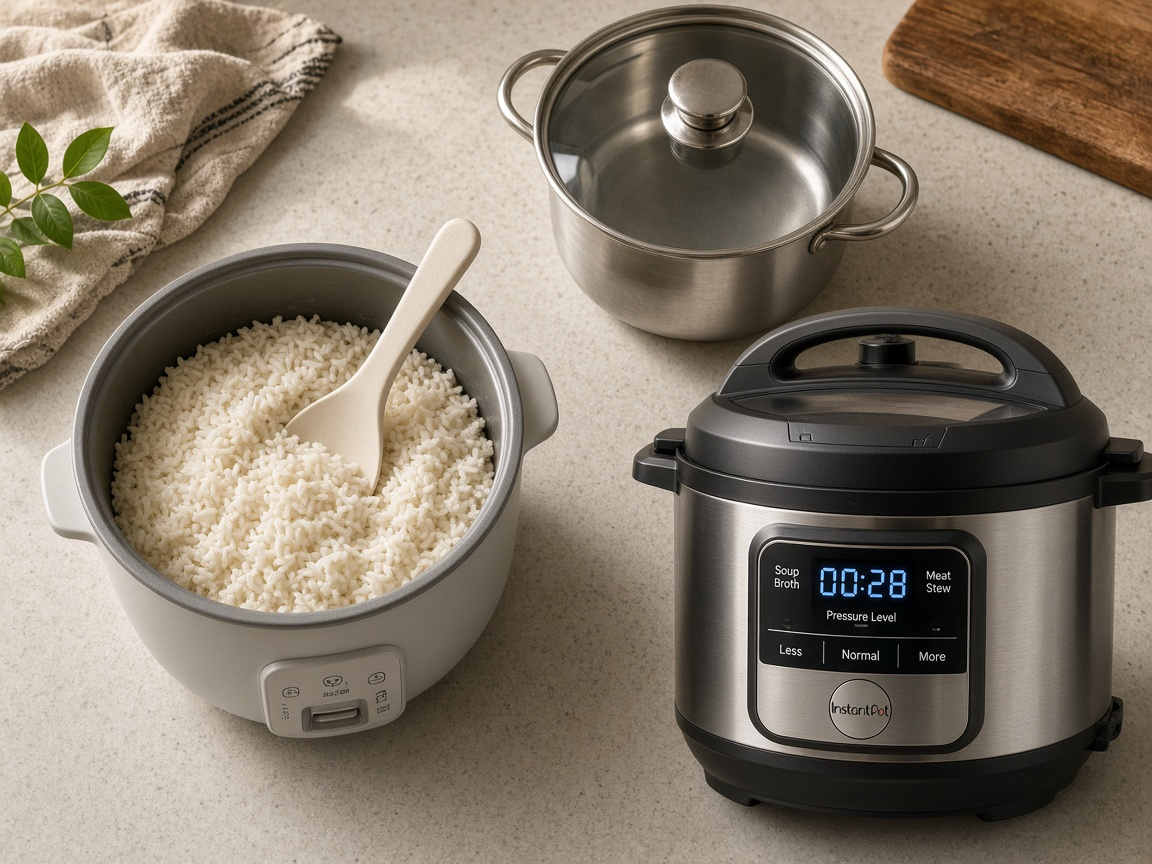
A stovetop pot with a tight-fitting lid or Instant Pot works equally well — see the method tabs for all three approaches.
Ingredients
How to Cook Sona Masoori Rice
Three reliable methods are covered below. The rice cooker method is recommended if you have one — it removes guesswork, produces consistent results, and keeps rice warm without overcooking. Getting the water ratio right is the single most important variable regardless of which method you choose; see our rice cooker water ratio guide for a full breakdown of how different variables affect absorption.
-
1
Measure your rice and rinse it thoroughly under cold running water, swirling gently until the water runs mostly clear — usually 2–3 passes. Drain well.
⏱ ~2 min
Rinsing removes surface starch that causes excess stickiness. Cold water is best — hot water can begin partial cooking of the outer layer. -
2
Add the drained rice to the inner pot of your rice cooker. For every 1 cup of dry rice, add 1½ cups of cold water. Stir in a pinch of salt if using.
⏱ ~1 min
Sona Masoori needs less water than standard white rice (which typically uses a 1.75–2:1 ratio). The 1.5:1 ratio accounts for the grain absorbing slightly less liquid to stay light and fluffy. -
3
Close the lid securely and select the White Rice or Regular Cook setting. Press start and walk away — no stirring, no peeking.
⏱ 15–20 min
Avoid Porridge or Slow Cook settings for plain Sona Masoori — they use longer, wetter cycles designed for other grains. -
4
When the cooker switches to Warm, keep the lid closed. Rest for 5–10 minutes. This resting period lets residual steam finish the cooking and distributes moisture evenly throughout the pot.
⏱ 5–10 min
The grains at the bottom of the pot will be slightly more cooked than those at the top. The rest period allows them to equalize. -
5
Open the lid and gently fluff the rice with a rice paddle or fork, using light folding motions from the edges in toward the center. Serve immediately, or leave on Warm for up to 60 minutes.
⏱ ~1 min
Avoid vigorous stirring — Sona Masoori grains are tender when hot and can break apart if handled roughly. Gentle folding keeps the texture intact.
-
1
Rinse 1 cup of Sona Masoori rice under cold water 2–3 times until the runoff runs mostly clear. Drain and transfer to a heavy-bottomed saucepan.
⏱ ~2 min
A heavy-bottomed pot (cast iron, stainless with a thick base, or enameled) distributes heat more evenly and reduces scorching on the bottom. -
2
Add 2 cups of cold water and optional salt. Bring to a rolling boil over medium-high heat, stirring once to separate any grains that have clumped.
⏱ ~5 min to boil -
3
Immediately reduce the heat to the lowest setting. Cover the pot with a tight-fitting lid. Simmer for 15–20 minutes without lifting the lid.
⏱ 15–20 min
If your lid does not fit snugly, place a sheet of aluminum foil between the pot and lid to trap steam. Escaping steam means the rice will not fully cook through. -
4
Check that all the water has been absorbed. The surface should look dry with small steam holes. Remove from heat, keeping the lid on, and rest for 5–10 minutes.
⏱ 5–10 min rest -
5
Uncover, fluff with a fork using light folding strokes, and serve.
⏱ ~1 min
-
1
Rinse 1 cup of Sona Masoori rice until mostly clear. Add to the Instant Pot inner pot. Add 1¼ cups of cold water and optional salt.
⏱ ~3 min -
2
Secure the lid and move the pressure release valve to Sealing. Set to Manual/Pressure Cook on High Pressure for 5 minutes.
⏱ ~10 min to pressure + 5 min cook
Coming-to-pressure time varies by model, fill level, and water temperature, but typically takes 8–12 minutes for this quantity. The 5-minute cook timer does not start until full pressure is reached. -
3
When the cook cycle ends, let the pressure release naturally for 10 minutes (do nothing). After 10 minutes, carefully switch the valve to Venting to release any remaining pressure.
⏱ 10 min natural release
Skipping the natural release and venting immediately often results in slightly sticky, unevenly cooked grains. The 10 minutes of passive rest makes a noticeable difference. -
4
Once all pressure is released and the float valve drops, open the lid away from you to avoid the steam. Rest uncovered for 3–5 minutes.
⏱ 3–5 min -
5
Fluff with a fork or rice paddle using gentle folding motions and serve.
⏱ ~1 min
Kitchen Timers
Tap a timer to start it. Tap again to pause. Use Reset to restart. Browser notifications will alert you when a timer finishes (permission required).
Variations & Flavor Ideas
Plain Sona Masoori rice is delicious on its own, but its ability to absorb aromatics makes it a great canvas for more adventurous cooking. Here are some reliable starting points.
Rice, water, optional salt. The base recipe — perfectly fluffy, lightly sweet, with that signature gentle aroma. Pairs with virtually any curry, dal, or stew.
Toss cooked rice with lemon juice, turmeric, mustard seeds, curry leaves, and roasted peanuts. A South Indian classic that makes excellent use of Sona Masoori’s light texture.
Sona Masoori absorbs herb flavors beautifully during cooking. Add a bay leaf, a cardamom pod, or cook the water with herbs first. For a detailed approach, see this guide to cooking rice with herbs in a rice cooker.
Toast minced garlic in a little oil before adding it to the cooker with the rice and water. The result is fragrant and savory. For a step-by-step, see this easy garlic rice in a rice cooker recipe.
Mix equal parts Sona Masoori rice and yellow moong dal, add spices (cumin, turmeric, ginger), and cook together with extra water for a comforting one-pot meal.
The non-sticky nature of Sona Masoori means grains stay separate when tossed with spiced meats, vegetables, and fried onions — making it a reliable biryani alternative to basmati.
Tips for Perfect Results
Even one rinse noticeably reduces excess surface starch and produces lighter, more separated grains. Two to three passes until the water is mostly clear is the standard recommendation from most Sona Masoori brands.
Sona Masoori needs less water than standard white rice. The 1.5:1 ratio in a rice cooker is deliberate — using the 2:1 ratio common for other varieties produces noticeably mushier results.
Lifting the lid mid-cook releases trapped steam, extending the cook time unevenly and sometimes leaving the top layer undercooked while the bottom is overdone.
The 5–10 minute resting period is not optional. During this time, residual steam continues to cook the grains gently and moisture redistributes throughout the pot, equalizing texture.
Toast the rinsed, drained rice in a dry pan or the rice cooker inner pot for 1–2 minutes before adding water. This deepens the aroma and produces a nuttier flavor profile that complements spiced dishes.
Use a rice paddle or fork with a light folding motion rather than a stirring motion. Vigorous stirring of hot cooked rice breaks the grains and releases excess starch, making the texture stodgier.
Where to Buy Sona Masoori Rice
Sona Masoori is more widely available than it used to be. Here are the main options:
How to Choose a Brand
When selecting Sona Masoori rice, look for three things: authenticity (brands that specialize in Indian rice varieties and source from Andhra Pradesh or Karnataka), quality indicators (traditional processing methods noted on the label, absence of artificial additives), and customer reviews that mention the characteristic aroma and non-sticky texture after cooking. Brands that are commonly cited by home cooks for consistent quality include Kohinoor, Daawat, Royal, and 24 Mantra Organic (the last being a certified organic option). Read the label carefully: some packages labeled “Indian white rice” may not be Sona Masoori specifically.
Storage & Reheating
Reheating
- Microwave: Sprinkle a tablespoon of water over the rice, cover loosely, and microwave on medium power in 60-second bursts, stirring between rounds.
- Stovetop: Add rice to a pan with 2–3 tablespoons of water, cover, and warm over low heat for 4–5 minutes.
- Rice cooker: Add a splash of water and use the warm or reheat setting if your model has one.
Common Mistakes to Avoid
-
Too much water The most common mistake. Using a 2:1 ratio (designed for most long-grain rices) makes Sona Masoori mushy and gluey. Fix: Use 1.5:1 for rice cooker, 2:1 for stovetop, 1.25:1 for Instant Pot.
-
Skipping the rinse Excess surface starch leads to stickier, starchier rice and can cause the rice cooker pot to boil over. Fix: Rinse 2–3 times in cold water until the water is mostly clear.
-
Lifting the lid mid-cook Even one peek releases significant steam, disrupting the cooking environment and leading to uneven results. Fix: Set a timer and trust the process.
-
Skipping the rest period Serving immediately after cooking means the grains are still finishing their steam-cook internally, which often results in slightly raw centers. Fix: Wait the full 5–10 minutes before opening.
-
Stirring vigorously Rough stirring when the rice is hot breaks the tender grains and causes starch release, making the texture paste-like. Fix: Fluff with a fork or rice paddle using light, folding motions.
Frequently Asked Questions
-
Basmati is a long-grain rice with a pronounced floral aroma and very dry, elongated grains. Sona Masoori is medium-grain, milder in fragrance, and slightly more moist in texture — though still non-sticky. They are not interchangeable in recipes that depend on grain length or specific starch ratios, but either works well as a plain side dish alongside curries and dal.
-
Soaking is not required. Sona Masoori cooks through reliably using the ratios and methods described above without pre-soaking. If you do choose to soak (20–30 minutes), reduce the water quantity slightly and shorten the cook time, since the grain has already begun absorbing moisture.
-
The most likely culprits are too much water, skipping the rinse, or vigorous stirring after cooking. Check that you are using the correct water ratio for your method (not a generic ratio designed for a different rice variety), rinse before cooking to remove surface starch, and fluff gently once the rest period is complete.
-
Technically yes, though it is not ideal. Sona Masoori is specifically known for being non-sticky, which is the opposite of what sushi rice requires. Authentic sushi uses short-grain Japanese rice (such as Koshihikari or Calrose) that becomes slightly sticky when seasoned with rice vinegar and sugar, allowing it to hold its shape. Sona Masoori would produce a crumblier result.
-
Always use cold water for rinsing. Cold water removes surface starch without beginning any premature cooking of the outer grain layer. For a thorough look at this question, see our guide on whether to rinse rice with hot or cold water.
-
Sona Masoori contains 2 g of dietary fiber per 100 g, which is associated with more gradual glucose absorption compared to some lower-fiber white rices. That said, all white rice affects blood sugar to some degree, and individual responses vary. Anyone managing diabetes or insulin sensitivity should consult their care team for personalized guidance. The choice of rice cooker can also play a role — see the guide to the best rice cookers for diabetics for models with features designed to preserve nutritional properties during cooking.
-
Sona Masoori originates from the southern Indian states of Andhra Pradesh and Karnataka. It is a heritage variety developed through selective cultivation of local rice strains and has been a staple in South Indian cooking for generations. The name references both “Sona” (gold, reflecting the grain color when unhulled) and the Mysore region of Karnataka.
Your Notes & Rating
Rate this guide
Personal notes
Jot down your tweaks, substitutions, or reminders for next time. Notes are saved in your browser.