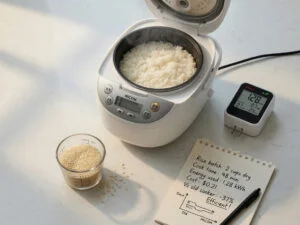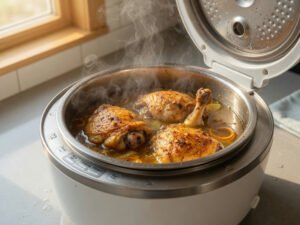
We’ve all been there—you’re cooking rice and suddenly smell something burning, or worse, you open the lid too early and get hit with a face full of scalding steam. Modern rice cookers have pretty much solved these problems with automatic shut-off and secure lid technology, though I’m not entirely sure everyone realizes just how sophisticated these features have become. These aren’t just basic safety mechanisms anymore; they’re actually smart systems that can make or break your cooking results.
Understanding Automatic Shut-Off Technology in Rice Cookers
While most of us don’t give much thought to the inner workings of our kitchen appliances, automatic shut-off technology in rice cookers is actually pretty brilliant – it’s like having a watchful guardian that never gets distracted or forgets what it’s doing.
This clever system uses temperature sensors to detect when water’s evaporated and cooking’s complete.
What’s really smart about this technology is how it prevents overheating while conserving energy – no more burnt rice or wasted electricity.
It’s probably one of those features we take for granted, but honestly, it makes our lives so much easier. The Panasonic SR-CN108 model exemplifies this with its 16 pre-set cooking programs, which allow for versatile cooking without the need for constant monitoring.
Locking Lid Mechanisms and Safety Features
Once your rice cooker starts building up steam pressure, that’s when a secure locking lid becomes absolutely critical – and honestly, it’s one of those safety features that can literally save you from some pretty nasty burns.
These locking lid mechanisms work like a safety valve for your kitchen, preventing accidental opening when there’s still pressure inside. Most modern rice cookers won’t even let you twist the lid open until the pressure’s completely released.
It’s basically like having a built-in safety guard that protects you from steam burns – well, assuming the mechanism’s working properly, of course. Additionally, the heating element ensures that the rice cooker maintains the optimal temperature for cooking while the lid is securely closed.
Benefits of Secure Lid Systems for Rice Cooking
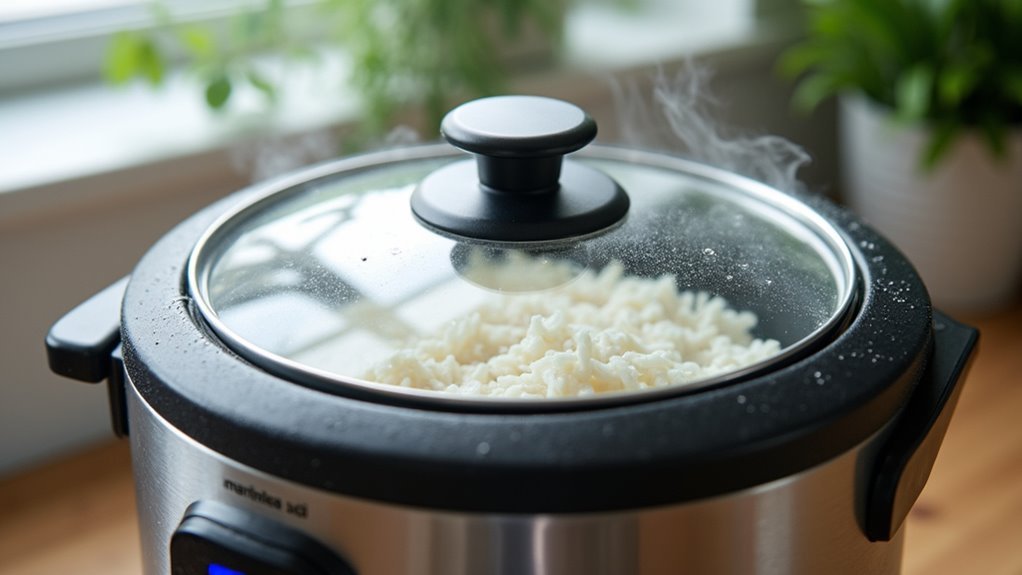
Since we’re talking about secure lid systems, let’s explore what makes them such a game-changer for rice cooking – and honestly, the benefits go way beyond just keeping the lid from popping off at the wrong moment.
These systems are like having a safety net that actually makes your rice better.
Here’s what we’re talking about:
- Spill prevention – Creates tight seals that contain steam and prevent messy overflows
- Enhanced safety – Minimizes burn risks from escaping hot steam during cooking
- Energy efficiency – Maintains heat retention, reducing cooking time and power consumption
- Perfect texture – Automatic shut-off prevents overcooking when rice reaches ideal doneness, ensuring nutrient retention and maximizing the health benefits of your meal.
Types of Automatic Shut-Off Sensors and Controls
Now that we’ve covered why secure lids matter so much, let’s talk about the brains behind the operation – the actual sensors and controls that make automatic shut-off work.
You’ve got several options here. Foot-sensor lids activate with a simple pedal press – pretty straightforward. Microwave sensors detect when you’re nearby, which is honestly quite clever. Remote control systems offer hands-free operation from a distance.
Then there’s timed automatic lids that close after inactivity. Advanced models even let you customize sensitivity settings.
I think the safety features preventing accidental closures are probably the most important aspect, though.
How Locking Lids Enhance Cooking Performance
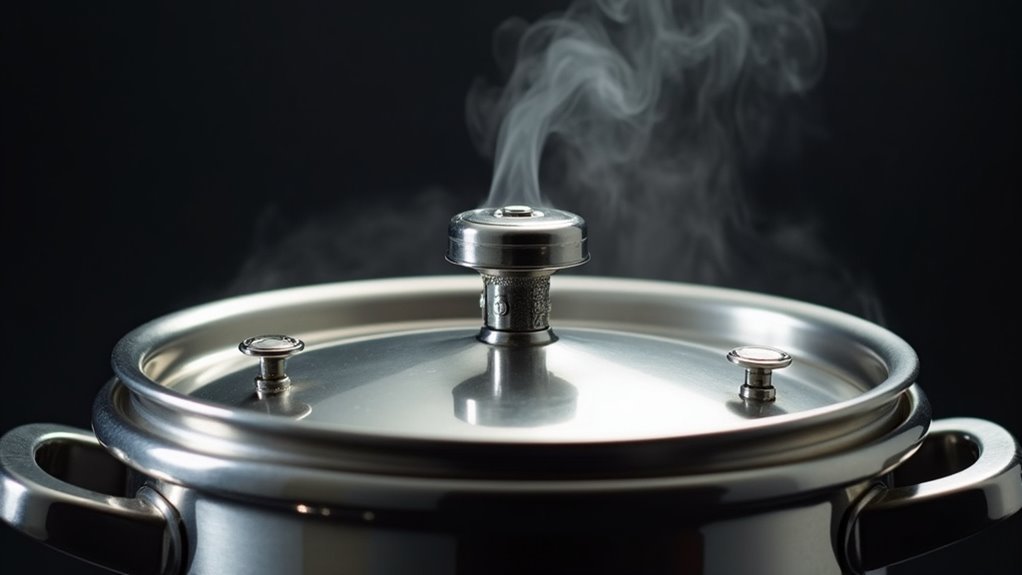
Three key benefits emerge when we’re talking about how locking lids actually boost your cooking performance – and honestly, the difference is pretty dramatic.
We’re seeing consistent pressure and temperature that cuts cooking times remarkably. Steam can’t escape, which means your food retains moisture and develops deeper flavors.
- Pressure maintenance – Secure lids create an airtight seal for even cooking
- Flavor retention – Aromatic compounds stay trapped, intensifying taste profiles
- Safety enhancement – Reduced spills and splatters during high-pressure cooking
- Energy efficiency – Less heat loss means faster cooking times
It’s like having a professional kitchen setup at home. Additionally, features like advanced technology in modern cookers ensure optimal cooking results with minimal effort.
Maintenance and Troubleshooting for Automatic Lid Systems
The beauty of automatic lid systems quickly fades when they start acting up – and trust me, maintenance isn’t optional if you want them working smoothly.
We need to regularly check sensor functionality and clean debris that might obstruct operation. When lids won’t open or close properly, we’re usually dealing with power issues – check those batteries or electrical connections first.
Smart toilets with automatic lids require the same attention. Keep sensors free from dust and moisture, since these factors really mess with responsiveness.
Don’t forget to inspect seals and gaskets for wear to prevent leaks.
Frequently Asked Questions
Should You Flush With the Lid Down?
Yes, we should flush with the lid down. Lid benefits include reducing airborne bacteria spread up to six feet, preventing surface contamination, and maintaining cleaner bathrooms—habits that protect our health effectively.
What Happens When You Flush the Toilet Without Closing the Lid?
Like opening Pandora’s box, we’re releasing aerosolized particles containing bacteria and viruses into our bathroom air. Toilet splash spreads contaminants up to six feet, settling on surfaces and creating health risks.