Choosing a rice cooker can feel like maneuvering through a maze—there’s an overwhelming number of options, and honestly, we’ve all been there staring at endless models wondering what actually matters. You know, it’s tempting to just grab the cheapest one or maybe go for the fanciest gadget with all the bells and whistles, but here’s the thing: the right choice depends on factors you probably haven’t considered yet.
Determine Your Ideal Rice Cooker Size and Capacity
How do you know which rice cooker size is right for your kitchen? Well, it really comes down to your daily rice habits. If you’re eating 1-2 cups daily, a 3-cup cooker works perfectly. Actually, let me rephrase that – it’s more about matching capacity needs to your lifestyle. A 5-cup model handles 2-5 cups and yields up to 10 bowls, which is ideal for small families. For size comparison, think of it like buying shoes – too big causes uneven cooking. Consider if you’ll steam vegetables too, and remember that larger cookers excel at batch cooking. A rice cooker with versatile cooking options can also enhance your meal preparation, allowing you to explore various culinary creations.
Choose Between Basic, Micom, and Induction Heating Technologies
Once you’ve nailed down the right size, you’ll need to decide on the heating technology – and honestly, this choice makes a bigger difference than most people realize.
| Technology | Basic Functionality | Cooking Precision |
|---|---|---|
| Basic | Simple on/off switch | Limited control |
| Micom | Fuzzy logic adjustments | High accuracy |
| Induction | Electromagnetic heating | Superior precision |
Basic models are fast but lack finesse. Micom cookers use fuzzy logic to automatically adjust for different rice types – it’s like having a smart assistant that knows exactly when your rice is perfect. Induction heating takes precision even further with electromagnetic power, though you’ll pay more. For occasional use, basic works fine, but serious rice lovers should definitely consider micom or induction. Additionally, multi-cookers like the Instant Pot Pro offer a range of cooking functions, making them a versatile option for various meal preparations.
Evaluate Inner Pot Materials and Non-Stick Coatings
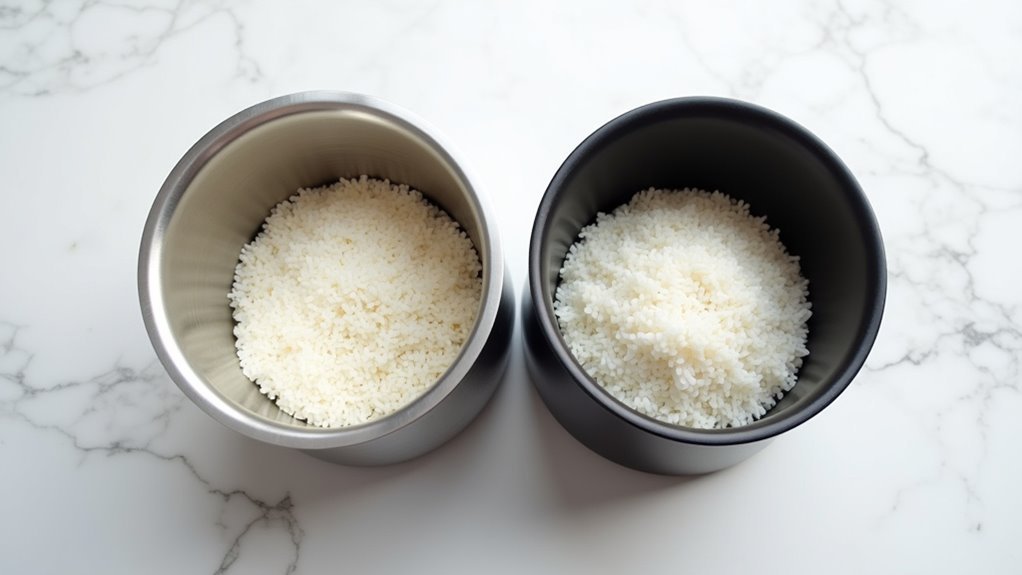
Beyond the heating tech, the inner pot is where the magic actually happens – and honestly, I think this choice gets overlooked way too often. Aluminum heats fast but can affect taste. Stainless steel drawbacks include uneven cooking and tricky heat management, though it’s super durable. Non-stick coatings make cleanup a breeze, but you’ll probably need replacements eventually. Ceramic advantages are impressive – naturally non-stick and easy to clean – but they’re heavier and, well, they can break if you’re not careful. Each material totally changes your rice’s texture and fluffiness. Additionally, when choosing a rice cooker, consider the durability and maintenance requirements of each material to ensure long-term satisfaction.
Consider Essential Features and Programming Options
While the inner pot sets the foundation, it’s really the features and programming options that’ll make or break your daily rice-cooking experience. We’re talking about programmable settings that actually work – not just fancy buttons. Look for models offering different cooking modes for jasmine, basmati, or brown rice. The keep warm function is, well, absolutely essential. Nobody wants cold rice an hour after cooking. We’d recommend seeking out Micom technology for precise temperature control. Think of it like having a mini chef monitoring your rice. Countdown timers and automatic shut-off? These aren’t luxuries – they’re necessities for busy households. Additionally, consider models that utilize fuzzy logic technology to ensure perfectly cooked rice every time.
Set Your Budget and Select a Reliable Brand
After you’ve mapped out your must-have features, it’s time to talk money – and honestly, this is where things get interesting. We’re looking at a sweet spot between $50 and $300, where budget flexibility really shines. The Hamilton Beach delivers solid performance around $53 for budget-conscious folks. But if you’re serious about rice – I mean really serious – Zojirushi’s high-end models ($310-$385) are worth considering. Brand reputation matters here; Japanese manufacturers like Zojirushi, Panasonic, and Tiger consistently deliver quality. Don’t forget warranty coverage either – good customer support can save you headaches down the road. Additionally, consider the advantages of electric models that can save space and cook quickly, making them a worthwhile investment.
Frequently Asked Questions
What Is the 5 5 5 Rule for Rice?
We’ve found the 5-5-5 rule uses equal parts water ratio for rice cooking: five cups water, five cups rice, boil five minutes, then rest five minutes off heat for perfectly fluffy results.
What Is the 123 Rice Rule?
The 123 rice rule simplifies rice cooking by using different water measurement ratios: one cup water per cup white rice, two cups for brown rice, and three cups for wild rice varieties.
Which Brand Has the Best Rice Cooker?
We’d recommend Zojirushi as the best rice cooker brand. Their advanced features consistently earn top user reviews for reliability and perfect cooking results, though they’re pricier than budget options like Hamilton Beach.
How Many Watts Is Good for a Rice Cooker?
While cheap cookers struggle with uneven heating, we’d recommend 500-800 watts for ideal power efficiency and cooking capacity. This range guarantees your rice cooks evenly without wasting energy, regardless of portion size.