The 1-2-3 rule of rice is a cooking ratio: 1 cup of uncooked white rice + 2 cups water = approximately 3 cups cooked rice. This applies to standard medium-grain or long-grain white rice; brown rice needs ~2.25 cups water and wild rice needs up to 4 cups. A separate food safety rule also uses “1-2-3” (refrigerate within 1 hour, consume within 2 days, reheat to safe temperature), so context matters.
We’ve all heard conflicting advice about cooking rice, but the 1-2-3 rule might be the most misunderstood guideline out there. Actually, let me clarify—there are two completely different “rules” that share this name, and confusing them could either ruin your dinner or, well, potentially make you sick. One’s about cooking ratios, the other’s about food safety. The cooking version seems simple enough, but here’s the thing: it doesn’t work for every type of rice, and that’s where things get complicated.
Understanding the Basic 1-2-3 Rice Cooking Method
When we’re learning to cook rice, the 1-2-3 rule sounds almost too simple to be true—and honestly, that’s because it kind of is. The basic concept involves one part uncooked rice, two parts water, yielding three parts cooked rice. It’s like a mathematical equation for rice cooking that sounds foolproof on paper. However, we’ve learned this method doesn’t work universally across all rice varieties. Different types require different approaches for proper texture improvement. Short-grain rice, for instance, needs less water to avoid becoming gummy—well, nobody wants that sticky mess on their plate. Additionally, brown rice cooking techniques require a different water-to-rice ratio to ensure optimal results.
Why This Rule Doesn’t Work for All Rice Types
Although the 1-2-3 rule seems like a universal kitchen hack, it’s actually quite limited in scope—think of it like trying to use the same recipe for both chocolate chip cookies and sourdough bread. We’ve discovered this method really only works well for medium grain white rice. Different rice varieties have unique absorption properties that create cooking variations, leading to disappointing rice texture when we stick to this rigid formula.
| Rice Type | Water Ratio | Texture Result |
|---|---|---|
| Short grain | Less water needed | Gummy if overwatered |
| Brown rice | More water required | Undercooked with 1-2-3 |
| Wild rice | Higher ratio needed | Tough, chewy texture |
Additionally, brown rice requires about 2.25 cups of water per 1 cup of dry rice to achieve the desired texture and flavor.
How Different Rice Varieties Affect Water Ratios
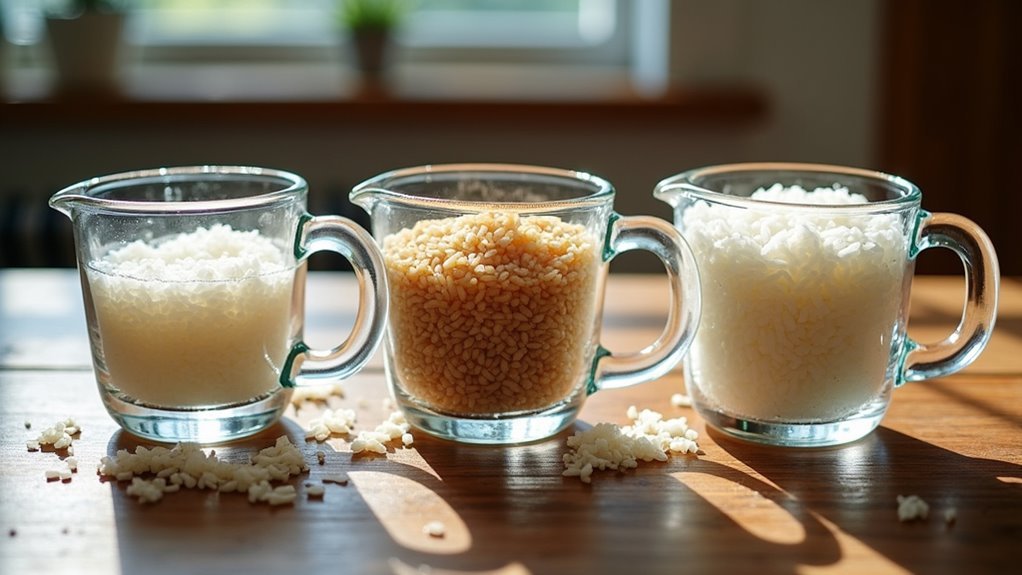
Since each rice variety has its own personality—well, sort of like how different pasta shapes cook differently—we can’t expect them all to play nicely with the same water ratio. Short-grain rice varieties like arborio actually need less water because their water absorption is naturally higher, and too much makes them gummy. Brown rice? It’s basically the opposite—that bran layer means it’s thirsty and needs about 2.5 cups of water per cup. Wild rice is even more demanding, requiring 3-4 cups. Understanding these differences prevents those frustrating “why didn’t this work?” moments we’ve all experienced. Additionally, black rice, known for its health benefits, requires about 2 to 2.5 cups of water per cup of rice to achieve the perfect texture.
The Impact of Cooking Liquids on Rice Texture
Three things happen when we swap plain water for something more interesting—and honestly, it’s probably the easiest way to elevate your rice game without much extra effort. First, we’re dealing with different liquid absorption rates since broths are thicker than water. Second, flavor enhancement becomes automatic as each grain soaks up those rich nutrients. Third, texture changes because richer liquids don’t behave the same during cooking. You know what’s great though? If we overestimate liquid amounts, we can always drain excess. Different rice varieties handle these substitutions differently, so maybe start with less broth than the 1-2-3 rule suggests. Additionally, using a steamer tray in a rice cooker can enhance the overall cooking experience by allowing you to steam vegetables or proteins alongside your rice.
Essential Pre-Cooking Steps for Better Results
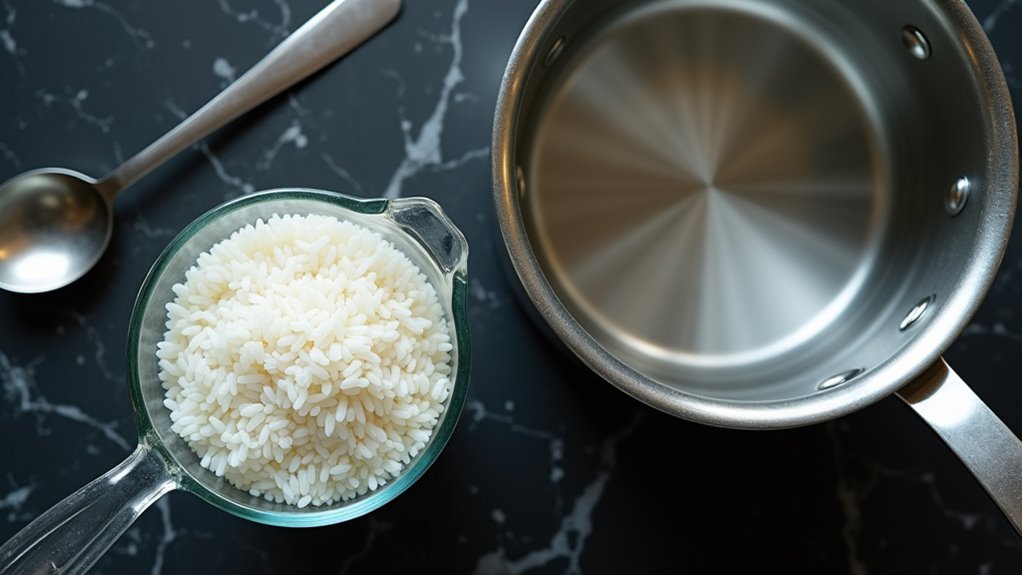
Before we even think about turning on the heat, there’s honestly a whole prep routine that’ll make or break your rice—and I’m not just being dramatic here.
Rice rinsing is absolutely vital for removing that excess starch that makes everything sticky and clumpy. We’re talking about rinsing until the water runs clear, which honestly takes longer than you’d think. The soaking benefits are real too—about 15 minutes lets those grains swell up properly. Additionally, be cautious to prevent rice expansion when measuring your uncooked rice.
Here’s our essential prep checklist:
- Rinse rice thoroughly until water clears
- Soak for 15 minutes before cooking
- Toast in dry pan for extra flavor
- Check package directions for your specific variety
Proper Cooking Techniques and Timing
Now that we’ve got our rice properly prepped, let’s talk about the actual cooking process—because honestly, timing and heat control can make or break your rice game. We’ll walk through the essential timing guidelines that’ll help you avoid that dreaded mushy or undercooked rice disaster. Plus, we’ll cover the heat control methods that, well, actually work in real kitchens where stoves don’t always cooperate. A rice cooker can automate the cooking process, ensuring even cooking that results in perfectly cooked rice with minimal effort.
Essential Timing Guidelines
While the 1-2-3 rule gives us a solid foundation, timing is honestly where most of us either nail it or—well, let’s just say we end up with rice that’s more like soup or something you could probably use as construction material.
Here are our essential timing tips and cooking schedules:
- White rice: 15-20 minutes on low heat
- Brown rice: 40-50 minutes (patience is key here)
- Rest period: Always allow 10 minutes with lid on
- Prep time: Factor in rinsing before you start
Don’t rush the process—good rice can’t be hurried, you know? Additionally, it’s crucial to remember that the proper water ratio is essential for optimal results when cooking different types of rice.
Heat Control Methods
Getting your timing down is only half the battle—heat control is honestly where we can make or break our rice game. Once we’ve got that boil going, we need to dial things back immediately. Think of it like a dimmer switch—we’re going from full blast to the lowest possible setting.
Proper flame control means finding that sweet spot where steam barely escapes from under the lid. Good heat distribution across the pot bottom prevents those dreaded hot spots that’ll burn our rice. We’re basically creating a gentle steaming environment, not a volcanic eruption. Remember to maintain a ratio of 2 cups of water to 1 cup of rice for optimal results.
Storage and Serving Guidelines for Cooked Rice
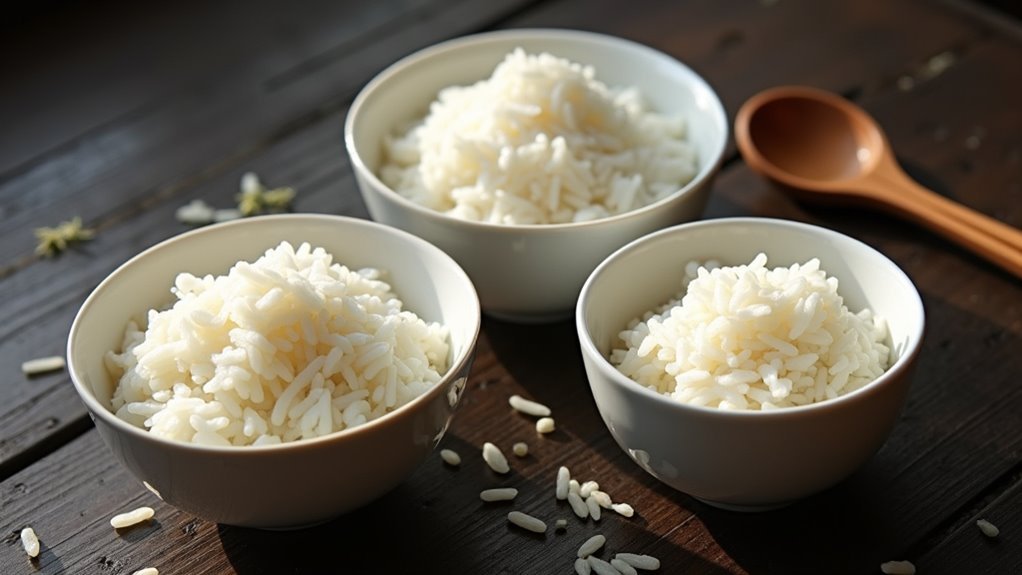
Once you’ve mastered the art of cooking perfect rice, you’ll want to know how to store and serve it properly—because let’s face it, nobody wants to waste good rice or make their guests sick.
Here are our essential storage tips and portion sizes:
- Refrigerate cooked rice in airtight containers for up to one week
- Freeze single-serving portions for up to six months
- Serve 1/2 to 1 cup per person for typical meals
- Plan 10-20 cups for 20 people at gatherings
Cool rice quickly after cooking, then store it properly. When reheating, make sure it’s thoroughly heated through—nobody wants food poisoning from yesterday’s dinner. Remember, it’s safe to keep rice in a rice cooker for up to 4 hours before it should be discarded to avoid spoilage.
Frequently Asked Questions
What Is the 1/2/3 Rule of Rice?
We use the 1-2-3 rice rule as one of our simplest rice cooking measurement techniques: one cup uncooked rice plus two cups water equals three cups perfectly cooked rice for most varieties.
What Is the General Rule of Rice?
Like a compass guiding sailors, we follow the 3:2 water-to-rice ratio as our general rule. Different cooking techniques and rice varieties may require adjustments, but this foundation helps us achieve consistently fluffy results.
What Is the 5 5 5 Rule for Rice?
We use the 5-5-5 rule as one of our rice cooking measurement methods: 5 cups water to 5 cups long grain white rice, cooked for 5 minutes before reducing heat.
What Is the Golden Ratio for Cooking Rice?
Like a compass guiding travelers, we’ve found the golden ratio for cooking rice is typically 2:1 water-to-rice. However, different cooking techniques and rice varieties require adjustments to achieve perfect texture.