
You’ve probably never noticed, but we’re actually witnessing one of Mexico’s most practical kitchen secrets when we see rice grains mixed into salt shakers. Well, it’s not really a secret—more like inherited wisdom that’s been passed down through generations. The humid climate across much of Mexico turns salt into concrete-like chunks faster than you’d think possible. We’ve found that those few grains of rice work like tiny moisture magnets, keeping our salt flowing smoothly when we need it most.
The Science Behind Salt Clumping in Mexican Kitchens
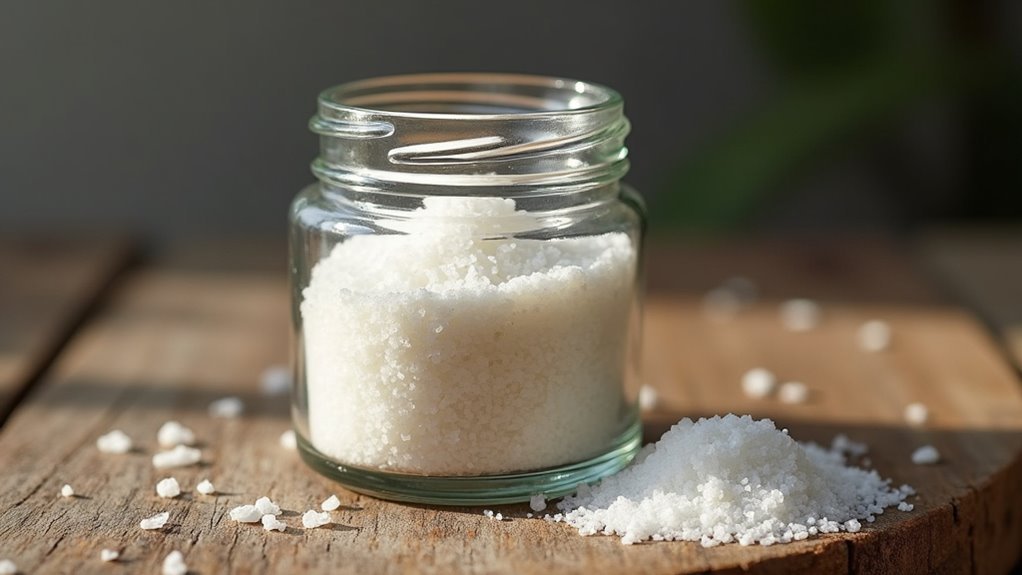
While we’ve all probably wondered about this clever kitchen trick at some point, the reason Mexicans put rice in their salt shakers actually comes down to basic science. You see, salt hygroscopy means it naturally pulls moisture from humid air—and Mexico’s got plenty of that. When salt absorbs this moisture, it dissolves slightly then recrystallizes, creating those annoying clumps we’re all familiar with. Rice acts like a tiny sponge, absorbing excess humidity before salt can get to it. It’s really quite brilliant moisture prevention that keeps seasoning flowing smoothly in Mexican kitchens.
How Rice Acts as a Natural Moisture Absorber
When you think about it, rice is basically nature’s little dehumidifier sitting right there in your salt shaker. The rice properties that make this work are actually pretty fascinating – those tiny grains have this amazing ability to pull moisture right out of the air around them. It’s all about surface area, really. White rice especially has these starches that create more space for moisture absorption to happen effectively. In our humid kitchens, where salt would normally turn into concrete blocks, rice swoops in like a tiny hero, keeping everything flowing smoothly.
Traditional Mexican Cooking Wisdom and Humidity Control
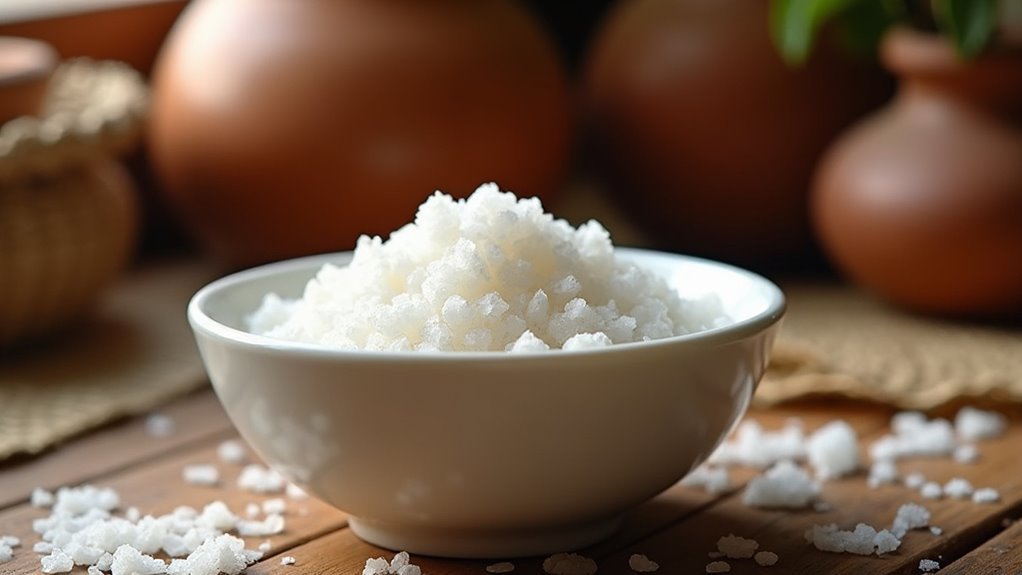
This clever little trick didn’t just appear out of nowhere – it’s actually rooted in generations of Mexican cooking wisdom that’s been passed down through families like a treasured recipe. In Mexico’s humid regions, moisture management became essential for maintaining ingredient quality, and this culinary tradition emerged as a practical solution. Mexican cooks discovered that rice grains work like tiny sponges, absorbing excess humidity before it can clump their salt. It’s brilliant, really – using one pantry staple to protect another. This moisture-fighting technique reflects the resourcefulness that’s always been central to authentic Mexican cooking practices.
Best Rice Varieties for Salt Shaker Maintenance
Not all rice is created equal when it comes to keeping your salt flowing freely, and honestly, choosing the right type can make or break this whole moisture-fighting strategy. We’re talking about white rice here – it’s basically the champion of moisture control because it doesn’t have that bran coating getting in the way. Long-grain varieties work best since they won’t go flying everywhere when you shake your salt. Brown rice? Well, it’s probably not your friend here. Different rice types really do matter for effective humidity management in your kitchen.
Alternative Methods Mexican Cooks Use to Prevent Salt Clumping
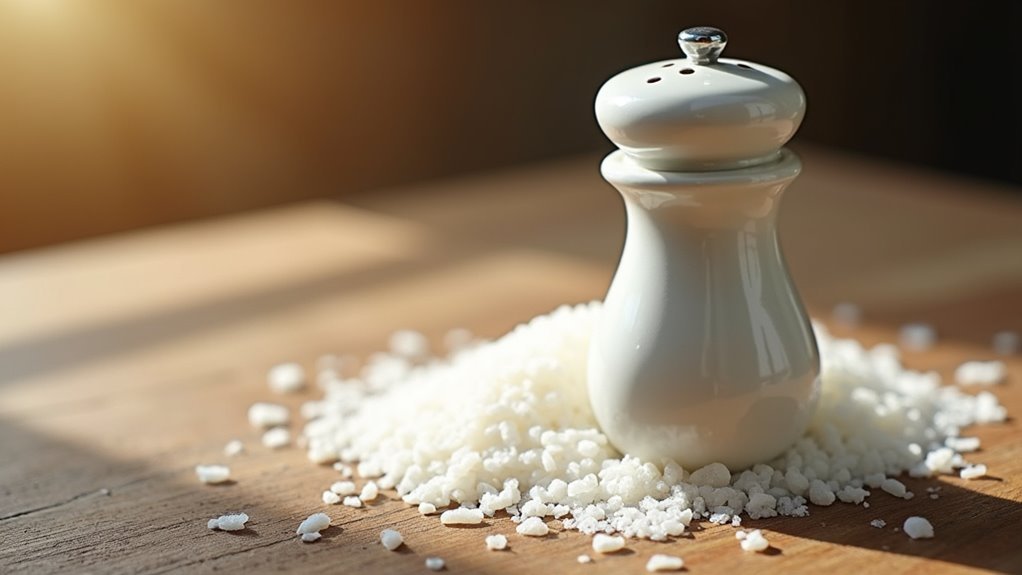
While rice gets most of the spotlight, Mexican cooks have actually been using a whole arsenal of moisture-fighting tricks that’ll probably surprise you. We’ve discovered these alternatives work just as well—maybe even better—for moisture control in our kitchens.
Here’s what we’re talking about:
- Dried beans – They’re like tiny moisture magnets that keep salt flowing smoothly
- Small pasta pieces – Macaroni works surprisingly well for humidity absorption
- Whole cloves – Double duty as moisture absorbers and subtle flavor enhancers
- Dried parsley – Natural solution that’s probably already in your spice rack
- Soda crackers – Effective but need replacing every 10-15 days
Frequently Asked Questions
Why Do Mexicans Put Rice in Their Salt?
We add rice to our salt because it’s part of Mexican traditions and smart culinary practices – the rice absorbs moisture, preventing salt from clumping in humid climates so we can season food evenly.
What Does Putting Rice in Salt Do?
Like tiny sponges, rice grains provide moisture absorption that keeps our salt flowing freely. We use this rice preservation method to prevent clumping in humid conditions, ensuring smooth seasoning every time we cook.
What Does Salt and Rice Mean?
When we combine salt and rice, it means we’re using rice storage as a moisture absorber for salt preservation. The rice keeps our salt dry and prevents clumping, ensuring it flows smoothly from shakers.
Why Should You Add Salt to Rice?
Did you know 75% of home cooks under-season their rice? We should add salt because it releases amazing salt benefits during rice preparation – enhancing flavor, improving texture, and helping grains cook more evenly for delicious results.