Like a magnet drawing metal filings, we’ve all noticed how Chinese restaurant rice seems to cling together in perfect, chopstick-friendly clumps. You know what I mean—it’s nothing like the fluffy, separated grains we usually get at home. Well, there’s actually some fascinating science behind this sticky phenomenon that goes way beyond just throwing rice in a pot. The secret lies in something most of us probably overlook entirely.
The Science Behind Rice Starch Content
When you think about why Chinese restaurant rice has that distinctive sticky quality, it all comes down to the molecular structure of the starch inside each grain. We’re looking at two main players here: amylose and amylopectin. Rice varieties with higher amylopectin content—like jasmine rice—naturally create that clumpy, sticky texture we recognize so well. It’s actually pretty fascinating how cooking temperatures affect this process. When heat activates the starch molecules, they gelatinize and bind together. Think of it like tiny molecular glue that makes each grain want to stick to its neighbors, creating that characteristic restaurant-style consistency. Additionally, the water-to-rice ratio used during cooking can significantly affect the final texture of the rice.
Short-Grain Vs Long-Grain Rice Varieties
| Feature | Short-Grain | Long-Grain |
|---|---|---|
| Starch Content | High | Low |
| Texture | Sticky | Fluffy |
| Grain Separation | Clumps together | Individual grains |
| Best Uses | Sushi, Chinese dishes | Pilaf, Indian cuisine |
| Cooking Method | Less rinsing needed | Requires thorough rinsing |
Think of short-grain as the clingy friend who won’t let go, while long-grain’s more independent.
Traditional Chinese Rice Cooking Methods
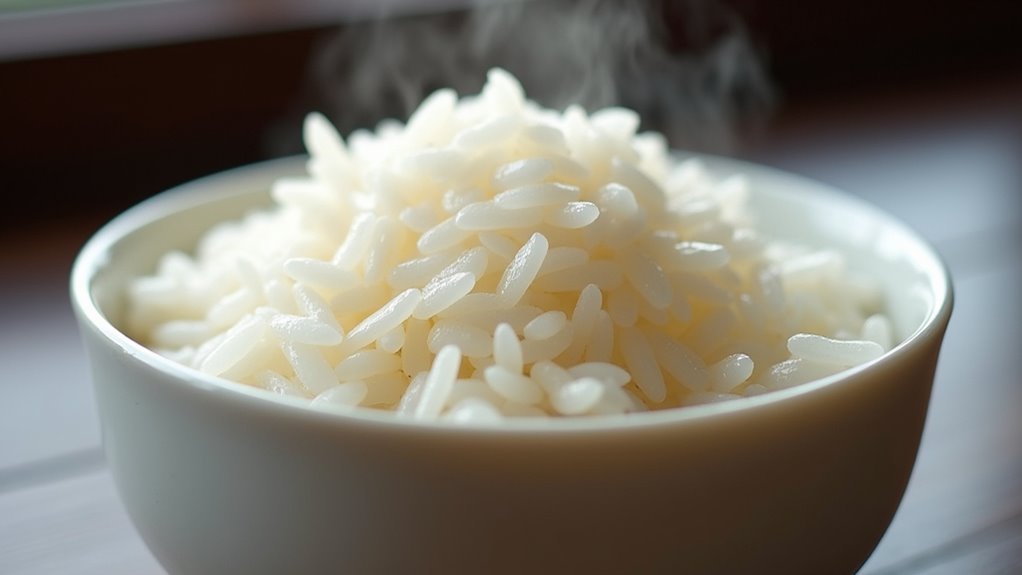
While modern rice cookers have revolutionized how we prepare rice, traditional Chinese methods rely on techniques that’ve been perfected over centuries—and honestly, they’re still some of the best ways to achieve that perfect sticky texture we’re after. These cooking traditions start with soaking rice varieties for 30 minutes before cooking. Well, sometimes they’ll skip the rinsing step entirely—that extra starch actually helps create more cohesion. The water-to-rice ratio is essential; too little and you’ll get mushy results. Adding a touch of oil during cooking? That’s probably the secret ingredient most restaurants won’t tell you about. In addition, soaking sticky rice enhances its texture and allows for a more flavorful final dish.
Water-to-Rice Ratios in Restaurant Kitchens
The secret behind that perfectly sticky restaurant rice isn’t just technique—it’s all about the ratios. We’ve discovered that Chinese restaurants typically use a 1.5:1 or 2:1 water-to-rice ratio, which is considerably higher than what most home cooks use. This extra water creates that signature sticky texture we all crave. Professional kitchens rely on industrial cooking equipment that maintains consistent water temperature throughout the process. These commercial rice cookers are like precision instruments—they control steam and heat better than our home appliances ever could, ensuring every grain achieves that perfect sticky consistency we can’t quite replicate at home. Additionally, using the right type of rice, such as short-grain rice, enhances the overall stickiness and texture of the dish.
Pre-Cooking Preparation Techniques
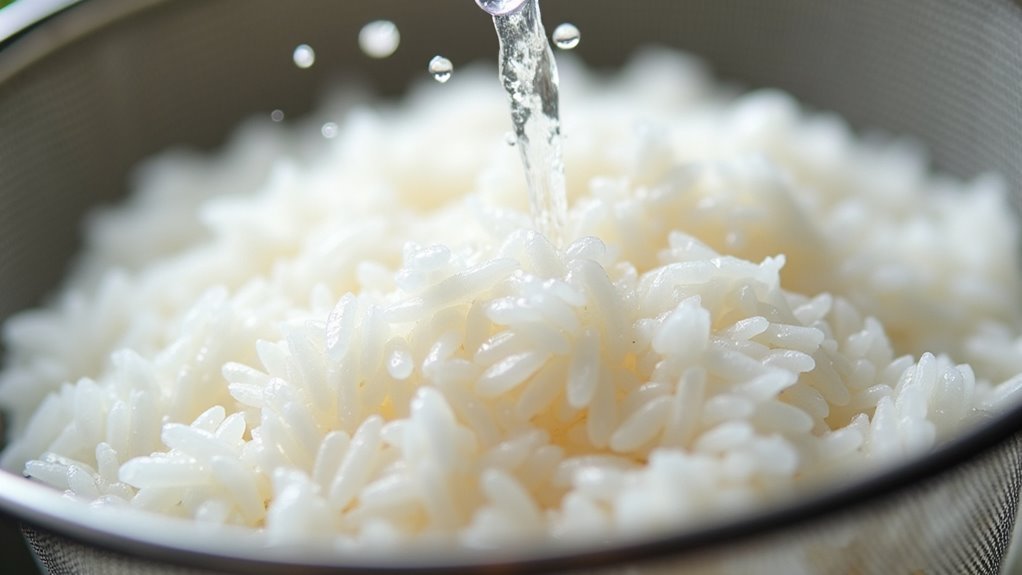
Before we even think about turning on the heat, there’s actually a whole ritual that happens in restaurant kitchens that most of us skip at home. Professional cooks know that proper rinse techniques are, well, everything. They’ll wash rice until the water runs clear, removing excess starch that causes clumping. The soaking benefits are huge too—fifteen to twenty minutes in water pulls out even more starch. After draining thoroughly, they use boiling water for cooking. Some chefs add lemon juice or oil, which honestly makes sense for preventing that gummy texture we’re trying to avoid. Additionally, using the correct water-to-rice ratio is crucial for achieving the perfect texture.
How Sticky Rice Enhances Chinese Dishes
Now, once we’ve mastered those prep techniques, we’re ready to appreciate why some Chinese dishes actually want that sticky texture we’ve been trying to avoid. Well, sticky rice dishes aren’t accidents—they’re deliberate culinary applications that showcase amylopectin’s magic. Think of it like edible glue that holds dim sum together perfectly. We can mold this versatile grain into dumplings, wrap it around savory fillings, or pair it with sweet mango. The chewy texture creates, you know, this satisfying mouthfeel that complements other ingredients. It’s probably why traditional steaming methods preserve that consistency we’re after. Additionally, making your own sticky rice allows you to control sugar and flavoring, enhancing the overall dish.
Frequently Asked Questions
What Is the 123 Rice Rule?
The 123 rice rule uses one part rice, two parts water, three minutes cooking time. When we follow this rice cooking method, we’ll avoid the sticky texture that happens when rice absorbs too much moisture.
What Is the Secret to Chinese Fried Rice?
We’ll share key fried rice techniques: use day-old rice that’s dried out, cook at high heat while stir-frying quickly, and add flavor enhancements like oil or lemon juice to separate grains perfectly.
Why Do East Asians Eat Sticky Rice?
We eat sticky rice because of its cultural significance in our traditions and festivals, plus it’s easier to pick up with chopsticks and creates unique textures in our dishes.
Which Country Eats the Most Sticky Rice?
Ever wonder where sticky rice reigns supreme? Thailand consumes the most sticky rice globally, though regional preferences vary across Asia. We’ll find Laos closely follows, with both countries making it their cultural staple.