
We’ve all heard that warning about reheating rice, but honestly, most of us don’t really understand why it’s such a big deal. I mean, we reheat pizza and pasta all the time without thinking twice, right? Well, turns out rice is actually—or maybe I should say potentially—harboring something much more dangerous than we realize. It’s not just about taste or texture going bad.
The Science Behind Bacillus Cereus Contamination in Rice
While most of us don’t think twice about tossing leftover rice in the microwave, there’s actually a sneaky little villain lurking in those innocent-looking grains that we should probably know about. Meet Bacillus cereus – a bacterium that’s basically the overachiever of the food poisoning world. This little troublemaker has mastered spore formation, creating these incredibly tough shells that laugh in the face of boiling water. When we leave cooked rice sitting around, these spores wake up and get busy with toxin production, churning out nasty compounds that’ll have us feeling pretty miserable.
Temperature Danger Zones That Make Rice Unsafe
Now that we comprehend how Bacillus cereus operates, we need to talk about the temperature sweet spot where this bacteria absolutely thrives – and it’s probably exactly where most of us leave our leftover rice. The danger zone sits between 40°F and 140°F, which is basically room temperature and slightly warm. When we’re using typical cooking techniques, rice gets hot enough to kill active bacteria, but those sneaky spores survive. Poor rice storage habits mean we’re creating a bacterial playground. Within two hours at room temperature, we’ve got a potential food safety nightmare on our hands.
How Improper Storage Leads to Bacterial Growth
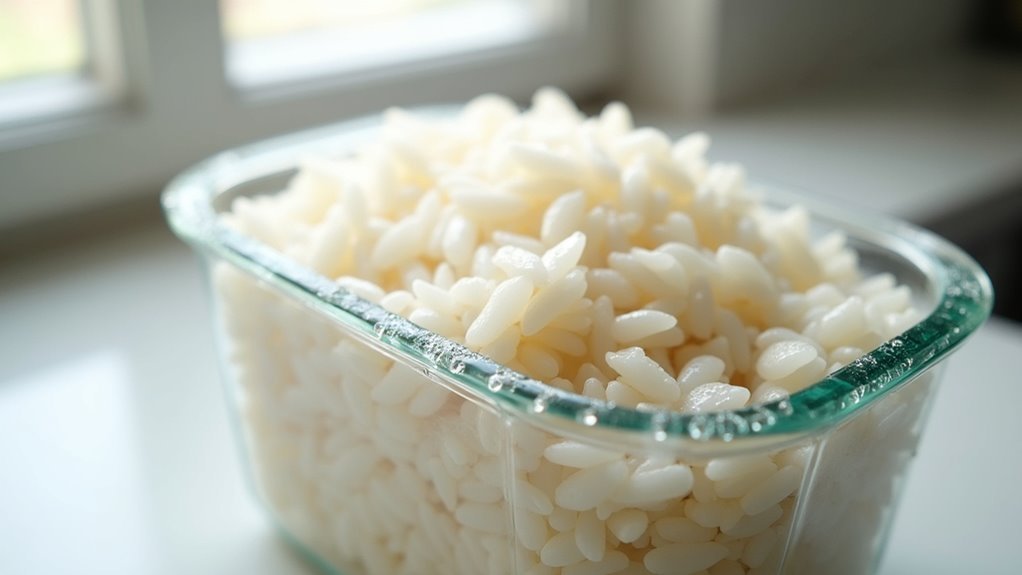
Once we leave that freshly cooked rice sitting on the counter – you know, maybe we’re busy cleaning up or got distracted by something else – we’re basically rolling out the red carpet for bacterial multiplication. What happens is those bacterial spores that survived the cooking process start waking up from their dormant state. They’re probably thinking, “Perfect temperature, plenty of moisture – let’s party!” When we don’t cool our cooked rice quickly in shallow containers, we’re creating this warm, humid environment where Bacillus cereus absolutely thrives. It’s like we’ve accidentally built them a five-star resort. In fact, it’s crucial to avoid leaving cooked rice at room temperature for more than 2 hours to prevent any health risks.
Health Risks and Food Poisoning Symptoms From Reheated Rice
When that bacterial party we just talked about reaches full swing, we’re looking at some pretty unpleasant consequences for anyone who eats that contaminated rice. Food poisoning from reheated rice isn’t just a mild upset stomach – it’s actually a serious health concern that can knock you down for days.
The bacterial toxins produced by Bacillus cereus don’t mess around. They’re heat-resistant, so even reheating won’t neutralize them once they’ve formed.
- Watery diarrhea develops within 6-15 hours after eating contaminated rice
- Severe abdominal cramping that can double you over in pain
- Persistent nausea and vomiting episodes
- Dehydration risks from fluid loss
- Symptoms lasting 24-48 hours in most cases
Safe Alternatives to Reheating Leftover Rice
Instead of throwing that leftover rice in the trash or risking a nasty bout of food poisoning, why not transform it into something completely new? We’ve discovered some brilliant alternatives that’ll make you forget about reheating entirely. Stir fry options work perfectly since high heat kills bacteria when reaching 165°F. Rice salads offer invigorating, cold dishes that skip heating altogether. Fritter recipes let you fry rice into crispy cakes—well, they’re absolutely delicious. Soup additions allow even heating in liquid, making it safer. These methods actually taste better than reheated rice, in our experience. Additionally, you can repurpose leftover rice into congee with leftover rice, a nourishing and comforting meal that reduces food waste.
Frequently Asked Questions
Why Should You Not Eat Reheated Rice?
We shouldn’t eat reheated rice because it promotes bacterial growth, particularly Bacillus cereus, which produces toxins that survive reheating. This creates serious food safety risks, potentially causing vomiting, diarrhea, and abdominal pain within hours.
Why Can’t I Reheat Cooked Rice?
You can reheat cooked rice, but we don’t recommend reheating it multiple times due to food safety concerns. Bacterial growth occurs when rice sits too long, and repeated reheating increases contamination risks considerably.
What Is the 123 Rice Rule?
We follow the 123 Rice Rule for proper rice storage and food safety: cool rice within 1 hour, refrigerate for maximum 2 days, then reheat to 165°F to prevent bacterial growth.
Is It Okay to Reheat Rice in the Microwave?
Yes, we can safely reheat rice in the microwave if we follow proper microwave safety guidelines and guarantee good rice storage beforehand – reaching 165°F throughout kills harmful bacteria effectively.